Finetuning 2D Dion-Jacobson perovskites for photovoltaic applications
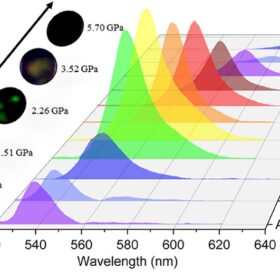
Canadian and U.S. researchers have investigated applying pressure to a 2D hybrid organic-inorganic perovskite to tune the optical and electronic properties to suit photovoltaic applications, light emitting diodes or other semiconductor devices.
National Laboratories releases energy procurement navigation tool
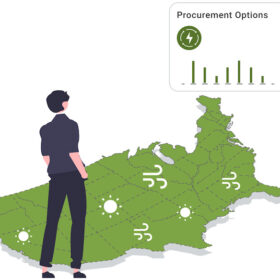
The National Renewable Energy Laboratory’s tool helps public and private energy buyers, like colleges, utilities, local governments, industrial buyers and more, explore off-site electricity options with cost-informed insights tailored to their specific goals.
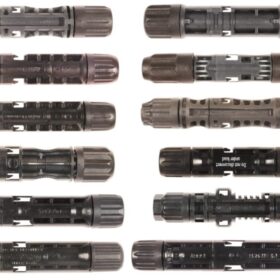
Confused about PV connectors? Words matter
The National Renewable Energy Laboratory and Sandia National Labs have created a new nomenclature for PV connectors to reduce confusion amongst installers and developers, while improving deployment practices. They catalogued a sampling of twenty-five commercially available 4 mm connectors.
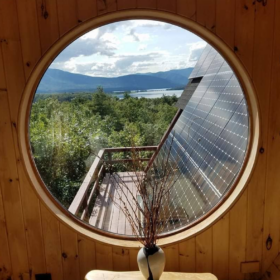
Net metering causes less than one dollar cost shift to most ratepayers, study says
With many states seeking to replace net metering with alternative compensation that pays solar owners less for their excess electricity, the National Renewable Energy Laboratory launched a qualitative study to find the truth behind the alleged cross subsidization of solar customers by non solar customers.
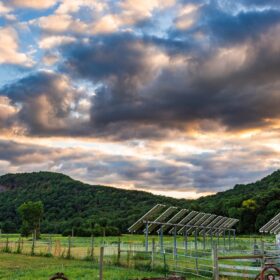
Agrivoltaic shading, full-sun fields gives farmers the power to pivot
Research conducted at the oldest agrivoltaic research site in the United States found year-to-year weather variability impacts agrivoltaic crop production, emphasizing the importance in conducting studies across multiple years.
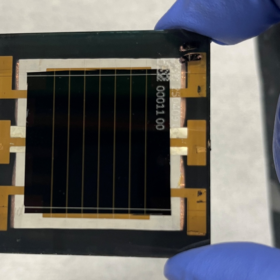
NREL, CubicPV achieves 24% efficiency for perovskite mini solar module
A U.S.-based collaboration between the National Renewable Energy Laboratory (NREL) and CubicPV has yielded a perovskite minimodule with certified efficiency of 24.0%. The two noted that it is the first time a U.S. effort has set a record in the perovskite mini module category.
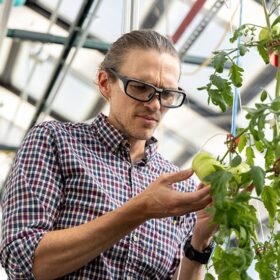
No photon left behind: NREL develops translucent solar panels for bigger, better crops
Researchers at the National Renewable Energy Laboratory grew tomatoes under translucent solar panels, which could play a promising role in agrivoltaics.
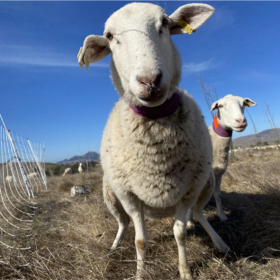
Solar grazing undergoing rapid growth, census finds
The scale of livestock grazing in agrivoltaic installations is much larger than previously understood, found the first solar grazing census by the National Renewable Energy Laboratory and the American Solar Grazing Association.
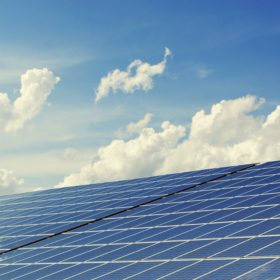
Understanding P50, P90 and P99 in solar energy
A review of using statistical probability to understand solar production outcomes.
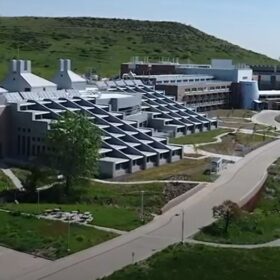
National Renewable Energy Lab announces layoffs
A statement released by NREL calls the layoffs an “involuntary separation,” thanks the employees for their work and acknowledges that the mission is critical to achieving “an affordable and secure energy future.”