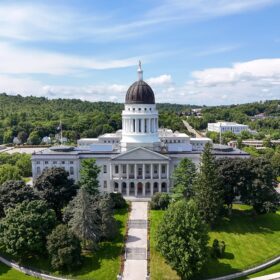
Maine becomes the 11th state to allow community choice aggregation
The state joins a growing list of places that allow municipalities to form local energy groups, giving residents more control over electricity costs and a faster path to 100% renewable energy goals.
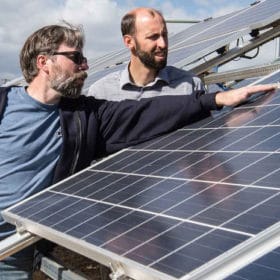
Trump DOE proposes 52% budget cut for National Laboratory of the Rockies
The U.S. Department of Energy has issued a fiscal year 2027 budget justification that seeks to slash $264 million from its lead renewable energy research center.
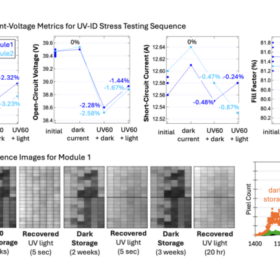
NREL researchers quantify UV-induced degradation levels in TOPCon solar cells
Researchers at NREL found that UV exposure can cause significant, partly non-recoverable degradation in TOPCon solar cells, with strong cell-to-cell and intra-cell variability linked to passivation and processing inconsistencies. While some UV-related losses recover quickly under light and are unlikely to affect field performance, the findings highlight gaps in current qualification tests and the need for improved UV aging standards.

The war on solar and renewable energy is real. If the public doesn’t care, we’ll lose
An opinion article issues a call to arms for the renewable energy industry to combat misinformation and aggressive federal deregulation through a grassroots “war of words.”

DOE removes “renewable” from National Renewable Energy Laboratory
The US Department of Energy (DoE) has renamed the National Renewable Energy Laboratory (NREL) in Colorado as the National Laboratory of the Rockies, a change it says aligns the institute’s mandate with the Trump administration’s applied energy priorities.
Quantifying uncertainty to produce more useful solar generation forecasts
Renewable energy firm PowerUQ advocates for the use of Uncertainty Quantification (UQ) in solar project analytics to combat the widespread issue of performance shortfalls. By incorporating a wider range of variables and providing probability scenarios like P50 and P90, UQ aims to make solar generation forecasts more useful and accurate over a project’s long lifespan.
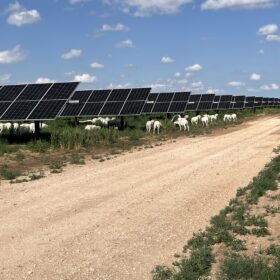
Agrivoltaics provides benefits and possible pitfalls for solar developers
NREL study examines Massachusetts’ comprehensive approach to deploying solar on farmland.
NREL researchers address safety implications of next-generation battery technologies
Report says new evaluation methods, including AI, will help make future batteries safer.

Ford Lightning electric truck batteries power Maryland’s electric grid
Residential solar company Sunrun is operating the first vehicle-to-grid program in the United States, running a distributed energy power plant via coordinated energy dispatch from Ford Lightning truck owners.
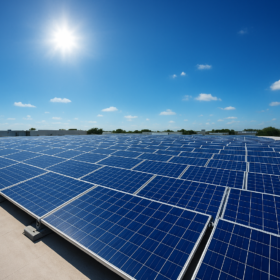
NREL researchers warn of unexpectedly high UV-induced degradation in n-type solar modules
A research team from the U.S. National Renewable Energy Laboratory has analyzed n-type modules deployed in a 3 MW commercial PV project in an effort to assess the high degradation rate reported by the plant owner. The scientists found that ultraviolet-induced degradation (UVID) was a major factor affecting the facility’s performance.