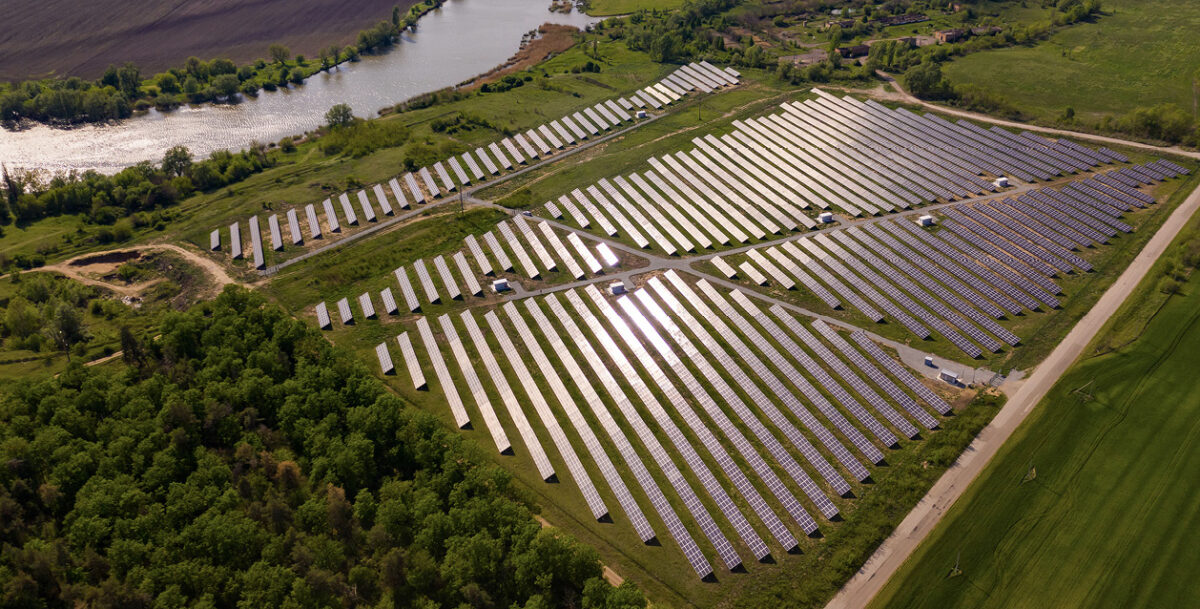





The rationale for renewables has broadened. Military interventions and resource wars continue across the world, natural gas prices remain one disruption away from another spike, supply chains are being weaponized, and electricity grids are straining beneath surging demand from data centers and AI.
In an era of geopolitical tension and volatility, electrifying economies through renewable power and smarter, more flexible grids is the most credible path to economic competitiveness and energy security. This marks a fundamental shift from centralized fossil fuel infrastructure and imported fuels, which leave economies exposed to shocks.
An emerging energy order is being built on domestically produced electricity from renewable energy backed by storage, digital controls and responsive demand. Security depends on building capacity, reinforcing networks and increasing flexibility. Each new solar array, wind farm, heat pump and electric vehicle is a strategic asset that insulates economies from fuel shocks, dampens price volatility and builds economic value at home.
Global leaders are openly embracing this shift. At the World Economic Forum in Davos, the United Nations and across the G20, the focus has moved from emissions reduction to energy independence, security and resilient supply chains. As UN Secretary-General António Guterres said in 2025: “Renewables mean real energy security, real energy sovereignty, and real freedom from fossil-fuel volatility.”
Role of renewables
Policymakers around the world now talk about homegrown energy, independence, and de-risking supply chains. The US Inflation Reduction Act and the EU Green Deal Industrial Plan were designed to cut emissions, onshore manufacturing, and shield economies from volatile fuel markets. These are security strategies as much as climate strategies.
Guterres has called the climate crisis a “threat multiplier” and renewables a foundation for peace. He argues that “almost every nation has enough sun, wind, or water to become energy self-sufficient,” shifting the challenge from geopolitics to infrastructure.
This logic equally applies in the Global South, where fossil fuel imports drain foreign currency reserves and contribute to inflation. A transition to clean energy will, in the words of Kenyan President William Ruto, “create jobs, protect local economies and accelerate the sustainable industrialization of Africa.”
Following the numbers
Markets are already responding. The 2025 Powering Up business poll from the We Mean Business Coalition found that 97% of executives support a rapid transition to renewables. This is not altruism, but hard-headed economic calculation.
Investors have reached the same conclusion. In a 2025 Morgan Stanley survey, 79% of asset managers and 86% of asset owners said they expect sustainable assets to grow in their portfolios, driven by performance and risk management.
The macro story is clear. International Renewable Energy Agency (IRENA) reports that renewables helped avoid $467 billion in fossil fuel costs in 2024, providing fiscal headroom for countries battling inflation and trade deficits. The agency also found that 91% of new utility-scale renewables delivered power cheaper than the lowest-cost fossil fuel alternative: solar PV averaged 41% cheaper, onshore wind 53%. The cheapest power is increasingly also the most secure.
Employment data reinforce the point. Renewables create three times more jobs per dollar invested than fossil fuels. Meanwhile, the International Energy Agency (IEA) estimates clean energy added around 10% of global GDP growth in 2023, contributing $320 billion to the global economy.
Put together, the logic is compelling. Fewer price shocks mean more predictable fiscal planning. Lower imports steady currencies and trade deficits. More domestic jobs strengthen resilience. More stable growth frees governments to invest in education, infrastructure and healthcare rather than firefighting the next energy crisis.
Electrotech revolution
Electrotech is often mistaken for renewables alone. In reality, the term encompasses electrified demand, storage, grids, flexibility, and digital controls integrated in a single coherent system.
Deploying electrotech reduces single points of failure. A diversified system supported by storage, rooftop PV, and interconnectors creates redundancy that centralized fossil fuel systems struggle to match. When one source falters, others compensate. When one region tightens, cross-border links stabilize supply.
These technologies are proven, the bottleneck is delivery. The IEA estimates over 3 TW of renewable generation capacity is stuck in global grid connection queues.
Ambition to execution
For years, governments and companies have formed coalitions around net-zero targets. These must now pivot to action judged by deployment milestones.
Five priorities stand out, as set out in the Global Renewables Alliance’s recent action plan. Permitting must be fast-tracked to accelerate renewable and storage projects. Grid and storage bottlenecks must be addressed by expanding and modernizing networks, clearing connection queues. Financing must be mobilised at scale to unlock investment in clean energy infrastructure. Electrification must advance across transport, heating and industry, supported by flexibility, storage and demand response. Finally, supply chains must scale in parallel to deliver the technologies and workforce required.”
Acting now will pay dividends for decades. The GRA and its members are already part of this emerging coalition, showing that the triple win of jobs, growth, and energy security is not a future aspiration but a present reality in markets that invest in renewables and electrification.
Every additional gigawatt of renewable capacity, electrified vehicle, or heat pump is a strategic investment in security. Policymakers and business leaders must treat electrotech as core infrastructure, on par with defense and digital systems.
The challenge now is to move fast enough to unlock the full potential of electrotech. The safest kilowatt-hour is generated renewably, used efficiently, and managed domestically.
About the author
 Bruce Douglas has more than 30 years of international experience in the promotion of renewable energy and electrification. He is currently CEO of the Global Renewables Alliance – uniting six leading global organizations for wind, solar, geothermal, hydro, long-duration energy storage, and green hydrogen industries.
The views and opinions expressed in this article are the author’s own, and do not necessarily reflect those held by pv magazine.
This content is protected by copyright and may not be reused. If you want to cooperate with us and would like to reuse some of our content, please contact: editors@pv-magazine.com.




By submitting this form you agree to pv magazine using your data for the purposes of publishing your comment.
Your personal data will only be disclosed or otherwise transmitted to third parties for the purposes of spam filtering or if this is necessary for technical maintenance of the website. Any other transfer to third parties will not take place unless this is justified on the basis of applicable data protection regulations or if pv magazine is legally obliged to do so.
You may revoke this consent at any time with effect for the future, in which case your personal data will be deleted immediately. Otherwise, your data will be deleted if pv magazine has processed your request or the purpose of data storage is fulfilled.
Further information on data privacy can be found in our Data Protection Policy.