




Finding a suitable site for a new battery storage project can be tricky. Building on what’s already there can be one way to smooth out the process.
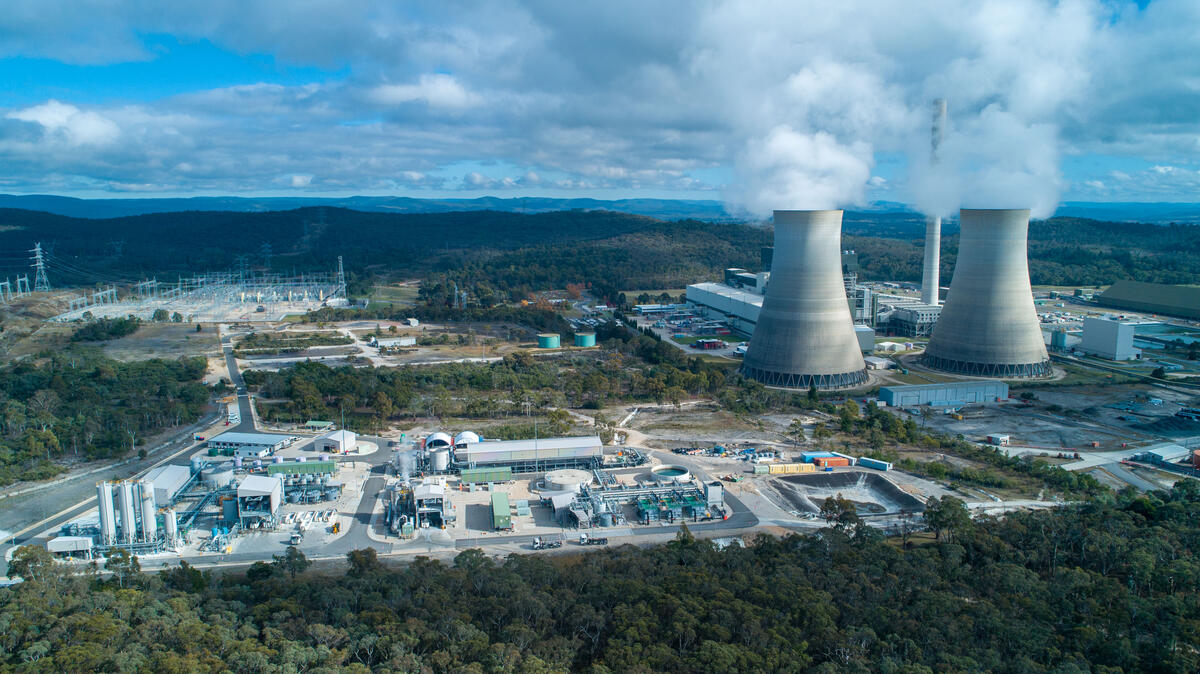
‘Brownfield’ battery development is on the rise, the alternative to ‘greenfield’ battery sites that require new infrastructure and land. Brownfields are previously developed sites that are now underused or abandoned, usually at least in part due to worries of contamination. However, in many cases, building batteries on top can be one way to not only make use of the land, but also make it easier to bring new storage systems online.
Boston-based Elevate Renewables is one developer who’s testing the strategy. The company recently announced a 50 MW/600 MWh project, which is set to be developed at the Bergen Generating Station in Ridgefield, New Jersey.
The project, also known as Two Rivers Storage, is a battery storage facility to be developed at the natural-gas-powered Bergen Generating Station in Ridgefield, New Jersey, as part of the state’s Garden State Energy Storage Program. Elevate is banking on its approach of building new batteries at existing power plants.
According to CEO Josh Rogol, Elevate’s brownfield-based colocation strategy enables the company to speed up development timelines, as there are already grid connections and existing power infrastructure. He told ESS News that this can be particularly impactful in capacity-constrained markets that have immediate reliability needs.
“There are hundreds of existing natural gas power plants across the U.S. with transmission access and established infrastructure,” Rogol said, noting that the combination with battery storage is beginning to emerge as a key strategy for reliable capacity in regions like PJM. Installing battery storage systems on brownfields with existing natural gas infrastructure can make it easier for developers to situate themselves inside the “load pocket” where the need for and value of the system are the most significant.
In those areas, “the competitive landscape for industrial land that can host a utility-scale storage project is constrained.” But, many brownfield sites are found in locations with what Rogol calls “immense” nodal value due to their locations.
“The execution timeline is the fastest of any available resource,” he said, and developers can leverage operational efficiencies with the existing plant [to] benefit rate payers. “By siting storage at those existing assets, we see a clear pathway to scaling deployment much more quickly than traditional greenfield development.”
Plus, as brownfield sites have already been developed and may already be used for infrastructure (such as with Elevate’s Two Rivers Storage project), they may face less community opposition compared to greenfield battery projects. Rogol pointed out this is because rather than introducing a new land use in a community, installing storage is simply “evolving an existing one.”
That’s one reason co-locating batteries and already built power plants could be such a potent combination.
“Using existing plants that typically have trained staff operating 24 hours can help optimize response times and enhance overall safety benefits so communities can feel more comfortable,” he added.
Still, brownfield development can be a more muddled, foggy path than it might seem at first glance. Working within an existing plant’s layout and operational constraints can be challenging, as can dealing with the environmental conditions or remediation requirements of a particular site. There may also be limited space for a system, depending on its size. And, in order to properly integrate the battery, the developer must build around the existing grid configuration and coordinate with legacy equipment and already-in-place systems.
In Rogol’s eyes, however, these are surmountable.
“Many existing natural gas plant sites are well-positioned to host meaningful amounts of storage, particularly as the grid evolves to rely more on flexible resources.”
This content is protected by copyright and may not be reused. If you want to cooperate with us and would like to reuse some of our content, please contact: editors@pv-magazine.com.



By submitting this form you agree to pv magazine using your data for the purposes of publishing your comment.
Your personal data will only be disclosed or otherwise transmitted to third parties for the purposes of spam filtering or if this is necessary for technical maintenance of the website. Any other transfer to third parties will not take place unless this is justified on the basis of applicable data protection regulations or if pv magazine is legally obliged to do so.
You may revoke this consent at any time with effect for the future, in which case your personal data will be deleted immediately. Otherwise, your data will be deleted if pv magazine has processed your request or the purpose of data storage is fulfilled.
Further information on data privacy can be found in our Data Protection Policy.