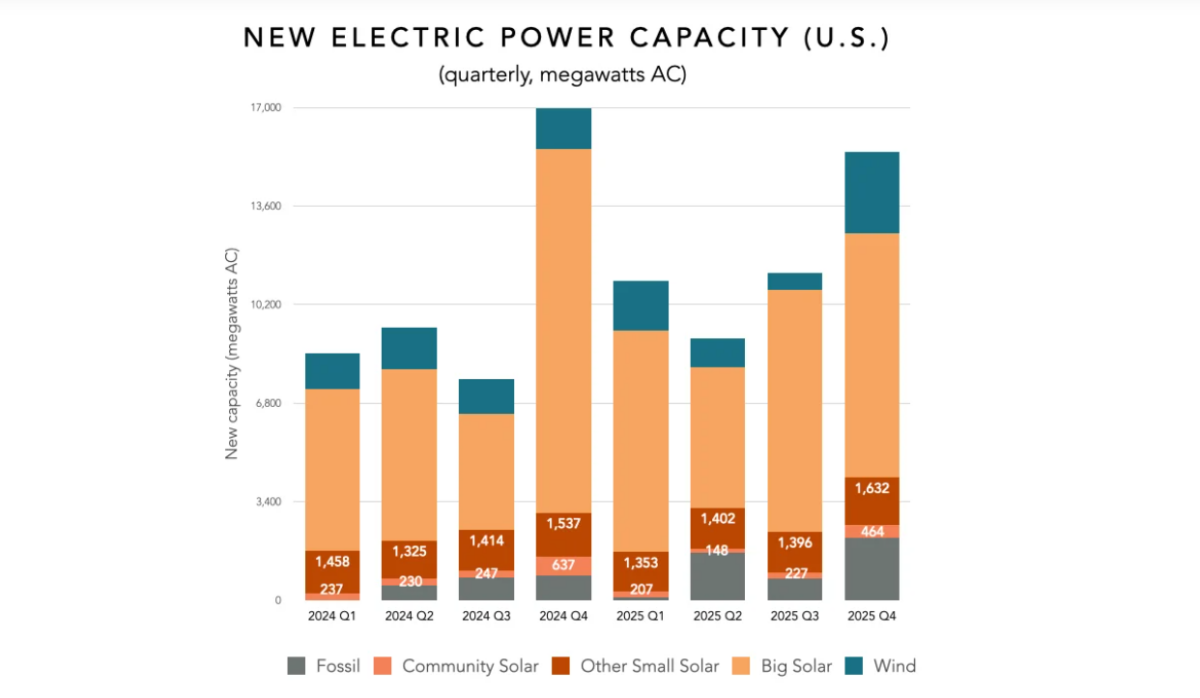





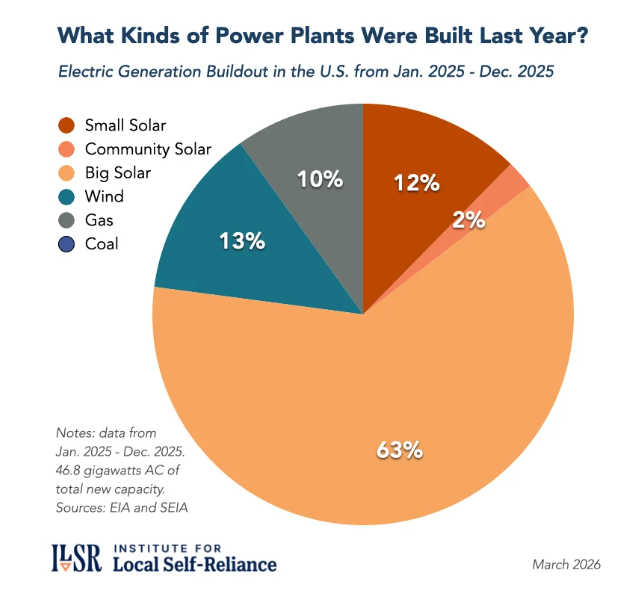
The U.S. solar market reached a new milestone in the final quarter of 2025 as distributed capacity surged to a record 1.9 GW of new installations. Data from the Institute for Local Self-Reliance (ILSR) shows this quarterly peak capped a year where solar generation accounted for 78% of the 46 GW of new power capacity added to the national grid.
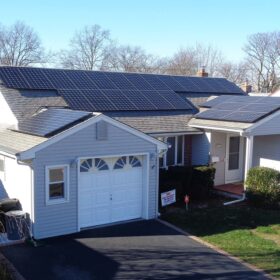
While utility-scale projects dominated installed capacity at 63%, the 15% contributed by residential and community solar projects indicates strength in the distributed energy segment. ILSR and the Energy Information Administration define distributed or “small solar” as less than 1 MW in nameplate capacity, and generally connected to the grid behind-the-meter.
Market analysts suggest the Q4 surge was driven in part by a rush to secure the 25D residential energy efficient property tax credit. The incentive, which provided a 30% credit for solar electric property, began its scheduled phase-down at the end of the year, prompting homeowners to finalize interconnections before the deadline.
The cumulative impact of these behind-the-meter assets is building a case for a decentralized grid by bypassing the multi-billion dollar bottlenecks of traditional transmission expansion. This growth is further bolstered by the 15 GW of new energy storage deployed in 2025. Approximately 14% of that storage capacity was installed at the distributed level to provide essential grid balancing.
Despite persistent regulatory hurdles, the closing months of 2025 demonstrated that small-scale solar remains a driver of U.S. energy resilience. The technical and economic data suggests the decentralized model is challenging the century-old centralized utility paradigm.
Distributed resources continue to offer unique advantages to the grid beyond simple capacity additions. These benefits range from reduced land-use requirements and lower transmission losses to increased local job creation and price predictability for consumers.
(Read: Ten reasons why behind-the-meter solar is a benefit.)
This content is protected by copyright and may not be reused. If you want to cooperate with us and would like to reuse some of our content, please contact: editors@pv-magazine.com.





By submitting this form you agree to pv magazine using your data for the purposes of publishing your comment.
Your personal data will only be disclosed or otherwise transmitted to third parties for the purposes of spam filtering or if this is necessary for technical maintenance of the website. Any other transfer to third parties will not take place unless this is justified on the basis of applicable data protection regulations or if pv magazine is legally obliged to do so.
You may revoke this consent at any time with effect for the future, in which case your personal data will be deleted immediately. Otherwise, your data will be deleted if pv magazine has processed your request or the purpose of data storage is fulfilled.
Further information on data privacy can be found in our Data Protection Policy.