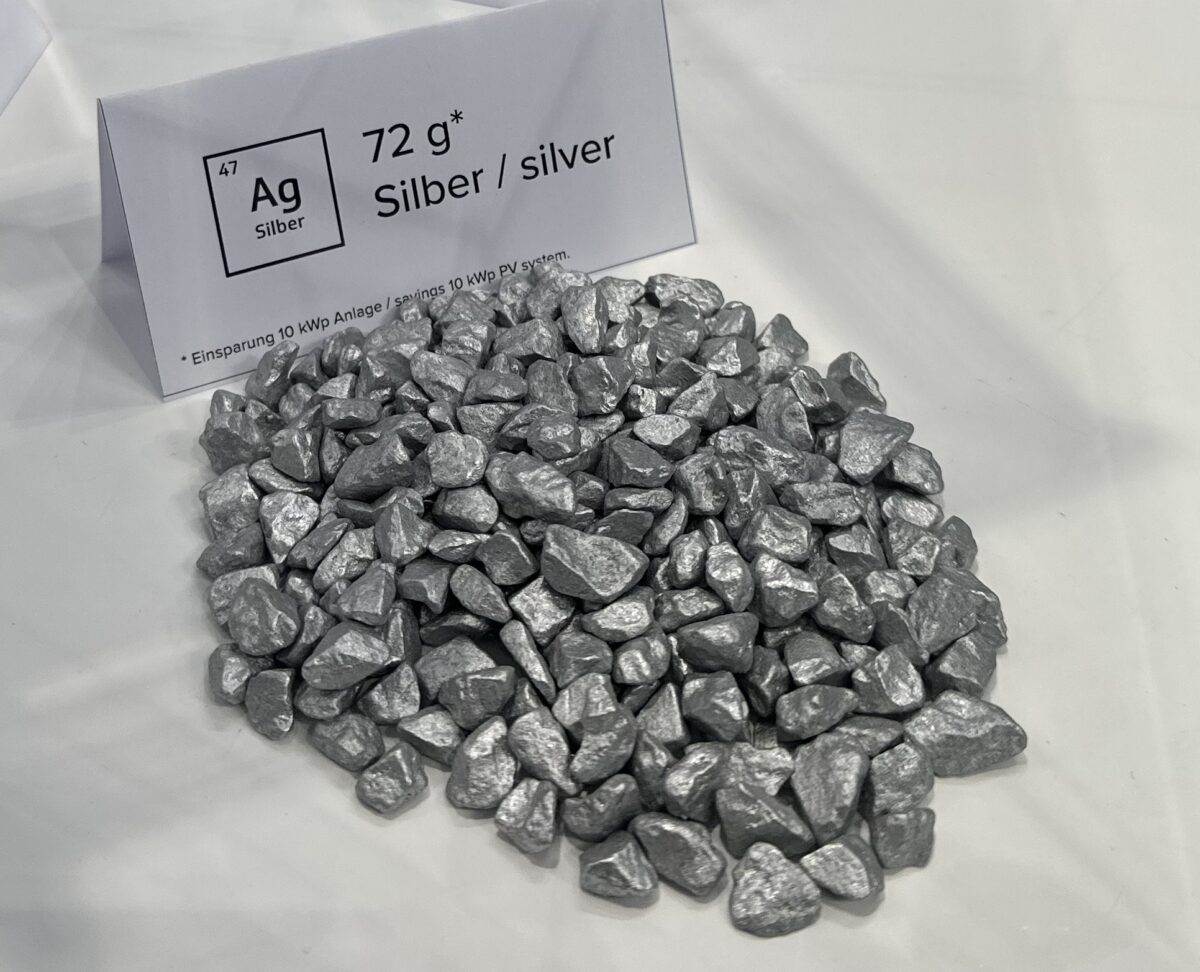





After oscillating above $80 per ounce (oz) between Feb. 19 and March 13, silver prices now appear to have stabilized around $70/oz.
“For the time being, silver prices seem to have found a new floor, supported by yesterday’s announcement of a pause in attacks on Iran,” Philip Newman, managing director of independent research consultancy Metals Focus told pv magazine.
From mid-October 2025, silver was already on a strong upward trajectory after breaking historic levels near $50/oz. The rally accelerated toward year-end, with prices climbing rapidly through November and December to around $70–75/oz, marking one of the sharpest late-year increases in decades.
In early January 2026, the surge intensified further, pushing silver past previous highs to an all-time peak of about $120/oz, driven by speculative momentum, tight supply, and strong investment demand. Shortly after reaching this record, the market turned volatile again but began to stabilize compared to January’s spike.
The photovoltaic industry is expected to use less silver in 2026, according to analysis published by the Silver Institute.
Silver paste currenly accounts for more than 20% of total solar cell costs, creating a difficult environment for manufacturers already facing overcapacity, falling module prices and squeezed margins. Companies are exploring alternative metallization technologies and other ways to reduce silver consumption.
Recently, China-based metallization paste supplier DK Electronic Materials highlighted this trend, revealing that a gigawatt-scale customer will adopt its high-copper paste for commercial production.
According to Radovan Kopecek, the co-founder and director of German research institute the International Solar Energy Research Center Konstanz (ISC Konstanz), an immediate transition to copper is technically and economically feasible. “Copper screen printing can be implemented quickly, and we have received many inquiries about it,” he told pv magazine last month.
Ning Song, from the University of New South Wales (UNSW) in Australia, explained that even if adopting a high-copper paste results in a small efficiency drop, the price trade-off should be acceptable to manufacturers. “That trade-off is acceptable if it does not introduce new reliability risks. Ultimately, the decision depends on how well the efficiency loss can be offset at the module and system level,” she told pv magazine.
Research published last September found th
This content is protected by copyright and may not be reused. If you want to cooperate with us and would like to reuse some of our content, please contact: editors@pv-magazine.com.



By submitting this form you agree to pv magazine using your data for the purposes of publishing your comment.
Your personal data will only be disclosed or otherwise transmitted to third parties for the purposes of spam filtering or if this is necessary for technical maintenance of the website. Any other transfer to third parties will not take place unless this is justified on the basis of applicable data protection regulations or if pv magazine is legally obliged to do so.
You may revoke this consent at any time with effect for the future, in which case your personal data will be deleted immediately. Otherwise, your data will be deleted if pv magazine has processed your request or the purpose of data storage is fulfilled.
Further information on data privacy can be found in our Data Protection Policy.