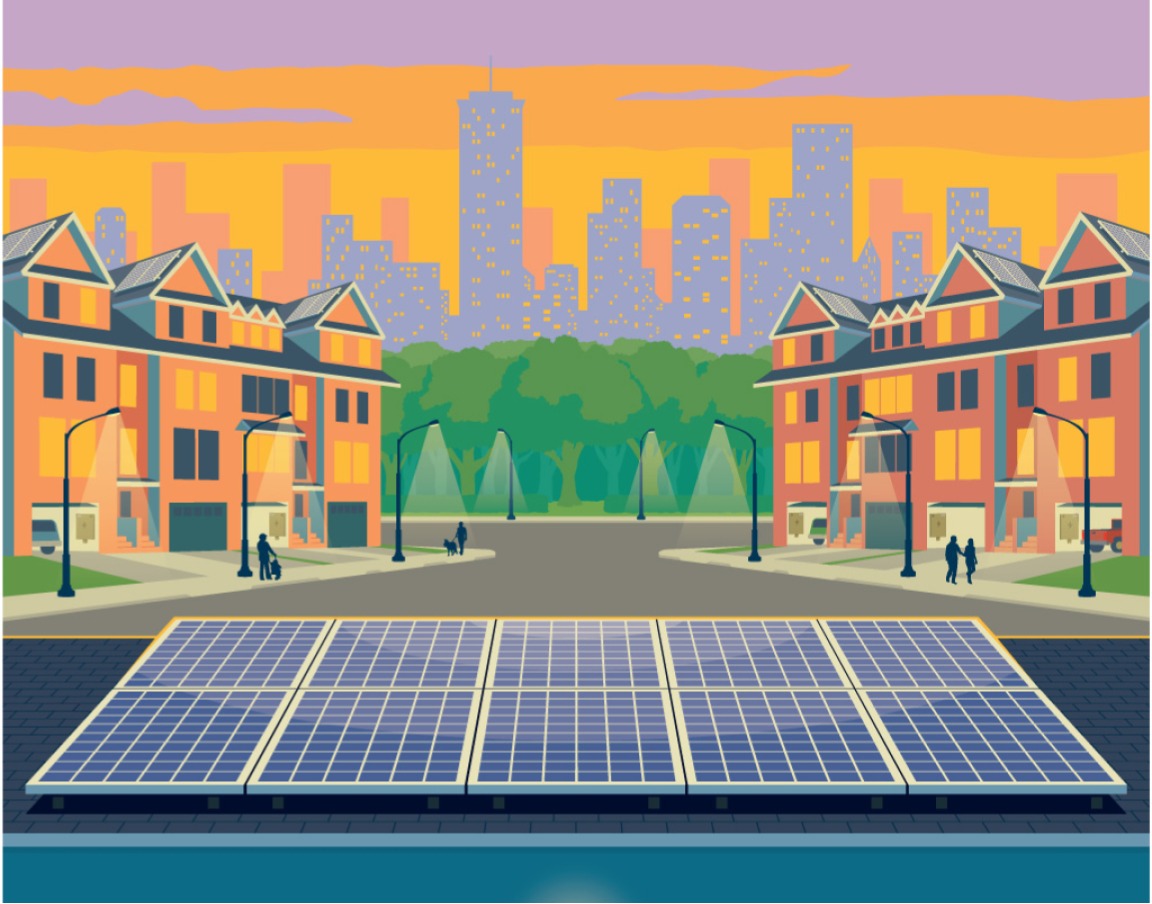





Jigar Shah, the former director of the U.S. Department of Energy’s Loan Programs office, maintains that scaling virtual power plants is the quickest way for state leaders to stabilize electric rates, in a report he co-authored with Deploy Action Executive Director Arnab Pal, published by Deploy Action.
The report, which describes virtual power plants as aggregations of distributed energy resources such as electric vehicles, distributed batteries and smart thermostats, says they can be deployed “within months, not years.” VPPs can shift some electricity consumption to non-peak hours, and a VPP’s batteries can help serve remaining peak demand. As a result, there is less need for costly new generating capacity.
The report cites a virtual power plant “liftoff” study, published by the U.S. Department of Energy, which found that scaling VPPs three to five times by 2030 to reach 80 to 100 GW of enrolled capacity could serve 10% to 20% of peak load and save power systems $10 billion per year. Shah presented those findings at the 2023 RE+ conference.
The capacity of resources enrolled in VPPs nationwide reached 37.5 GW last year, according to research firm Wood Mackenzie.
The Deploy Action report recommends that states “looking to rapidly expand” their VPP portfolio should “default to auto-enrollment” of enabled devices, “reward utilities that grow their VPP footprint,” and set standards that allow for device interoperability.
Real-world examples
The report lists several state laws and utility programs as “real-world examples” of state action to advance VPPs.
California’s grid operator CAISO operates the nation’s largest VPP, the report says, with 515 MW of capacity, offering “a playbook for states scaling VPPs in their own regional grids.”
Colorado in 2024 required the state’s major utilities to file VPP proposals that would provide incentives for participants.
In Maryland, a state law required investor-owned utilities to develop programs to compensate owners and aggregators of distributed resources for distribution-system support services, thereby “opening the door” to VPP structures.
California is taking actions beyond VPPs to control peak demand. The state in 2023 set an overall goal for 7 GW of load flexibility by combining 3 GW of price-responsive demand from appliances with 4 GW of traditional demand response, in which some customers “drop load” during the 100 highest-demand hours of the year.
Through 2030
While measures to advance VPPs top the report’s list of recommended state actions through 2030, other actions to stabilize electric bills would aim to increase grid utilization, prioritize large load flexibility and “modernize” utility rate design and contract structures.
Beyond 2030, the report recommends actions to promote a wide range of energy resources, including scaling long-duration storage beyond 2035.
The report is titled “Grid growth, utilization and affordability: a playbook for states.”
This content is protected by copyright and may not be reused. If you want to cooperate with us and would like to reuse some of our content, please contact: editors@pv-magazine.com.



By submitting this form you agree to pv magazine using your data for the purposes of publishing your comment.
Your personal data will only be disclosed or otherwise transmitted to third parties for the purposes of spam filtering or if this is necessary for technical maintenance of the website. Any other transfer to third parties will not take place unless this is justified on the basis of applicable data protection regulations or if pv magazine is legally obliged to do so.
You may revoke this consent at any time with effect for the future, in which case your personal data will be deleted immediately. Otherwise, your data will be deleted if pv magazine has processed your request or the purpose of data storage is fulfilled.
Further information on data privacy can be found in our Data Protection Policy.