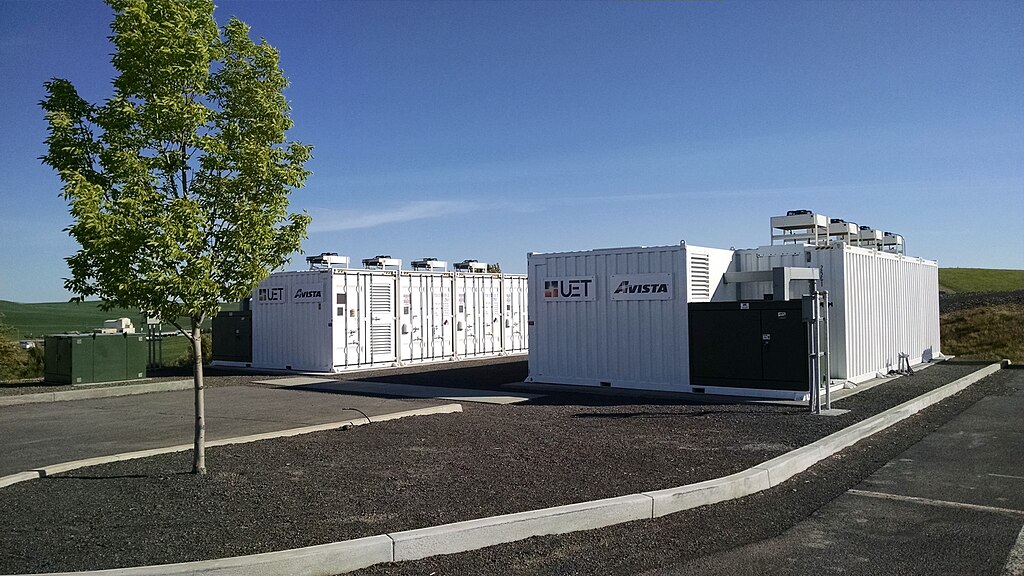





If the story of increasing electricity demand, with growth conservatively forecast to increase 34% by 2050, is to include renewable energy, it will necessarily feature battery-based energy storage systems (BESS). In fact, energy storage is likely be a key player in any future energy mix.
North Carolina-based energy management and services firm FlexGen is planning for massive increases in BESS capacity in the U.S., primarily driven by loads from new data centers. Developer of a family of battery, energy and plant management and analysis applications built on its HybridOS software, FlexGen is adding capabilities to keep up with ballooning demand and new requirements on both sides of the meter.
At the same time, the role of grid storage has changed markedly in half a decade, with old economic models giving way to market realities and perhaps new opportunities. FlexGen’s executive vice president of business development, Jason Abiecunas, shared his thoughts with pv magazine USA on how BESS enables solar to reach its full potential and why it is indispensable for reliable future capacity increases.
pv magazine: There has always been an association of BESS with solar. It is the combination with batteries that basically enables solar to be a dispatchable resource. Otherwise, it’s not. Otherwise, there’s intermittency. There are all the issues that we all know about.
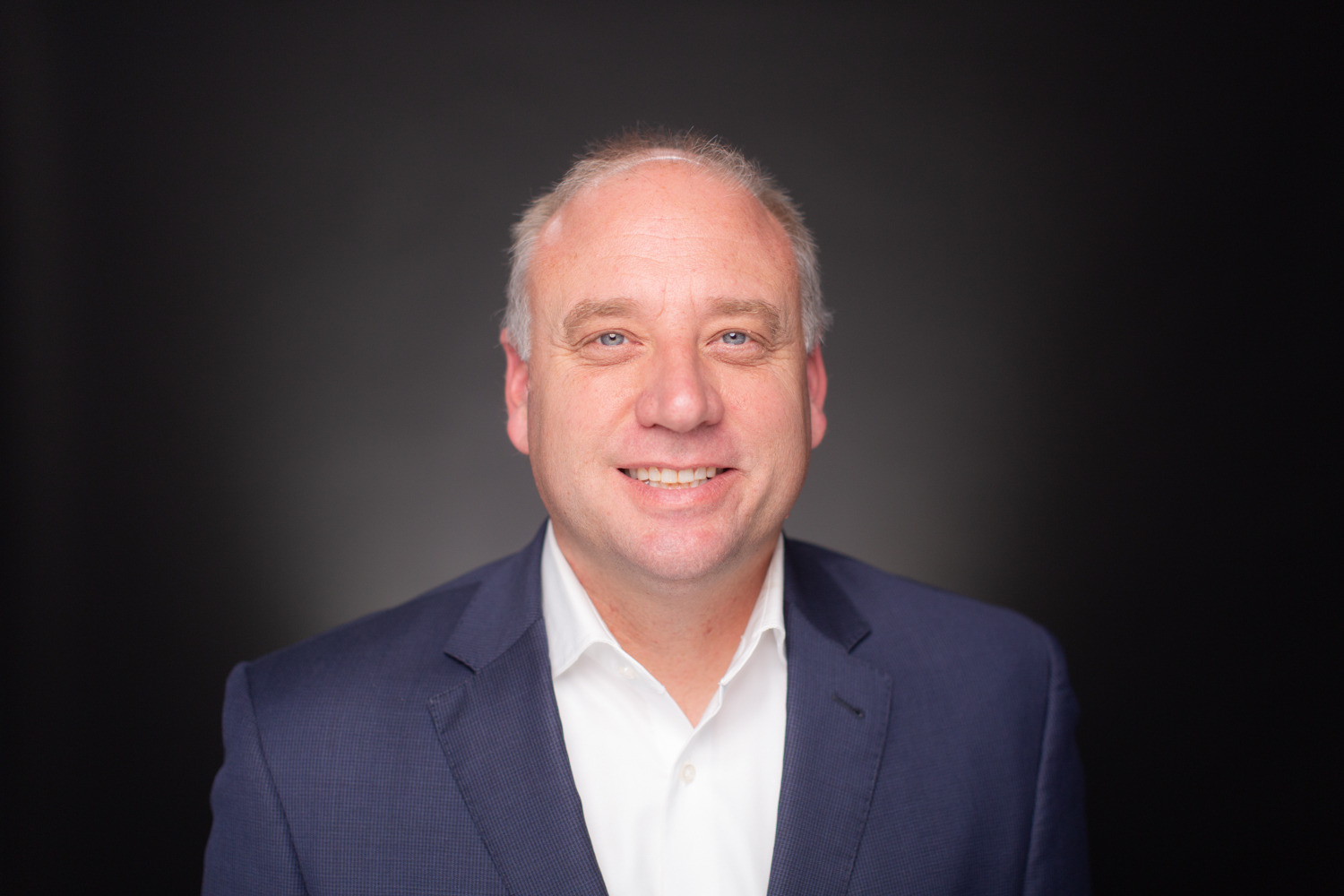 Jason Abiecunas: The really cool thing about battery storage as an application is that it’s a Swiss army knife for the grid. It’s a time machine in terms of moving generation to times of consumption. A lot of demand for storage is as a balancing resource to capture the solar that’s being dumped in high-resource regions like California and use that at productive times.
But it’s really there to make all the other resources work better. In a lot of cases, such as the projects we’re deploying with Alliant Energy in the upper Midwest, new storage capacity is co-located with some of the utility-scale solar that was built several years ago. So, storage is now being added to those sites to provide a more reliable resources for the grid.
pv magazine: I see a lot of projects that are not necessarily solar related that are incorporating significant storage capacity. Pacifico Energy’s GW Ranch project in Texas comes to mind: There are provisions for solar but there will definitely be battery storage. Is storage becoming the senior partner in solar-plus-storage projects?
Jason Abiecunas: The overall grid in Texas offers a wonderful example of how they work together. When [winter storm] “Uri” came through in February 2021, there was a relatively small amount of energy storage on the Texas grid. There were a lot of issues with fossil units tripping offline, but their energy storage did play a key role in keeping at least parts of the grid operational at that time.
You fast-forward a few years to what we just experienced this winter and there’s a lot more renewables on the Texas grid, but there’s also a lot more storage on the grid. It weathered the storm very well. Texas didn’t have the sorts of problems experienced in the Northeast.
I think you can extend that to what we saw in Spain last year with the widespread outage. Yes, there was a lot of solar but almost zero battery storage on the grid. Since, we’ve expanded our business into Europe and are deploying our first projects there. But we’re actively working on this with a number of the owners in Spain to bring new controls and battery storage onto those solar PV plants and make them more reliable resources for that grid.
pv magazine: They had to burn a lot of oil in Massachusetts and New York to keep the lights and heat on, even though those are both very solar friendly states. It’s interesting in Texas that energy storage did exactly what it was designed to do. On the other side of that, though, BESS owners and operators are finding it harder to make money in that market with so much storage capacity available.
Jason Abiecunas: We’ve seen prices for ancillary services sort of come down as there’s more energy storage. You’ve also seen arbitrage sort of start to level out because of energy storage. In a way, that’s challenging for energy storage operators, but the technology is doing what it’s supposed to do. It’s smoothing the operation of the grid and making the grid more efficient for Texas.
And you’re seeing the same thing in California and with our customers in Iowa and Wisconsin; they really need storage as a reliable capacity resource. They need it to better integrate their solar and wind, but they also need it to help them more efficiently operate their fossil assets to keep them at an efficient operating point rather than cycling those assets up and down.
pv magazine: So, even if the storage is serving its function, both grid stabilization and rising to the occasion during deep freezes and other events, the economics of it change over time.
Jason Abiecunas: What we’re seeing with these assets that have been on the grid for maybe three-to-seven years is that their usage really changes over time. So, there were different grid requirements with ERCOT [Electric Reliability Council of Texas] and other operators then as opposed to now. A plant that may have be designed initially to provide ancillary services might now primarily be operating in an arbitrage mode.
One of the major events in 2025 was ERCOT’s rollout of RTC+B – the Realtime Co-optimization Plus Batteries protocol – that introduced some new ancillary services, but it required reinterpretation of an operator’s connection to ERCOT and updates to all the control systems that we had operating on the grid. Our team worked closely with the ERCOT team to interpret the rules. And we had cases where ERCOT told us we had good interpretations about how the rollout should happen. As a result, we were one of the first to have our fleet in compliance.
pv magazine: I think it’s fair to say that a lot of capacity that is online now, both in terms of solar generation and energy storage capacity, was planned at a time when circumstances were different. There was a long period where energy demand was rather flat and the goal was to phase out fossil-fuel burning plants and replace them with renewables. Battery storage seemed to be a key partner in achieving this. The structure of federal tax incentives and state mandates supported this so-called energy transition. Now, with demand projected to curve up radically from above all data centers, all the previous assumptions seem to be changing.
Jason Abiecunas: We’ve seen this coming for a couple years, and you know some of our founding technical members are from [power management company] Eaton and doing data centers and UPS [uninterruptable power supply] solutions from kind of way back in the day. Now such projects are being built at this astounding scale.
But what we’re also seeing with data centers now, with AI inference and training loads, is that they flutter, cycling more like the heartbeat of a hummingbird than that of an elephant. Demand changes constantly on a very small timeline. Whether those facilities are connected to the grid or they’re connected to on-site generation, that fluttering causes massive problems in terms of power quality and reliability of the power system. And if you’re connected to gas turbines or engine generators, those resources absolutely cannot handle those load steps.
pv magazine: I can’t imagine any of these new data centers that are being built right now not having some sort of battery storage element to them. With your software, do you want to reach down into those sources of generation, even to those other types of sources like linear generators that you hadn’t necessarily been looking at before?
Jason Abiecunas: A hundred percent. We have already had the capability of acting as a supervisory control overall for – you know, it’s a stretch to call them microgrid systems connected to these large data centers. They’re full-on grids. But yeah, the issues are around the load steps that these data centers introduce, whether it’s a linear generator or a fuel cell or a gas turbine or solar or wind or any of those resources. They really can’t handle what these data centers are putting out.
What battery storage is able to do is dampen out those operating disturbances and keep the overall system stable, keep it operating within spec and keep it reliable. So, for us it’s an interesting scale up from the things we were doing with a couple of engines in an oil field a decade or so ago. It’s bigger and faster, but it’s the same technology that we deployed and demonstrated many years ago in terms of managing power quality.
pv magazine: Just to pick up on that, one of the things we hear talked about is increasing demand from electrification and manufacturing. Even to expand your existing manufacturing capability, you can’t just get that from the grid necessarily. You say, “I want another 7 MW.” It’s not available. Then they have to look at developing some on-site generation. And that’s going to require more batteries, and adding energy management, storage management to that. So, more microgrids.
Jason Abiecunas: Yeah, absolutely. I think we’ve been in kind of a stagnant situation for so many years with load growth, but now we’re seeing real load growth on the grid. Over and above very large industrial loads, we are seeing more demand for reliable capacity on the grid.
When I think about the data center projects that we’re working on now, the vast majority of those have a fairly large component of on-site generation. Many of those projects still have some sort of grid connection, but not all of them. It’s really just becoming part of the standard design for these large data center complexes to have some gas, solar, batteries and integrate that with the power system.
It’s mission critical to get them online faster. A couple of years of time saved is huge value to these organizations. You can’t get anything online as fast as you can get battery storage. Solar is a bit longer but still on a shorter time scale relative to a five-to-seven-year wait for a combined-cycle gas turbine.
Our software controls are an essential resource in managing that overall system. The value is being that hub of control to enable you implement the battery storage piece and then implement an overall reliable microgrid.
pv magazine: What your software does, essentially, is enable a storage facility built yesterday to do one thing to do another thing tomorrow. Needs and opportunities are going to be constituently evolving. It seems that having this ability to manage power at a very granular level is essential for going forward with any kind of large-scale battery storage project.
Jason Abiecunas: It’s like your electric vehicle, in a way. You get software updates that continue to improve the performance of that asset over time and tackle new challenges. One of the things that we developed last year that we’re starting to roll out to customers is our power plant controller.
At one of our sites, we had just provided the batteries and they had a separate controller on their solar PV plant. They told us, “You know, we’re having trouble with our solar controller. The battery plant is working really well. Can you guys give us a controller and just integrate the whole stack? Can you take care of my solar plant as well?”
We looked at this, and even though we had not provided solar plant controls in the past, we know how to control inverters. We know how to control systems. We thought we can handle that. So, we went into development on that solution and are now rolling that into the field.
This content is protected by copyright and may not be reused. If you want to cooperate with us and would like to reuse some of our content, please contact: editors@pv-magazine.com.




By submitting this form you agree to pv magazine using your data for the purposes of publishing your comment.
Your personal data will only be disclosed or otherwise transmitted to third parties for the purposes of spam filtering or if this is necessary for technical maintenance of the website. Any other transfer to third parties will not take place unless this is justified on the basis of applicable data protection regulations or if pv magazine is legally obliged to do so.
You may revoke this consent at any time with effect for the future, in which case your personal data will be deleted immediately. Otherwise, your data will be deleted if pv magazine has processed your request or the purpose of data storage is fulfilled.
Further information on data privacy can be found in our Data Protection Policy.