





The Environmental Protection Agency (EPA) issued a final rule Thursday morning formally repealing the 2009 Greenhouse Gas (GHG) Endangerment Finding.
The move, announced by Administrator Lee Zeldin alongside President Trump in the White House, eliminates the scientific and legal prerequisite used for nearly two decades to regulate carbon emissions and provide federal support for the transition to clean energy.
By rescinding the finding, the EPA has effectively removed the statutory basis that allowed the agency to regulate carbon dioxide as a pollutant under the Clean Air Act.
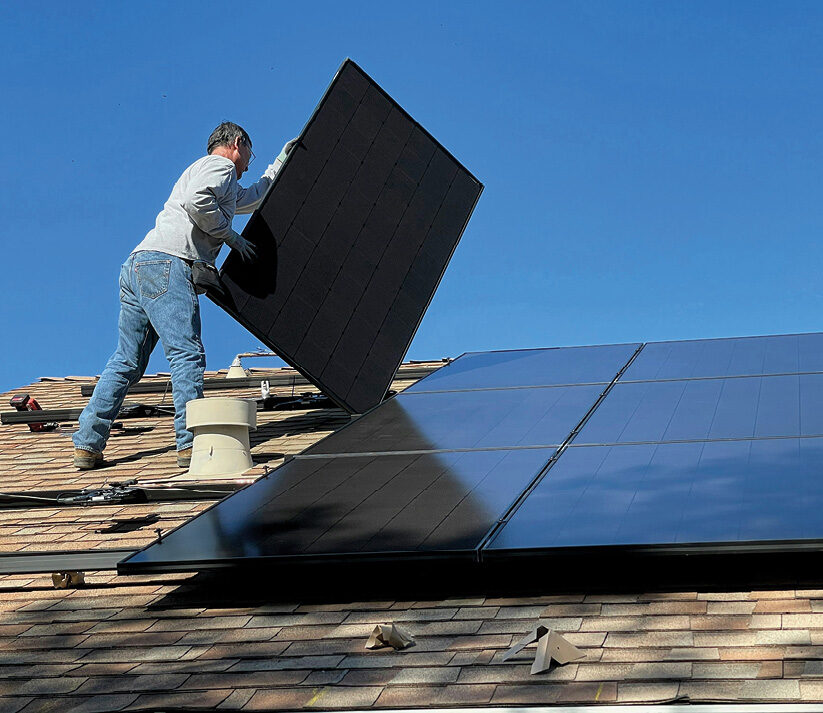
While the immediate focus of the announcement was the elimination of vehicle emission standards, the decision has immediate implications for the solar and energy storage sectors.
Impact on solar
The Endangerment Finding served as the legal foundation for federal programs prioritizing carbon reduction. The Trump administration has already moved to claw back billions in clean energy funding, including $7 billion from the “Solar for All” program.
Industry analysts suggest that without the Endangerment Finding, the legal basis for several Inflation Reduction Act (IRA) provisions, specifically those framed as “climate pollution reduction” grants, becomes more vulnerable to litigation.
If greenhouse gases are no longer legally classified as a threat to public health, opponents of solar subsidies can argue the EPA lacks the authority to prioritize low-carbon energy sources over fossil fuels.
Legal precedent
The EPA’s decision leans on recent Supreme Court rulings, including Loper Bright Enterprises v. Raimondo and West Virginia v. EPA.
Administrator Zeldin argued that the 2009 finding was a “legal fiction” and that major policy shifts regarding the economy and energy must come from Congress.
The solar industry is already facing a series of legal and policy shifts under the “One Big Beautiful Bill Act” (OBBBA), which compressed tax credit deadlines. Wind and solar facilities must now begin construction before July 5, 2026, to qualify for tax credits under Section 45Y and 48E.
Global competitiveness
Environmental groups, led by the Environmental Defense Fund (EDF), have vowed to challenge the repeal in court. EDF President Fred Krupp said the decision “endangers all of us” and ignores the innovation sparked by clean energy standards.
Industry experts warn that the move could increase policy uncertainty, a factor that may stifle private investment.
Chris Field, Director of the Stanford Woods Institute for the Environment, said the scientific evidence for the risks of greenhouse gases has “dramatically” increased since 2009, despite the EPA’s new determination.
The Department of Justice is expected to face lawsuits from environmental groups and state attorneys general. For now, the U.S. solar market faces a period of regulatory transition as the administration shifts focus toward fossil fuel energy sectors.
This content is protected by copyright and may not be reused. If you want to cooperate with us and would like to reuse some of our content, please contact: editors@pv-magazine.com.





By submitting this form you agree to pv magazine using your data for the purposes of publishing your comment.
Your personal data will only be disclosed or otherwise transmitted to third parties for the purposes of spam filtering or if this is necessary for technical maintenance of the website. Any other transfer to third parties will not take place unless this is justified on the basis of applicable data protection regulations or if pv magazine is legally obliged to do so.
You may revoke this consent at any time with effect for the future, in which case your personal data will be deleted immediately. Otherwise, your data will be deleted if pv magazine has processed your request or the purpose of data storage is fulfilled.
Further information on data privacy can be found in our Data Protection Policy.