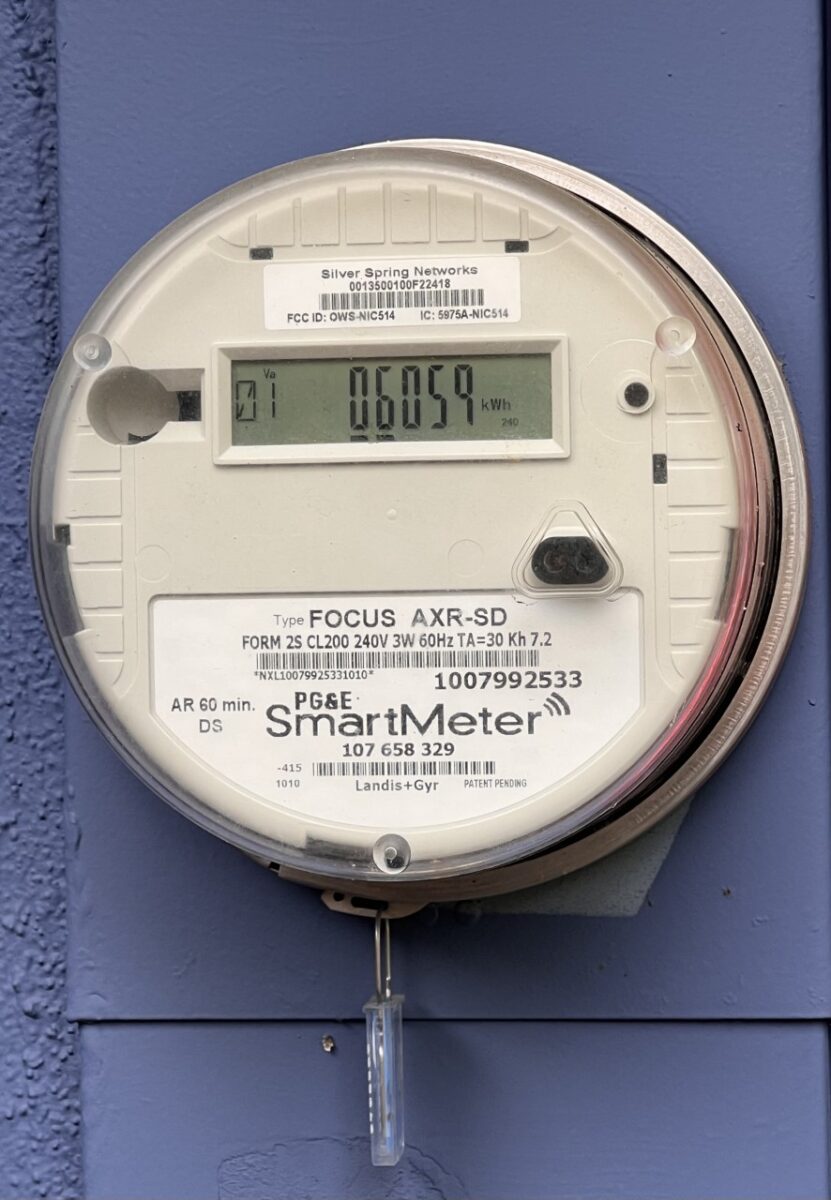





In California and other high-cost states like New York and in the New England states, some utilities are imposing or proposing to impose fixed charges on customers while lowering variable energy charges. They contend that this will accelerate electrification. Is that a valid premise?
Not in my opinion. It’s just a shell game between fixed and variable charges. If fixed charges are raised and energy charges are lowered, low usage customers will see higher bills, medium use customers may not see any change in their bills, and high usage customers will see a lower bill.
Many low usage customers are frugal in how they use energy, or energy efficient, or people who have installed solar panels on their roofs. This shell game will penalize them for using electricity and they will have no motivation whatsoever for investing in electrification, to further raise their electric bills.
High usage customers already have high bills. Their bills will go down by a few percentage points but that will be insufficient to motivate them to invest in electrification, which would further raise their bills.
Medium usage customers will not see a change in their bills and will have no motivation to invest in electrification.
Despite knowing all this, three investor-owned utilities regulated by the California PUC will be rolling out these fixed charges in the next several months. One of them, SCE, rolled them out in November. PG&E, which serves 5 million customers in northern California, will impose a fixed charge of $24 a month in March 2026 on non-low-income customers who account for roughly a third of all customers.
The latter will get a substantial discount on their bills which ranges from 18-35 percent based on their income. It is paid for by all other customers. For low income customers, the fixed charge will range from $6-12 a month. They will see lower bills when the fixed charge is implemented. But they are unlikely to electrify either their homes or their vehicles. Many of them rent their homes and don’t own vehicles.
PG&E has estimated how this change in rate design will affect three categories of non-low income customers: low users, medium users and high users.

Small customers who use 200 kWh a month will see their bills rise by 21%. Customers who use only 100 kWh a month will see a much steeper increase, possibly as high as 50-60% range. These might be singles living in small apartments, or couples living in San Francisco, or families living in very energy efficient homes or homes with solar panels. Why would they invest in electrification when their bills have gone up dramatically?
Large customers using 700 kWh a month will see a modest decrease in their bills, of 2.6%. That is not going to move the needle on electrification.
The premise that raising the fixed charge will accelerate electrification is flawed. Incidentally, the $24 is based on what SMUD, a municipal utility, had in place a couple of years ago. If it is legitimate to copy SMUD’s fixed charge, why not copy their energy charge, which is substantially lower than PG&E’s charge? PG&E’s customers, who are currently paying nearly 41 cents/kWh, would be elated if their usage charge would drop by two and a half times.
AB205 is cited as the rationale for raising the fixed charge. But it did not mandate the charge. It simply said the regulator may consider imposing a fixed charge and lowering the energy charge.
Even if a fixed charge was going to be imposed, it should have been done gradually. Currently, the fixed charge does not even exist. Going from a value of zero dollars a month to $24 a month violates a fundamental tenet of regulation: gradualism.
When the idea was first proposed in California, I co-authored an article with economists Jim Lazar and Richard McCann that critiqued it.
And, if the ultimate goal is to promote electrification, a much better way is to price key electrification loads, such as heat pumps and electric vehicles, at marginal cost.
Finally, it is a fact that households that have installed solar panels are more likely to invest in electrification technologies. The economics of solar installations will be hit hard once the federal income tax credit expires. California, along with other high-cost states, should take steps to offset the damage caused by the removal of the federal tax credit.
Ahmad Faruqui is an economist who has worked on energy issues in two dozen countries located on six continents over the past four decades.
The views and opinions expressed in this article are the author’s own, and do not necessarily reflect those held by pv magazine.
This content is protected by copyright and may not be reused. If you want to cooperate with us and would like to reuse some of our content, please contact: editors@pv-magazine.com.

I am a PG&E customer with solar. My baseline was $12 a month. Now it is $24 a month. More money for PG&E from the solar people they dislike for trying to save money.
The writer did not point out the fact the those of us who invested a lot of money in solar may be forced to disconnect from the grid at some point!
California regulators and utilities desperately urged homeowners to put solar panels on their homes to reduce the load on the grid and reduce the rapidly growing energy demand. But oops! It was too successful and the utilities weren’t making enough money, so they coerced the regulators into making solar a bad bet. But that wasn’t enough. They then decided to raise rates on the people who had spent the most to save energy, or owned the smallest homes. I guess they figured those ratepayers wouldn’t fight back.
Time will tell. The movement to turn electric utilities into publicly owned entities is growing, and the presidential hopeful who installed the puppets on the board responsible for rate approvals may find that the utilities won’t cough up enough campaign money to cover the funds withheld by disgruntled ratepayers.
Rooftop Solar Customers have been hit hard by NEM 3.0 in California where the utility takes away 75% of excess generation that goes back to the grid without compensation already and then topping that off with an additional fixed charge will slow on-grid installations of rooftop solar even more with all the Federal Tax incentives going away. With newer DC systems with storage, going completely off grid may be the only way forward to lose the electric meter and have a natural Gas generator backup along with the off grid solar. I built such a system and ran off grid for 3 months with it during a re-model of my home in 2023. Many in Hawaii have also done off grid as well as remote homes around the country and in Australia.
This is literally just taking money from the poor to give to the rich.
They have to compensate for the power not actually going into the grid Believe It or Not electricity just like pumping water or air against existing pressures Renewables can only put in about 10 to 15% of advertised amount or extra electricity it’s easily demonstrated with a volt amp meter and fourth grade math called Ohm’s law with the optional amp clamp only takes a second to demonstrate the ignorance of Renewables assuming you could do the math
Good breakdown of how shifting to higher fixed charges and lower per‑kWh energy rates can end up raising bills for low‑usage and efficient customers while offering only small savings for heavy users