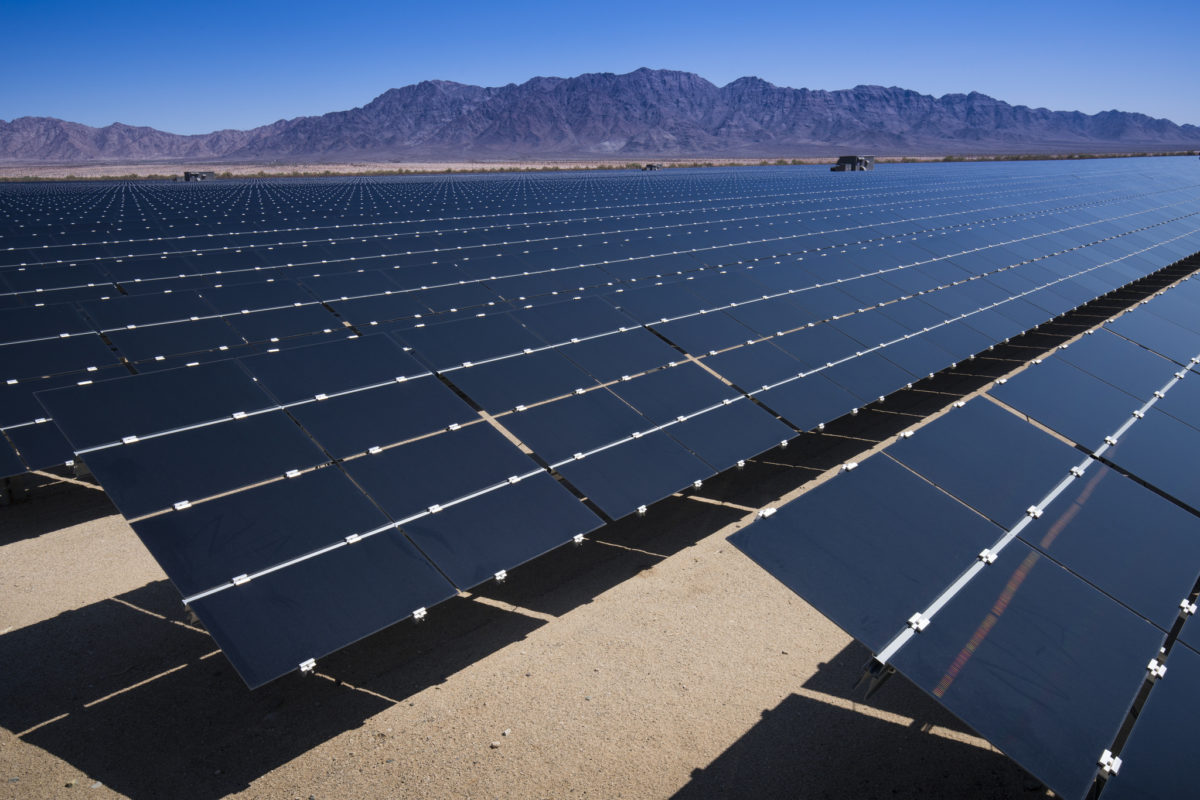





An academic paper published in Communications Earth & Environment has introduced a systematic methodology that leverages deep learning and high-resolution aerial imagery to quantify the land required for utility-scale solar projects in the U.S. Western Interconnection.
The study aims to resolve previous inconsistencies in land-use estimates by analyzing 719 solar facilities, providing crucial data for future energy systems planning and lifecycle assessments.
The core of the study involved training a neural network to delineate the total project footprint—including access roads, fencing, and buffer zones—rather than just the immediate panel area, a limitation in earlier analyses. The resulting dataset covers over 13 GW of installed capacity and reveals vital statistics on land efficiency.
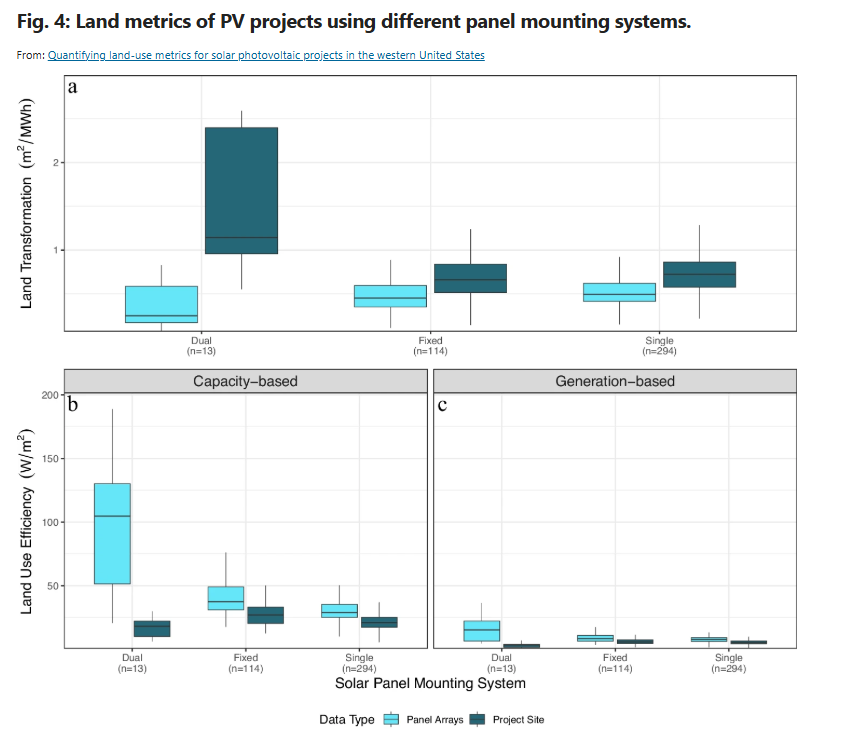
The mean capacity-based land use efficiency across the sample was quantified at 24.7 W per square meter, with significant variability across projects, found the study.
The study found dual-axis tracking systems surprisingly demonstrated lower project-level land use efficiency compared to fixed-rack or single-axis systems. The paper attributes this to the need for greater spacing between tracking panels to prevent shading and allow for full movement, resulting in a larger overall footprint.
The research also classified the land cover utilized by these projects. While 65% of the total installed capacity is now on “developed” land, historical data indicates that 38% of these sites were previously cultivated cropland.
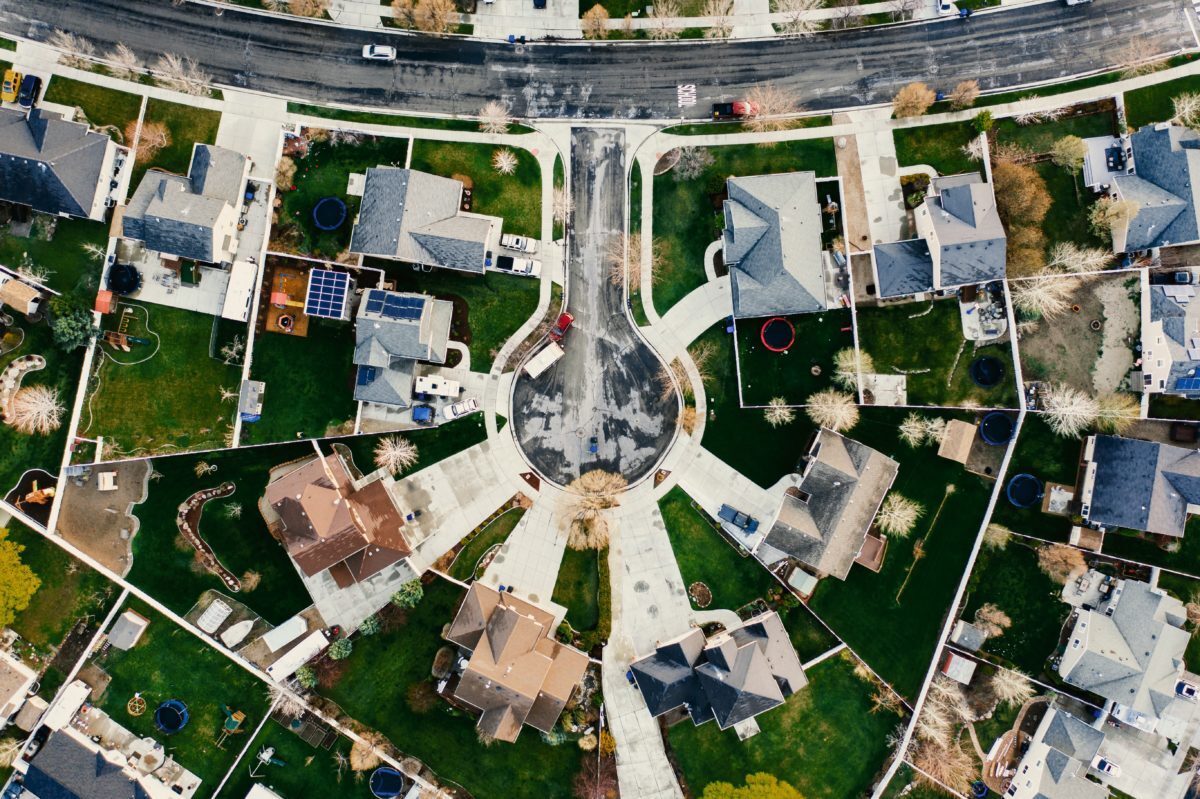
These findings highlight opportunities for “land sparing” strategies. Developers can mitigate environmental impacts by prioritizing placement on already-disturbed surfaces, such as existing rooftops or brownfields.
The researchers said the prevalence of projects on former agricultural land also highlights the potential for expanding agrivoltaics, the dual use of land for both solar energy generation and farming operations, to optimize resource use. Find the full study and methodology here.
This content is protected by copyright and may not be reused. If you want to cooperate with us and would like to reuse some of our content, please contact: editors@pv-magazine.com.




By submitting this form you agree to pv magazine using your data for the purposes of publishing your comment.
Your personal data will only be disclosed or otherwise transmitted to third parties for the purposes of spam filtering or if this is necessary for technical maintenance of the website. Any other transfer to third parties will not take place unless this is justified on the basis of applicable data protection regulations or if pv magazine is legally obliged to do so.
You may revoke this consent at any time with effect for the future, in which case your personal data will be deleted immediately. Otherwise, your data will be deleted if pv magazine has processed your request or the purpose of data storage is fulfilled.
Further information on data privacy can be found in our Data Protection Policy.