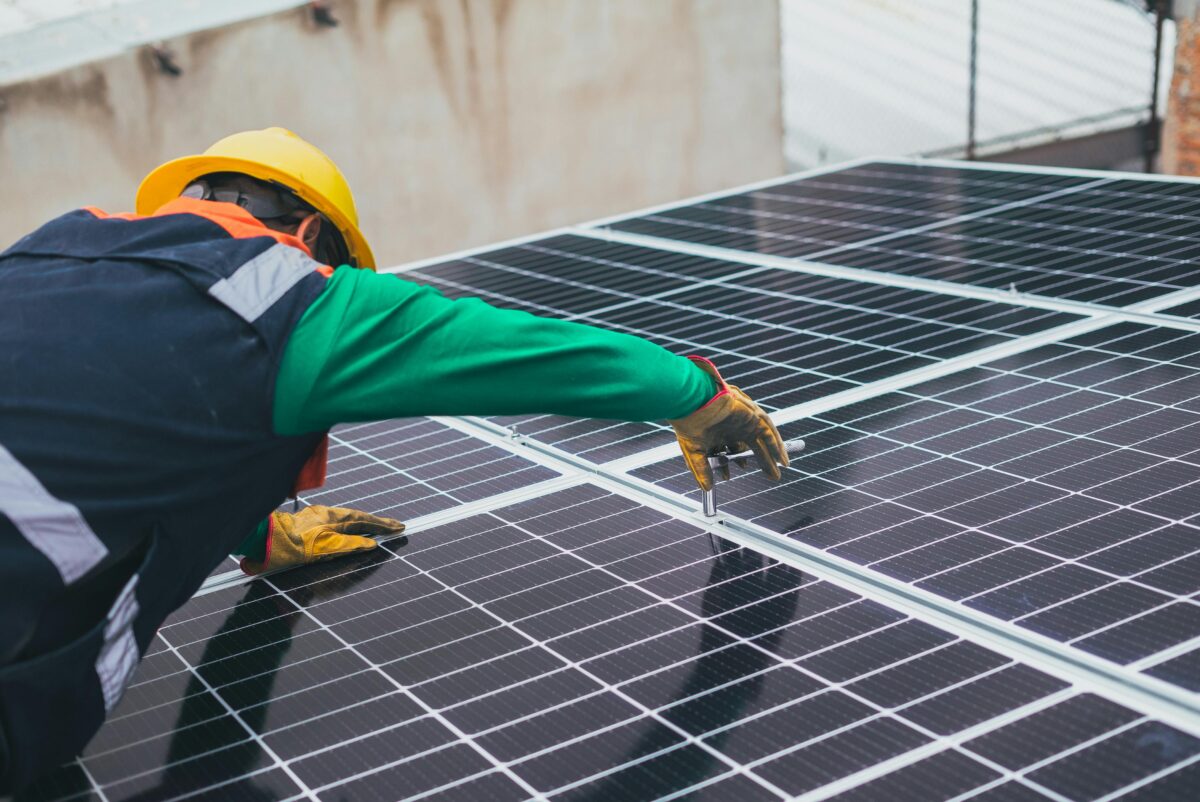





The U.S. solar industry has long been defined by its volatility. Changes to federal and state policy, tariffs, incentives and net metering rules often lead to major shifts in project economics, upending the solar marketplace and leading many in the industry to refer to their experience as “riding the solar coaster.”
Major changes to solar policy in 2025 — including the termination of the Section 25D residential clean energy tax credit in the One Big Beautiful Bill Act — are sure to make for an interesting ride in 2026.
As the industry looks ahead to the coming year, pv magazine USA asked several experts in the residential sector to share their predictions. The responses revealed a few broad trends, including:
-
Successful installers will diversify their product offerings
-
Third party ownership will dominate the market, but differ from its current form
-
Equipment sourcing will be impacted by new federal rules
-
VPPs will continue to grow, becoming an important way solar provides value to owners
-
Automation will reduce costs
Successful solar companies will diversify
Many in the industry have recently made the assertion that successful solar companies must sell more than just solar. Our sources tend to agree.
Rex Liu, VP of Product Management at Generac, expects installers will evolve “from single-product sellers to comprehensive home-energy providers,” and predicts solar companies will expand into HVAC, storage, smart home tech, and backup power.
Dean Chiaravalloti, Chief Revenue Officer at Solar Insure, says battery installations are responsible for this shift. He says “contractors who stay in touch after installation and offer monitoring, maintenance, and upgrades are earning long-term trust and creating recurring value.”
Third party ownership will dominate… and change
This prediction follows logically from the one above, as third-party-ownership (TPO) providers have long taken on the mantle of home energy system advisors. However, while traditional TPO agreements lock a customer into a 25-year contract that includes monitoring and maintenance, experts say there is a trend toward a new kind of pre-paid, short-term TPO agreement.
Under these new-style agreements, the TPO provider would own the system for only between 5 and 10 years, then transfer ownership to the homeowner. This would allow the TPO company to claim all the tax benefits of the system and pass some of the savings along in the sale.
Rohan Humphrey, VP of Research and Analytics at Ohm Analytics, says the adoption of this prepaid TPO model is “faster than expected.” He says his company’s models initially predicted a 50% drop in customer ownership of home solar installations in 2026, combined with a modest 10-to-15% growth in the TPO segment, but that the TPO picture has changed due to the “accelerated go to market strategy of well capitalized new entrants in the (pre-paid lease) space.”
Federal rules will affect equipment sourcing
TPO systems installed through the end of 2027 can still qualify the installation company for Section 48E tax credits — including bonuses for using domestic content. But tax credit eligibility for these installations is now subject to new restrictions against using equipment produced using “material assistance” from Foreign Entities of Concern (FEOC).
Marty Rogers, GM of North America at SolarEdge says “2026 will mark the turning point when domestic content and non-FEOC supply chains go from incentive to requirement. Manufacturers with U.S. production and tariff-resilient supply chains will have the strategic advantage in TPO procurement.”
However, experts don’t expect the final IRS rules about what constitutes “material assistance” to be published until late 2026. Humphrey points out that this lack of clarity on FEOC is causing TPO providers to take a conservative approach to the products they allow on their approved vendor lists (AVLs). He says this has resulted in a tightening of eligible supply, which could limit growth in the TPO market until domestic equipment suppliers can ramp up their output.
On the other hand, manufacturers who can’t prove their non-FEOC bona fides could potentially step in to serve the residential cash-purchase market, because there is no tax credit (and therefore no eligibility restrictions) for those customers. Humphrey expects products from these companies to be competitive in states with higher energy costs, as long as installers can compete on price with a prepaid lease product.
VPPs will continue to grow
In recent years, virtual power plants (VPPs) have helped grid operators handle periods of peak demand, and at the same time, offered extra financial incentives to solar-plus-battery installation owners who participate.
Chiaravolloti says VPPs “are quickly becoming a mainstream grid stabilization strategy,” and predicts the number of states that offer the programs will double. Rogers adds that “smart inverters and batteries are becoming fully grid-interactive assets that are dispatchable, responsive, and valuable far beyond self-consumption.”
James Showalter, founder of EG4 Electronics, also expects VPPs to expand into more markets. He thinks payments for participation can replace the value of the federal tax credit, and advocates for installation financing with “a monthly payment that decreases as VPP incentives pay the lender directly.”
This novel approach could provide further benefits of operational stability for participating systems, as the lenders themselves would have a vested interest in keeping them in tip-top shape.
For now, though, VPPs have a long way to go to become more mainstream. According to a recent report by Wood Mackenzie, the share of VPP capacity served by the residential market is just 10.2% of the overall 37.5 GW in total VPP capacity. The report also says that batteries represent just 61% of the capacity served by smart thermostats.
Automation will reduce costs
The issue of installation affordability has long been a major topic of discussion among residential solar experts, and the end of the Section 25D tax credit has placed an immediate emphasis on bringing down costs.
Liu is among those who believe in a systematic approach to improving efficiency. He says “AI-driven optimization will accelerate adoption. Smarter automation and easier installs will make energy independence more accessible to mainstream homeowners.”
One expert who agrees is Ravi Mikkelsen, CEO of Atmos Financial, who says a cash price of $2 per watt is the key to improving the value proposition of residential solar. He says some technology-first solar companies that use automation to streamline their operations have already hit that target.
Free services like OpenSolar and SolarAPP+ are already helping installers automate preliminary design, sales, and permitting, which often account for a large portion of the final installed cost of a solar system.
There are some signs of widespread cost decreases, including recent numbers from EnergySage that show an average installed cost of $2.48 per watt for systems sold through its online platform. However, those prices are for installations with an average size of 11.7-kW, far above the national median of 7.2-kW.
In the long term, the cost to purchase a home solar installation is expected to compare favorably with the cost of paying an ever-increasing electric bill. Humphrey estimates that rising utility rates and operational efficiencies will result in long-term support for a healthy residential solar marketplace beyond 2026.
This content is protected by copyright and may not be reused. If you want to cooperate with us and would like to reuse some of our content, please contact: editors@pv-magazine.com.





By submitting this form you agree to pv magazine using your data for the purposes of publishing your comment.
Your personal data will only be disclosed or otherwise transmitted to third parties for the purposes of spam filtering or if this is necessary for technical maintenance of the website. Any other transfer to third parties will not take place unless this is justified on the basis of applicable data protection regulations or if pv magazine is legally obliged to do so.
You may revoke this consent at any time with effect for the future, in which case your personal data will be deleted immediately. Otherwise, your data will be deleted if pv magazine has processed your request or the purpose of data storage is fulfilled.
Further information on data privacy can be found in our Data Protection Policy.