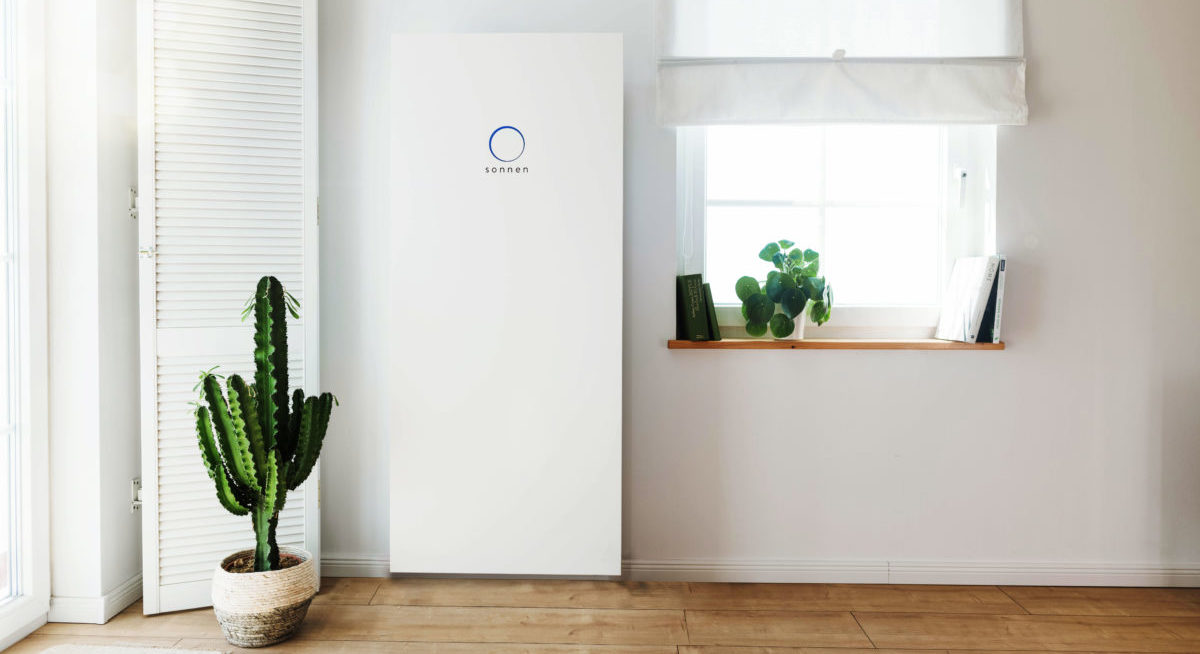





Sonnen, a provider of smart energy storage and virtual power plant (VPP) technology, announced it has released an optimized time-of-use solution designed to maximize customer value under California’s net energy metering (NEM) 3.0 regime.
NEM 3.0 in California cut the value of exporting excess solar generation to the grid by about 75% on average, making new solar-only rooftop installations less valuable than previous iterations of NEM rate structures. By including a battery with smart time-of-use based controls, homeowners can ensure that their PV array is generating value under the new rate structure.
With the new sonnenConnect program, the grid-interactive VPP combines the company’s batteries with an algorithm-based bill management system. The company said this results in electric bill reductions similar to, or exceeding expectations for NEM 2.0 systems.
The company will connect its batteries in a statewide network, responding to price signals embedded in the NEM 3.0 time of use rates. The company said this coordination of resources represents an acceleration of the energy transition.
The VPP program allows customers to participate in the CAISO wholesale energy market, earning cash rewards for balancing the California grid. As part of the program, customers can also access proactive backup power services to mitigate the impact of planned and unplanned grid outages.
Sonnen said its system is designed to offset peak loads daily, regardless of weather-related impacts on solar production. The time-of-use algorithm analyzes the day ahead, preparing for potential weather effects and planned grid events. In the cast of predicted insufficient PV generation the next day, the algorithm will partially charge the battery during super off-peak periods.
Sonnen said this will lead customers to not pay peak-period pricing at any point throughout the year, and that solar will not be wasted by way of low-value grid injection.
“Our German heritage has taught us a great deal about the potential of grid optimized energy storage systems, functioning as a single grid asset, providing authentic grid services for society in a manner that accelerates true energy transition,” said Blake Richetta, chairman and CEO of sonnen Inc.
With the VPP offering, Sonnen will expand its partnership with Baker Home Energy, serving customers in southern California. The company targets enrolling 6,000 batteries in Baker’s ChargeOn program in by 2025.
“With ChargeOn, Baker and sonnen’s joint VPP program, we have already differentiated ourselves from the competition by offering an unparalleled grid services package that generates cash rewards for our customers enrolled in sonnenConnect,” said Mike Teresso, President of Baker Home Energy.
This content is protected by copyright and may not be reused. If you want to cooperate with us and would like to reuse some of our content, please contact: editors@pv-magazine.com.





I am glad wealthy rooftop owners will not be so financially disencouraged out of the Sea Change, but this is still not enough. Removing – complete – control of energy pricing from utility scale solar energy developers, (why can they still have that?) is the best next move. Utility scale solar development has a place in the energy market, and it has
– physical places – where it can be part of the energy market. Those physical places are not in remaining irreproducible, irretrievable, uncompensably essential natural systems of desert Wildlands.
We all look forwards to better life with solar energy, just not done anymore, The Only Way! It Can Work! Right! —
— For commercial utility scale development corporations.
No part of the Mojave Desert was or is “free”, “unlimited” “wasteland”.
Mr. Kennedy,
“Sonnen said this will lead customers to not pay peak-period pricing at any point throughout the year…”
This statement is so wrong. To report this nonsense you must have misunderstood what they said.
Think about it: When the algorithm discharges the battery and the Sun has gone down where will a residential home get its power? The battery has been discharged so they have to dump you to the Grid! Happens almost every Friday to me in SoCal. I’ve been dumped to the Grid during “peak” power three times now (19Aug23, 2Sept23, and 16Sep23). On the 16th of Sep. I spent 4hrs and 48minutes on “peak” power, 3hrs on “off- peak power” and about 7hrs on “super off peak” power until the Sun came up the next day!
I’ve learned to adjust my battery’s buffer(% of charge it will not discharge below) to reduce the negative impact of their algorithm(s). Regardless what is said, at some point the customer gets dumped back onto the Grid which negates any advantage to the residential customer although Sonnen will have made their $$ (money) discharging the customer’s battery and SDG&E makes money when the customer is dumped back on the Grid whether it’s peak or off-peak or super-off peak periods- doesn’t matter to SDG&E. What a racket!
Someone is not telling you the whole story and I feel you are not asking enough questions to accurately report on this topic.