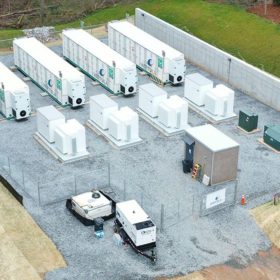
Duke Energy commissions 50 MW battery storage project at former coal site
The utility activated a four-hour duration lithium-ion system at its retired Allen Steam Station to manage rising solar capacity and provide grid reliability in the Carolinas.

Solar to surge 49% as EIA forecasts 70 GW of new capacity by 2027
Utility-scale solar is set to meet rising data center demand as generation in Texas nearly doubles and battery storage capacity in ERCOT more than triples by 2027.
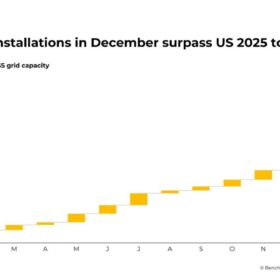
Global BESS demand jumps 51% in 2025 as installations top 300 GWh
Iola Hughes, Head of Research at Benchmark Mineral Intelligence, tells ESS News that 2026 is set to be another strong year for BESS, with forecast additions exceeding 450 GWh and no material supply constraints in sight. Meanwhile, the initial impact of rising lithium prices is already visible at the cell level, but the full effect has yet to ripple through to system pricing.
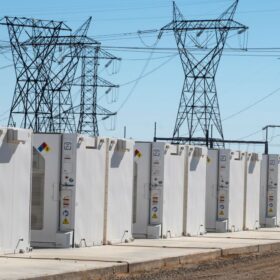
Fluence supplies 1.2 GWh Arizona project, NextVolt sells 1 GWh battery
NextVolt has offloaded a 1 GWh battery energy storage system (BESS) to Exus Renewables which will take on ownership long-term. Menawhile, the developers of a 1.2 GWh BESS in Arizona have partnered with Fluence for its GridStack Pro system.
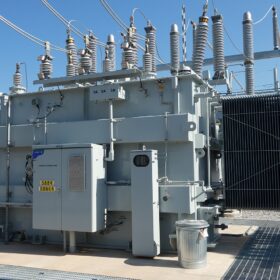
Easing the transformer procurement bottleneck
Anza’s Transformer Procurement Service aims to help solar developers meet new deadline requirements imposed by federal policy.
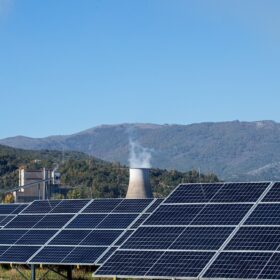
Global emissions rise 9% since 2015 as energy transition slows
McKinsey report finds solar and storage remain primary growth drivers while offshore wind and hydrogen pipelines fall behind 2030 targets.
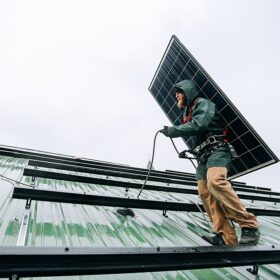
Electricity rate hikes slash commercial solar payback periods by 33%, says Wood Mackenzie
Soaring utility costs and rising power demand are recalibrating the financial outlook for the United States non-residential solar market.

U.S. withdraws from IRENA
Director-General of the International Renewable Energy Agency, Francesco La Camera, says the “door for continued cooperation remains open” following announcement the United States is withdrawing its membership.
2026 is set to be a year of reset, repowering, and resilient growth
As the solar industry navigates a transformative 2026, success belongs to the “middle market” innovators and service-driven firms mastering the billion-dollar repowering boom.

La Niña Ridge drives December solar gains across U.S. Southwest
In a new weekly update for pv magazine, Solcast, a DNV company, reports that December’s solar resource reflected a classic La Niña pattern, with suppressed irradiance in the Pacific Northwest and above-normal conditions across the southern U.S. A blocking ridge brought clear skies and strong solar gains to the Southwest and Texas, while cloud cover and fog reduced output farther north.