IEA urges countries to accelerate renewables deployment
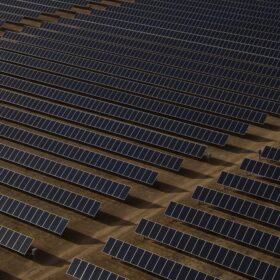
A new report from the International Energy Agency (IEA) suggests that the world could miss out on a target of 11,000 GW of global renewables capacity by the end of the decade, as agreed at COP28. It also predicts that solar will become the world’s largest source of installed renewable capacity, surpassing hydropower.

Sunrise brief: California did what?
Also on the rise: Longi announces 27.30% efficiency for heterojunction back contact solar cell. Heliene inks supply agreement with UGE for U.S.-made solar modules. And more.

Was 2023 the peak for global electricity sector emissions?
A report from Ember highlights how “a new era of falling fossil generation is imminent.”
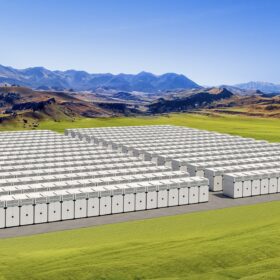
IEA calls for sixfold expansion of global energy storage capacity
The International Energy Agency (IEA) has issued its first report on the importance of battery energy storage technology in the energy transition. It has found that tripling renewable energy capacity by 2030 would require 1,500 GW of battery storage.
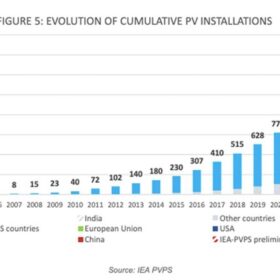
Global PV capacity hit 1.6 TW in 2023, says IEA-PVPS
The International Energy Agency (IEA) Photovoltaic Power Systems Programme (PVPS) has published a wide-reaching snapshot of the global PV market, covering installations, manufacturing, policy trends, and grid integration.
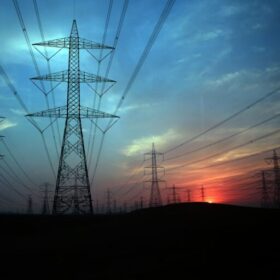
Optimizing photovoltaic grid integration through active power management
PV systems, surpassing minimum load demands in various regions, necessitate innovative grid integration measures. Active power management (APM), notably curtailment, emerges as a powerful solution here. By actively managing power peaks, PV systems can unlock new possibilities, contribute to grid stability, and enhance their overall value. The new IEA-PVPS Task 14 report encourages a shift in perspective, urging DSOs to explore the potential of APM instead of traditional grid expansion methods.

IEA-PVPS releases guide for applying innovation system approach to BIPV
IEA-PVPS has published a new handbook that provides support for Technological Innovation System (TIS) analysis for building-integrated photovoltaics (BIPV).
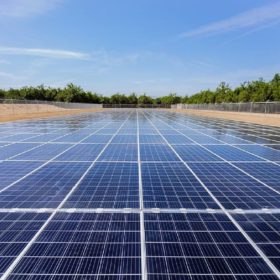
Driving down cost of solar, key to unlocking a green hydrogen future
Reducing the cost of solar electricity will be the key to unlocking the next chapter of the energy transition: a green hydrogen economy, according to Jim Tyler, CEO of solar technology company Erthos.
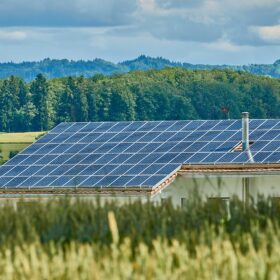
Renewable energy investors unanimously deem U.S. market attractive
In a survey, 100% of investors and developers see increasing investment opportunity in the U.S. renewable energy market when compared to other major countries.
Global investment in clean energy nearly doubles that of fossil fuels
For every dollar invested in fossil fuels, 1.7 dollars are invested in clean technologies. Five years ago, it was a one-to-one ratio, said the International Energy Agency.