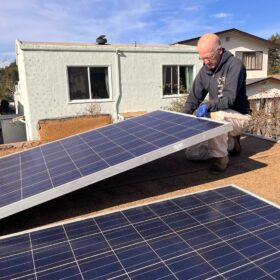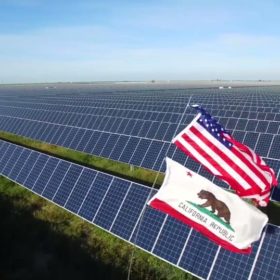
Solar power is targeted most often when California orders curtailments
Around 5% of utility-scale solar production was curtailed in 2020. Policy leaders are using a number of tools to reduce this waste of renewable energy.

Renewables are seeing declines in cost and market value: What gives?
Cost declines are helping consumers, but producers may slow deployments as market value headwinds getting conflict with decarbonization goals.

NREL scientists encourage ‘optimal’ PV curtailment
Solar curtailment might become a valuable aspect of future PV deployment, particularly if grid operators start focusing on ‘curtailment management’ instead of ‘curtailment prevention.’ Management would include measures such as flexible generation, storage, load flexibility, and regional coordination.
Overbuilding solar at up to 4 times peak load yields a least-cost all-renewables grid
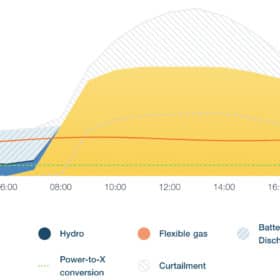
The global energy firm Wartsila found a least-cost renewables mix for the U.S. that involves overbuilding renewable capacity, but requires no seasonal storage, and needs only four to ten days of multi-day storage capacity. The analysis modeled meeting current uses of electricity, based on projected technology costs for 2030.
Duke warns solar producers it may cut power purchases
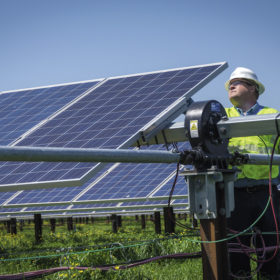
In the face of exceptionally low demand linked to the lack of commercial and industrial energy consumption and mild weather, Duke Energy has warned independent power producers and state regulators that the company may stop purchasing power that it’s contracted to buy from solar plants.

Tell the kids, that 50% solar powered future of ours, it’s going to work just fine – NREL says so!
National Renewable Energy Lab researchers hourly modeled the whole of the United States, and when more than half of all electricity is coming from solar power, there would be no technical deal killers, but many spring days with free electricity that we would have to learn to use, and a need to financially recognize the predictability and grid stabilizing attributes of solar and storage.
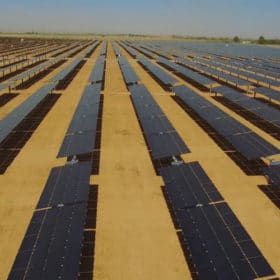
Designing for and monetizing curtailed solar power
Research by NREL and First Solar has produced highly accurate, real-time estimates of available aggregate peak power that a curtailed solar power plant can deliver to support the broader needs of the grid.

California sets a new solar output record – and it isn’t even spring yet (w/ charts)
On Saturday afternoon utility-scale solar output on California’s grid peaked at 10,745 MW – its highest level since last summer. More importantly, California is wringing greater flexibility out of its imports, meaning more renewables with less curtailment.

Demand-side flexibility: helping solve solar’s curtailment conundrum
This op-ed by WattTime takes a look at solutions to solar curtailment, including new software to enable greater demand-side flexibility.
Operating solar with reserve capacity enables more solar on the grid
A solar plant can increase its output by starting from a curtailment status and then reducing curtailment. If grid operators schedule in advance both solar curtailment and increased solar output, the cost-saving level of solar increases substantially.