How long will the lithium supply last?
Researchers have sounded the alarm. If no serious efforts are made on second-life battery use, recycling and vehicle-to-grid applications, decarbonization efforts may hit the buffers a lot sooner than expected.
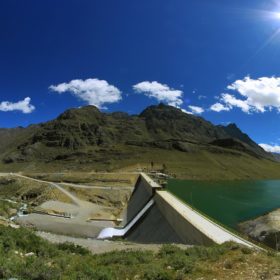
NREL projects up to 7.5 TW of global, hydro-linked floating PV potential
A study into the benefits of linking solar with hydro in a full hybrid system configuration has found global potential of 7,593 GW, for an estimated annual power generation of 10,616 TWh and a 20% reservoir coverage.
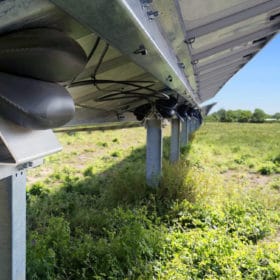
Sunfolding looks to disrupt the tracker industry with air pneumatics
With $32 million in series B funding and an ever-growing project pipeline, air-based tracker startup, Sunfolding, is hoping to increase its hold in the tracker market with tech that’s simple, light and can be installed on terrain previously thought untouchable.
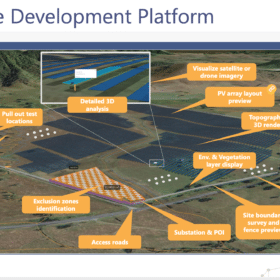
Terabase Energy raises funding to break the $0.01/kWh utility-scale solar barrier with software
Terabase wins a $6 million Round A led by SJF Ventures, an early funder of Nextracker, for an integrated software platform to make building utility-scale solar more efficient, smarter and cheaper.
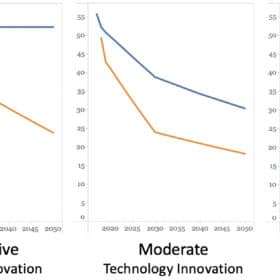
NREL’s solar cost projections plummet in new forecast
The lower projected costs for PV could help guide some utilities to plan for more PV capacity, as the utilities develop their long-term resource plans.

Morning Brief: FERC loses commissioner with no replacements in sight, Improving utility-scale bifacial modeling
Also in the brief: Puerto Rico chooses solar over gas in grid redesign, U.S. clean power giants to join forces to build lobbying muscle.

Combating climate change with time series data
After raising $6 million in funding, the team at Myst AI is bringing to market advanced electricity forecasting models that can help electricity companies forecast electricity demand, renewable production and market prices more accurately than ever before.
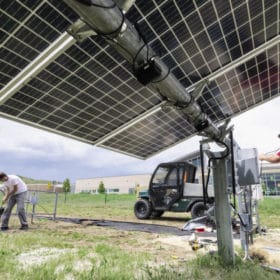
Morning Brief: Nextracker CEO Dan Shugar on bifacial PV, plus NextEra’s massive energy storage plans
Also in this morning’s brief: Outback Power partners up for home resiliency, the top 10 global solar developers — plus NextEra is ready to construct Eagle Mountain, a 1,300 MW pumped storage project that is fully permitted and shovel-ready.
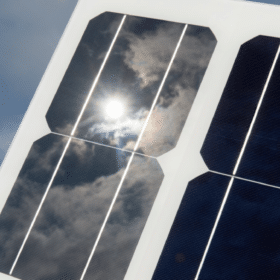
In search of the ‘most rational design’ for anti-reflective coating
Scientists in Spain have tested various properties of anti-reflective and anti-soiling coatings for PV module glass, aiming to develop a material that offers the best balance of desired material properties at the lowest cost. Over a year of testing, the best coatings were shown to boost module output by around 2%, and the group also made several observations that could influence future developments of coatings for PV module front glass.

Morning Brief: Elon Musk hints at yet another battery breakthrough, CAISO provides details on California blackouts
Also in the brief: A surge of nuclear outages in the U.S. this summer, Japan’s struggle to drive down renewables costs