Meta signs 100 GWh supply agreement for Noon Energy’s ultra-long-duration storage
Meta Platforms and Palo Alto-based Noon Energy have reached a reservation agreement for up to 1 GW / 100 GWh of energy storage capacity, marking a significant bet on ultra-long-duration energy storage to power the next generation of AI infrastructure.
Amperon launches probabilistic forecasting tool for solar and wind assets
Amperon has introduced a new AI-powered forecasting tool that provides 19 distinct probability bands for solar and wind generation, allowing energy companies to move beyond single-value predictions to better quantify weather-related market risks.
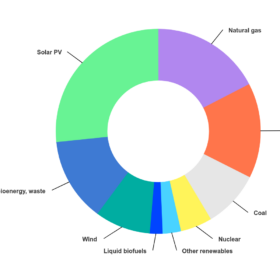
Solar PV led world energy demand growth in 2025, but the U.S. turned to fossil fuels, says IEA report
The International Energy Agency’s latest Global Energy Review shows solar PV accounted for 27% of all energy demand growth, while demand grew 62% faster in the U.S. than the world total, largely driven by a 10% increase in coal use, as the world enters what the report’s authors call the “Age of Electricity.”
Massachusetts Senate considers DER peak reduction mandate to curb grid costs
Advocates are pushing for a new standard that requires utilities to leverage distributed energy resources (DER) for peak load management, offering a potential fix for the state’s high retail rates.

Solar developers face high-stakes tax credit risks as FEOC rules tighten
New restrictions under the One Big, Beautiful Bill Act are reshaping project bankability, with developers facing a steep learning curve on effective control and material assistance limits.

Solar asset managers talk underperforming systems, catastrophic losses and AI at SAMNA 2026
More than 650 solar industry professionals gathered in San Diego at the annual Solarplaza Summit Asset Management North America conference to discuss the most important topics facing today’s O&M marketplace.

Trina Solar TOPCon patents invalidated in U.S. ruling involving Canadian Solar
The U.S. Patent and Trademark Office has invalidated all claims of two TOPCon solar cell patents previously asserted by Trina Solar against Canadian Solar subsidiaries.
Trump DOE proposes 52% budget cut for National Laboratory of the Rockies
The U.S. Department of Energy has issued a fiscal year 2027 budget justification that seeks to slash $264 million from its lead renewable energy research center.

Virginia expands shared solar, streamlines permitting in affordability push
Governor Abigail Spanberger signed a legislative package releasing 525 MW of new capacity and establishing a statewide automated permitting platform.
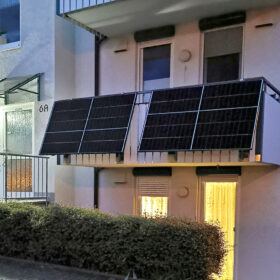
Maine’s plug-in solar law takes effect in July and some companies are already selling products in the state
Representatives from both APsystems and CraftStrom say their products are already available in Maine, while EcoFlow plans to launch one product as the law takes effect and offer another after it obtains UL listing.