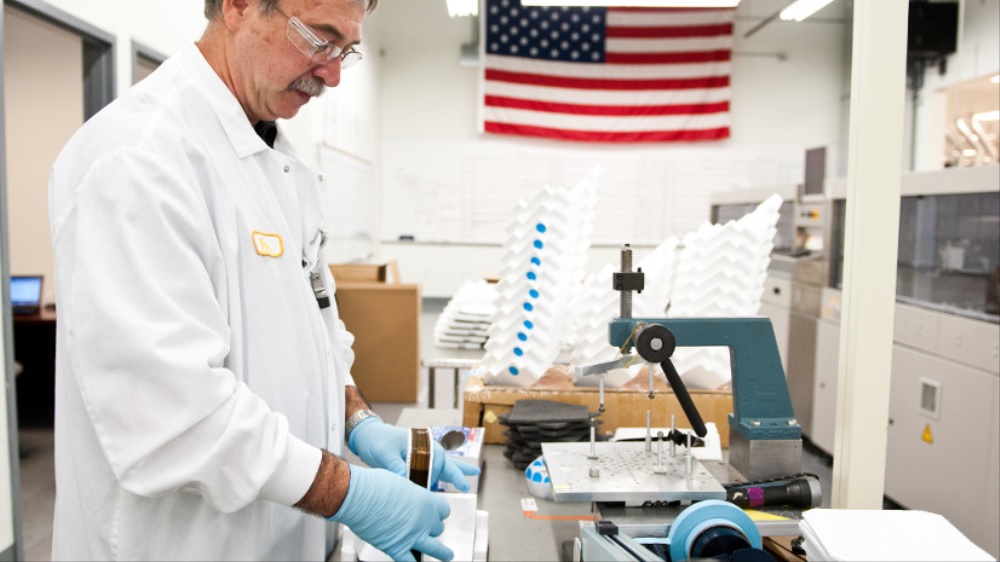





Suniva has announced plans to invest $350 million in a new manufacturing facility in Laurens, South Carolina. The project is expected to begin operations in the second quarter of 2027 and will have an annual production capacity of 4.5 GW. When combined with the output from its existing headquarters and factory in Norcross, Georgia, the expansion will bring Suniva’s total annual capacity to more than 5.5 GW.
The Laurens facility is expected to create 564 new full-time jobs. The company indicated that the site will focus on producing advanced solar cells that allow module manufacturers to meet the stringent domestic content requirements under the Inflation Reduction Act. Matt Card, president and COO of Suniva, stated that the question of where energy comes from and who controls the supply chain is a consequential issue facing the country.
Suniva remains a unique player in the domestic landscape as one of the few merchant cell suppliers, meaning it sells cells to various third-party module assemblers rather than consuming all production for its own branded modules. Historically, the U.S. solar industry has suffered from a bottleneck in cell production. While module assembly capacity has grown rapidly due to lower capital requirements, cell manufacturing has lagged. By expanding its cell capacity, Suniva provides a pathway for smaller and mid-sized U.S. module assemblers to qualify for the 10% domestic content bonus investment tax credit.
While U.S. module assembly capacity has surged to over 65 GW, domestic cell manufacturing has historically hovered at less than 10% of that volume. This massive imbalance has created a strategic bottleneck where American-made panels remain reliant on imported internal components. SEIA data suggests that without a rapid scaling of merchant cell capacity, most U.S. manufacturers will struggle to meet the “Domestic Content” thresholds required for federal tax bonuses, especially as “Foreign Entity of Concern” (FEOC) rules tighten supply chains through 2026 and 2027.
Suniva’s technology is rooted in research funded by the U.S. Department of Energy at Georgia Tech’s University Center for Excellence in Photovoltaics. The company highlights its American-owned and American-operated status as a differentiator from foreign-headquartered competitors that have recently established U.S. footprints.
The announcement marks a significant milestone in Suniva’s history. Founded in 2007, the company filed for bankruptcy in 2017 amid a surge of imports. After years of being inoperative, the company announced a restart in late 2023, bolstered by the manufacturing credits provided by federal policy. In early 2025, Suniva began shipping its first cells from its Georgia facility to Canadian-American module manufacturer Heliene.
Tony Etnyre, CEO of Suniva, said the expansion means that domestically produced renewable energy will do more to secure the energy future of the United States. The Laurens County project has received support from the state of South Carolina, which has become an emerging hub for clean energy manufacturing following recent major investments from several global technology and automotive firms.
This content is protected by copyright and may not be reused. If you want to cooperate with us and would like to reuse some of our content, please contact: editors@pv-magazine.com.




By submitting this form you agree to pv magazine using your data for the purposes of publishing your comment.
Your personal data will only be disclosed or otherwise transmitted to third parties for the purposes of spam filtering or if this is necessary for technical maintenance of the website. Any other transfer to third parties will not take place unless this is justified on the basis of applicable data protection regulations or if pv magazine is legally obliged to do so.
You may revoke this consent at any time with effect for the future, in which case your personal data will be deleted immediately. Otherwise, your data will be deleted if pv magazine has processed your request or the purpose of data storage is fulfilled.
Further information on data privacy can be found in our Data Protection Policy.