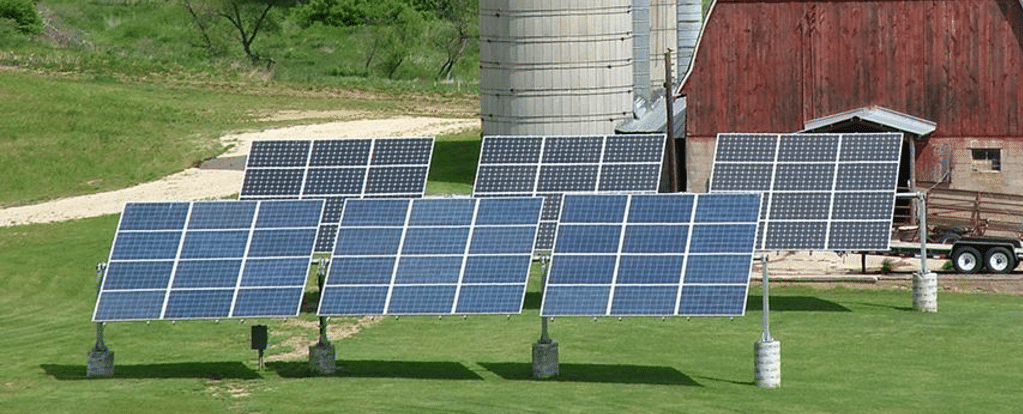





An annual report from the Minnesota Department of Commerce confirmed the state’s Low- and Moderate-Income Accessible Community Solar Garden (LMI Accessible CSG) Program has approved 179 MW of projects across 133 individual gardens as of December 16, 2025. While the program is meeting its equity mandates, the transition marks a fundamental shift from Minnesota’s historically uncapped market to a strictly regulated 800 MW ten-year sandbox.
Launched at the beginning of 2024, the initiative was designed to bridge the gap for households historically excluded from the renewable energy transition. The program made 100 MW of capacity available in both 2024 and 2025, moving away from the “open-ended” development model that allowed Minnesota to previously surpass 1 GW of community solar. Developers now compete for finite annual slices of capacity, creating a “first-come, first-served” dynamic absent in the legacy program.
Currently, 90% of program participants fall into low-income, residential, or public interest categories. Residential subscribers make up 77% of the total program, with 47% classified as low-to-moderate income. The LMI category accounts for 62% of total subscribers, surpassing the original program goal of 55%. Beyond households, the program has found traction with public interest organizations, including schools, municipal governments, and religious institutions.
Despite these figures, the program faces technical and legislative friction. Industry stakeholders have noted a disconnect between programmatic approvals and actual energized capacity, as Xcel Energy maintains control over interconnection timelines. Furthermore, a quiet technical debate persists over the compensation model; the shift from the “Value of Solar” (VOS) rate to a simplified net metering rate has drawn criticism for failing to account for the true locational benefits of distributed generation.
Executive Director of MnSEIA, Logan O’Grady, noted the results prove the program is delivering measurable savings to families while embedding equity into policy design.
However, the long-term viability of the program remains a subject of legislative debate. Senate Bill SF 2393 recently proposed a sunset for the LMI program by 2030, a move that would eliminate 500 MW of planned capacity and reflects ongoing utility-led concerns regarding cost-shifting to non-participating ratepayers.
As the industry navigates a complex regulatory environment following the overturning of the Inflation Reduction Act, these state-level successes provide a critical, if contested, blueprint. The report suggests that while inclusive design can lower costs for targeted participants, the broader market must still contend with interconnection bottlenecks and a shrinking legislative window.
This content is protected by copyright and may not be reused. If you want to cooperate with us and would like to reuse some of our content, please contact: editors@pv-magazine.com.



By submitting this form you agree to pv magazine using your data for the purposes of publishing your comment.
Your personal data will only be disclosed or otherwise transmitted to third parties for the purposes of spam filtering or if this is necessary for technical maintenance of the website. Any other transfer to third parties will not take place unless this is justified on the basis of applicable data protection regulations or if pv magazine is legally obliged to do so.
You may revoke this consent at any time with effect for the future, in which case your personal data will be deleted immediately. Otherwise, your data will be deleted if pv magazine has processed your request or the purpose of data storage is fulfilled.
Further information on data privacy can be found in our Data Protection Policy.