





Base Power and Denton County Electric Cooperative (CoServ) have announced a new partnership to create a 100 MW distributed residential energy storage program.
The program will see the deployment of a fleet of Base Power batteries that will provide dispatchable capacity to support the grid during periods of high electricity demand, while also offering participating customers whole-home backup power during grid outages.
Under the agreement, CoServ will manage the battery fleet by dispatching power during peak hours to shave load and perform energy arbitrage. Base Power will handle the system installation and ongoing maintenance for the life of the battery.
Homeowners with or without existing solar power systems can participate, and Base Power says the battery can be paired to charge from either existing solar or the grid, depending on availability.
CoServ serves more than 300,000 customers in North Texas, making it one of the ten largest utility companies in the state, and the third-largest electric cooperative in the United States.
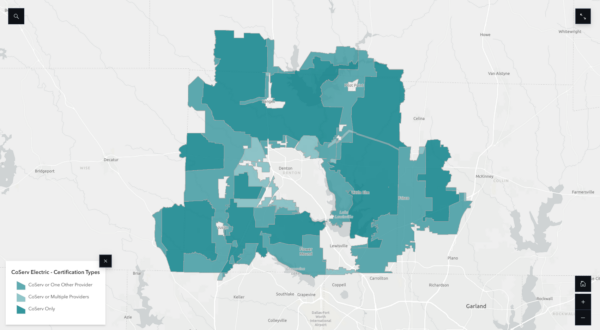
Image - CoServ website
Base Power’s utility partnership model
The CoServ agreement is the fifth utility collaboration in Texas for Base Power. The company offers similar (but smaller) residential battery programs in cooperation with Bandera Electric Cooperative, Farmers Electric Cooperative and Guadalupe Valley Electric Cooperative.
The programs allow eligible homeowners to sign up to have one or two 25 kWh batteries installed on their property. After homeowners indicate their interest, Base Power conducts a virtual site survey review to confirm the batteries can be safely installed at the property (e.g., that there is sufficient space).
Base Power charges an installation fee (typically $695 for one battery or $995 for two) and an ongoing monthly payment of $19 or $29 for backup. The utility may access 80% of the battery capacity for dispatch, and a minimum of 20% capacity available at all times for emergency backup.
On its website, Base Power says it can reach a market penetration of 1-2% of homes per year and the average system capacity is 20 kW per home (each battery is rated to output 11.4 kW of continuous power, and most customers choose two batteries). According to these numbers, the program could reach its 100 MW goal within a year in CoServ territory with a deployment of 5,000 average-sized systems.
In February, 2026, Base announced a slightly different battery program in collaboration with El Paso Electric (EPE). The details of battery dispatch are the same, but rather than paying up front and monthly for the service, homeowners who serve as battery hosts receive payments from EPE.
This content is protected by copyright and may not be reused. If you want to cooperate with us and would like to reuse some of our content, please contact: editors@pv-magazine.com.






By submitting this form you agree to pv magazine using your data for the purposes of publishing your comment.
Your personal data will only be disclosed or otherwise transmitted to third parties for the purposes of spam filtering or if this is necessary for technical maintenance of the website. Any other transfer to third parties will not take place unless this is justified on the basis of applicable data protection regulations or if pv magazine is legally obliged to do so.
You may revoke this consent at any time with effect for the future, in which case your personal data will be deleted immediately. Otherwise, your data will be deleted if pv magazine has processed your request or the purpose of data storage is fulfilled.
Further information on data privacy can be found in our Data Protection Policy.