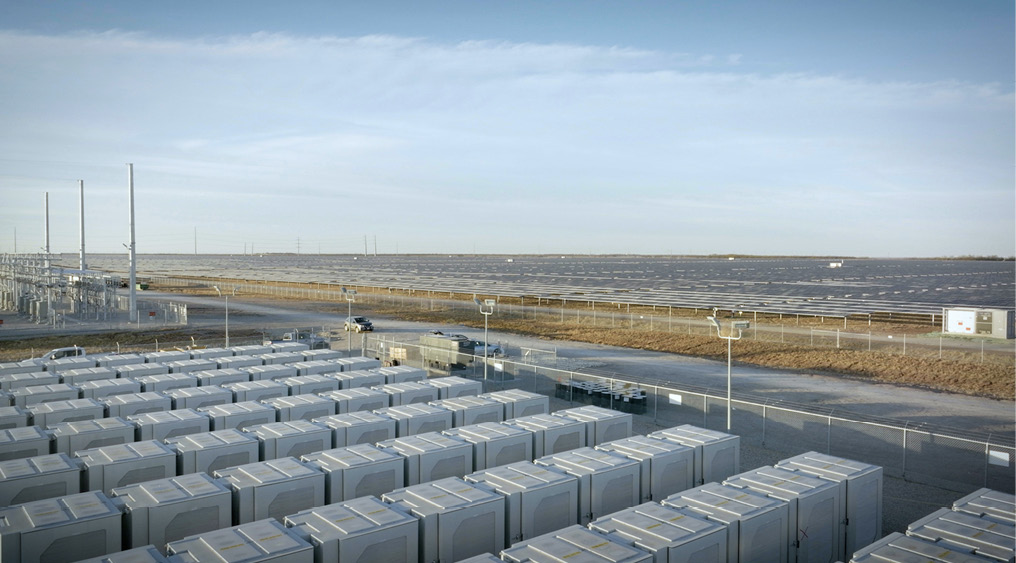





US energy storage caught glimpses of a clear sky in 2025, though dark clouds remain on the horizon. President Donald Trump’s changes to energy policy have transformed domestic manufacturing from a preference to a necessity, forcing developers to absorb new political and financial risks.
“We are no longer in an era of cheap imported batteries,” said Zora Chung, CFO at battery optimization platform ReJoule. For years, she explained, the industry depended on falling foreign cell prices. But heavy tariff implementation and tightening tax credit eligibility are reversing that trend. “The cost of having a compliant battery system is significantly higher than before,” Chung said.
Jon M. Williams, the CEO of lithium-ion battery manufacturer Viridi Parente, said higher costs coupled with tightening margins mean there is more pressure to manage upfront costs. “We see developers increasingly weighing total lifecycle value, not just capital cost,” he said, adding that higher overall expenses make permitting delays, insurance premiums, and project redesigns hit harder.
“This has created a massive need for traceability, [as] eligibility for 48E, the 30% Investment Tax Credit (ITC), is contingent on strict foreign entities of concern (FEOC) sourcing thresholds,” said ReJoule’s Chung. Securing 48E hinges on stringent limits for foreign-supplied components that increase over time until the credit’s 2033 phaseout.
“We have noticed an increased emphasis on manufacturability and supply chain security,” explained David Mackanic, CEO and co-founder of polymer battery startup Anthro Energy. He added that customers are asking more questions about how the company will scale manufacturing and ensure it can continue to deliver despite potential disruptions in global trade.
“The market is rewarding companies that can scale proven technologies across regions rather than betting everything on a single policy outcome,” said Rick Luebbe, CEO and co-founder of advanced materials manufacturer Group14 Technologies. Mackanic added that greater clarity and predictability in trade and tariff policy, regardless of the specific outcome, would make investing in domestic manufacturing easier.
Policy changes
The updated regulations are part of a raft of measures in the OBBBA that eliminate pro-renewable energy reforms introduced in 2022 under the Inflation Reduction Act. Energy storage was relatively unscathed by the OBBBA compared to solar, which lost the 25D residential clean energy tax credit at the end of 2025, and faces a more rapid phaseout of Section 48 ITCs.
Since energy storage boosts grid resilience, and continues to enjoy federal support, growth is largely inevitable, according to Viridi’s Williams. “Storage is driven by grid conditions, resilience needs and economics, not solely by policy,” he said, but added supportive legislation would help scale deployment safely and position the United States as an industry leader globally.
Sean Burke, policy director at developer BlueWave, said energy storage provides significant value to a grid that needs resources capable of producing at times of peak demand. The challenge is in translating that value into the revenues that make it possible to build projects.
There are long wait times to secure an interconnection in most US regions, meaning it could be years before projects are able to participate in the capacity market. Burke highlighted the difficulty developers face in projecting revenues for projects that may not come online for years.
“Today’s prices may not be there [in the future], leaving developers uncertain of the revenues available to them when they interconnect,” he said.
Many independent system operators and regional transmission operators have tried to reform their processes to address this challenge, but results have been mixed. Several operators have moved toward utilizing cluster-based studies that aim to assure developers today’s capacity signals will still exist when projects reach commercial operations, but the changes also triggered dozens of gigawatts of cancellations immediately following the rollouts.
Market operators also face increasing competition and cannibalization between batteries, as storage penetration increases and erodes price signals, ancillary service revenues fall, and merchant revenues become more difficult to predict. However, eastern states’ transmission system operator PJM Interconnection’s 2027-28 capacity auction will better link performance and payment through duration-weighted capacity accreditation. Texas grid operator ERCOT, on the other hand, is betting its recently deployed real-time co-optimization plus batteries scheme will better align dispatch and pricing with storage’s operational value.
Uncertainty bites
Many projects couldn’t overcome the trifecta of an unsettled political landscape, tax credit phaseouts, and tightening economics. Quality assurance advisory Intertek CEA’s second-quarter 2025 report said over 20 GWh of planned storage manufacturing capacity for 2028 was cancelled in the first half. Data from Cleanview show 79 GW of battery storage projects were canceled in 2025, only 7 GW less than that of utility-scale solar.
There’s been a marked shift toward more conservative funding models, according to Chung, prioritizing “established, multinational incumbents over American small businesses.” The problem, she warned, is that these approaches create a more perilous funding journey for early- and mid-stage companies. Public capital is often key to technological derisking and Chung warned that if the US federal government stops being a reliable bridge from pilot to scale, “we risk ceding our competitive edge in battery innovation to foreign markets.”
“Slowing down or stalling early-stage battery innovation means we will have to wait longer to see the benefits that electrification will unlock across industries,” added Anthro Energy’s Mackanic.
“If the government is not willing to help drive a solution by incentivizing private investment or providing more capital to keep things moving, the domestic battery industry will not be able to keep up with demand or with foreign competition,” said Group14’s Luebbe. “In no way will we be able to compete with the juggernaut that China already is.”
This content is protected by copyright and may not be reused. If you want to cooperate with us and would like to reuse some of our content, please contact: editors@pv-magazine.com.






By submitting this form you agree to pv magazine using your data for the purposes of publishing your comment.
Your personal data will only be disclosed or otherwise transmitted to third parties for the purposes of spam filtering or if this is necessary for technical maintenance of the website. Any other transfer to third parties will not take place unless this is justified on the basis of applicable data protection regulations or if pv magazine is legally obliged to do so.
You may revoke this consent at any time with effect for the future, in which case your personal data will be deleted immediately. Otherwise, your data will be deleted if pv magazine has processed your request or the purpose of data storage is fulfilled.
Further information on data privacy can be found in our Data Protection Policy.