
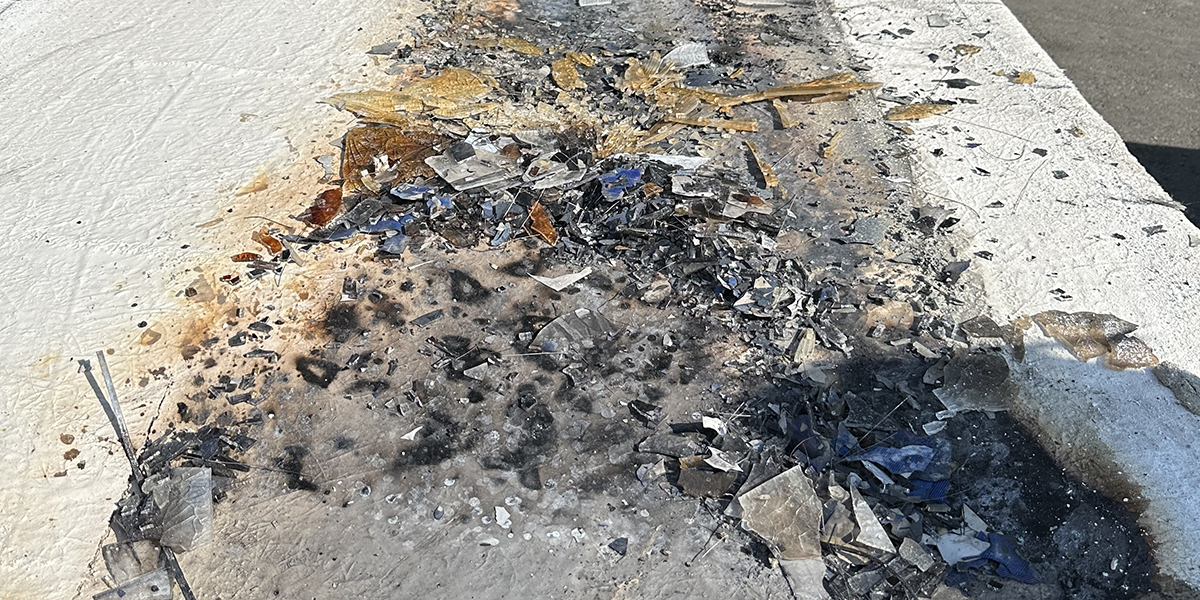





As rooftop photovoltaic (PV) installations proliferate across commercial and residential buildings, fire prevention remains a critical concern for the PV industry. One promising potential solution is now emerging: recent research by FM has systematically evaluated the effectiveness of roof coatings in mitigating fire hazards associated with rooftop PV panels, particularly when applied on existing combustible roof constructions.
The study – presented at Interflam 2025, an international conference on fire science and engineering in London – highlights that while PV panels contribute to building sustainability, their installation adds additional combustible materials from the panel itself and alters fire dynamics, potentially accelerating flame spread during a fire event. This risk is particularly exacerbated in modules with plastic back sheets, which add fuel and intensify fire propagation. Traditional fire test methods have been effective in differentiating fire-safe roof assemblies, but solutions for retrofitting existing roofs are still under development.
FM’s research focused on two types of roof coatings applied to three common combustible roof constructions, tested with both glass and plastic back sheet PV panels. Through large-scale fire tests, the team found that one roof coating type consistently prevented fire spread by forming a non-combustible encapsulation. This barrier effectively blocked the release of pyrolysate from roof materials, which would otherwise fuel the fire. In contrast, the second coating offered only moderate protection, delaying ignition but not fully preventing roof involvement in the fire. The FM Approval Guide lists the approved coatings, along with other FM approved products.
These findings have led to the development of the FM Approvals Examination Standard 4484, which includes a test method for roof coatings, providing the industry with a robust tool for evaluating and certifying fire mitigation solutions for rooftop PV systems. For installers, building owners, and insurers, this research underscores the importance of selecting appropriate coatings and further understanding the fire dynamics introduced by PV installations.
The study also quantified heat exposures in realistic rooftop fire scenarios, revealing that the cavity formed between the unprotected roof and PV panels, especially when spacing is between 5 to 10 inches, can intensify heat transfer and flame spread. If roof construction is protected by a new FM 4484-approved coating, the risk is reduced, and any spacing between the rooftop and PV panels is acceptable.
As a global leader in commercial property insurance, FM continuously researches and innovates proactive loss prevention solutions that set industry standards and help protect their clients. The study was authored by Dong Zeng, principal research scientist at FM, Timothee Rodrique, senior staff engineering specialist at FM, and Daniel Boardman, vice president, approvals manager for building materials at FM Approvals. FM Approvals is the third-party internationally recognized testing and certification arm of FM.
For more property loss prevention resources, visit FM.com.
This content is protected by copyright and may not be reused. If you want to cooperate with us and would like to reuse some of our content, please contact: editors@pv-magazine.com.



By submitting this form you agree to pv magazine using your data for the purposes of publishing your comment.
Your personal data will only be disclosed or otherwise transmitted to third parties for the purposes of spam filtering or if this is necessary for technical maintenance of the website. Any other transfer to third parties will not take place unless this is justified on the basis of applicable data protection regulations or if pv magazine is legally obliged to do so.
You may revoke this consent at any time with effect for the future, in which case your personal data will be deleted immediately. Otherwise, your data will be deleted if pv magazine has processed your request or the purpose of data storage is fulfilled.
Further information on data privacy can be found in our Data Protection Policy.