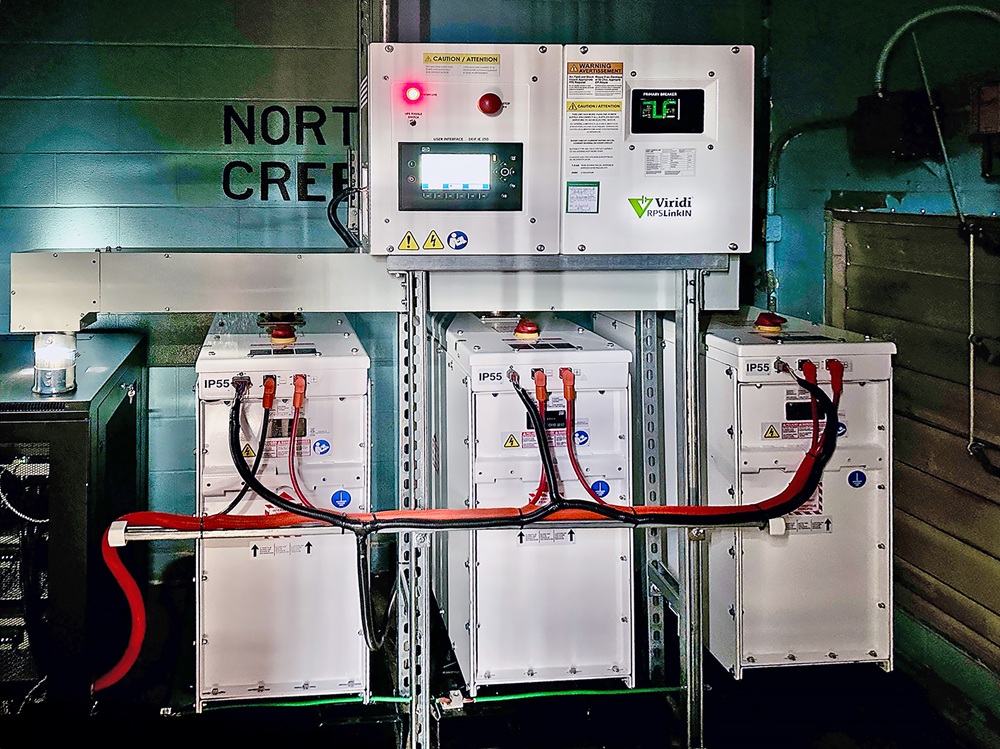





Viridi announced a successful replacement of a diesel backup generator by its battery system at a municipal wastewater pumping station in Erie County, New York. Depending on pump demand, the 150 kWh RPSLink system can deliver energy for 32 to 90 hours.
The $130,000 lithium-ion Nickel Manganese Cobalt battery system was custom designed to align with the energy demands of the onsite pumps. Specifically, Viridi noted that ‘high inrush’ situations –when machines turn on and immediately demand large amounts of current to physically move components– can stress batteries and require maintenance to ensure they don’t overheat or burn out.
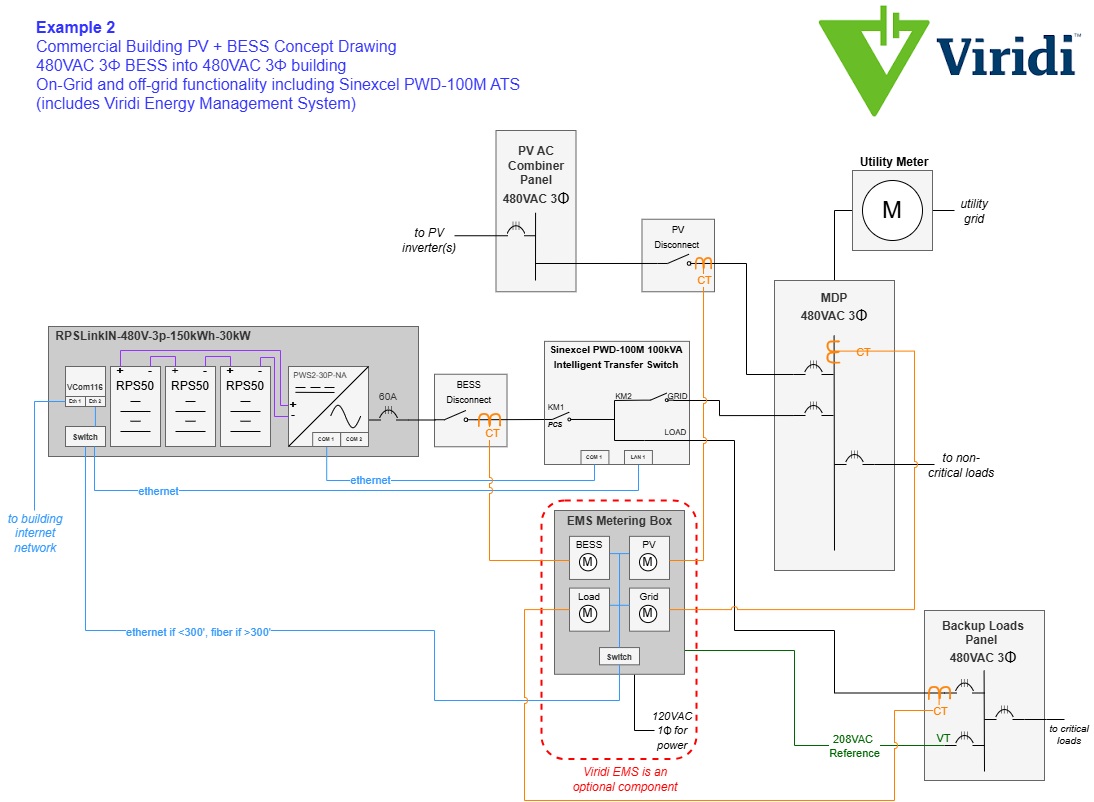
Source – Installation one Line Diagram from Viridi
Viridi estimates that annual site and generator upkeep costs, such as fuel management, testing, and maintenance, range from $8,000 to $15,000 per site. The company says Erie County is considering implementing nearly 100 similar pump installations.
Viridi’s system can be remotely monitored and tested while generators need operators onsite. If 100 sites were replaced, the cost anywhere from $800,000 to $1.5 million in savings per year, including many hours of a human being driving around town.
The $130,000 battery system receives a 40% 48E Inflation Reduction Act tax credit due to the domestic content of the batteries, constituting a net cost of $78,000. The system has a twenty year operating lifetime if it is not continually running, as is the case with this backup installation. Viridi warrants 4,000 complete charge-discharge cycles before the battery may degrade to 80% of its original capacity.
Viridi provided pv magazine USA with the RPSLinkIN operating manual and the single line drawing of the Erie County installation shown above.
In Yucaipa, California, one of the nation’s leading water treatment and pumping facilities is nearing completion of a massive solar plus storage facility that integrates grid tied gas generators. Along with cleaning up their electricity, the Yucaipa Valley Water District (YVWD) facilities are essentially retiring multiple backup diesel generators at its two main sites.
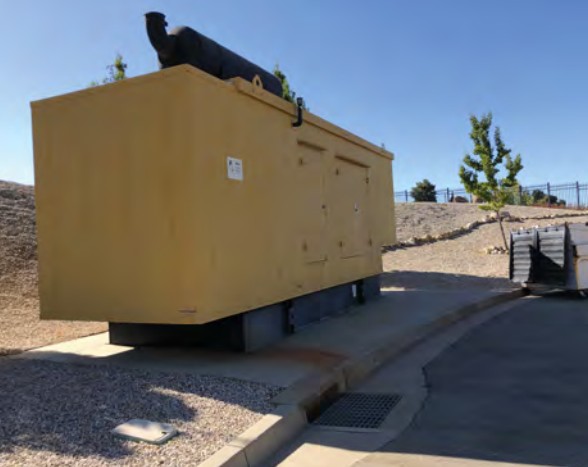
Diesel generators onsite at Yucaipa Valley Water District, Yucaipa, California, source John Fitzgerald Weaver
The solar, storage, and gas grid backup provides a near guarantee that the facility will never go down in the fire heavy, high risk, and semi-arid California region. The water cleaning and pumping facilities take care of more than 50,000 locals and the businesses they run. If the water treatment facility goes down for a long enough period, it could take 30 days to get the facility up and running again.
The new energy system is sized to keep the water moving for at least 72 hours on solar and storage alone. Hypothetically, if the smoke that is associated with power grid shutdowns due to forest fires, the solar output is lower, the gas grid connected generators can run the facility, and charge the batteries concurrently.
The YVWD has also worked with Tesla to electrify their distributed water pumps and like Erie, New York, they have retired many small scale diesel generators.
Residential solar and storage projects are integrating generators as well. BD Electric, a residential installation company in Massachusetts recently installed an Enphase residential solar system with three of the company’s 5 kWh batteries. The system integrated the customers existing 20 kW Generac generator.
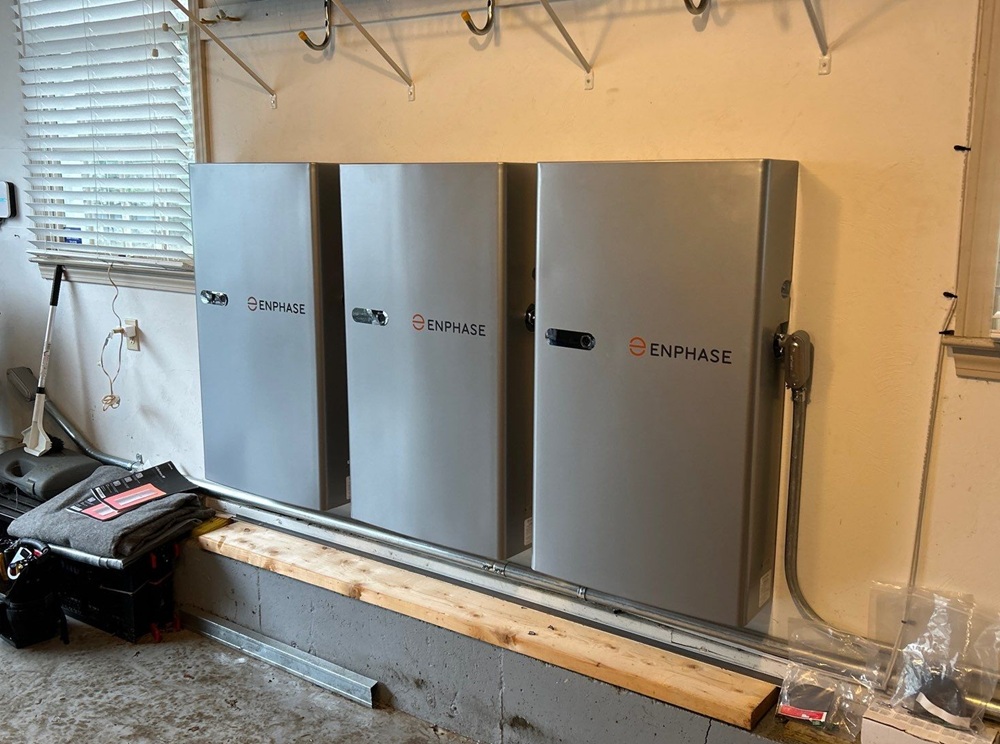
Image BD Electric
Using the Enphase controller system, the installation is designed to allow the house to run off of solar power initially if it is available. Then the house will start using the energy stored in the batteries. The generator will turn on if both the solar and batteries aren’t enough to keep the controller system running.
A key feature of the Enphase Envoy system is that the generator can both power the home and charge the battery at the same time. This allows the generator to run more efficiently, and once fully charged, allows the batteries to take over and power down the fuel burning machine.
This content is protected by copyright and may not be reused. If you want to cooperate with us and would like to reuse some of our content, please contact: editors@pv-magazine.com.




By submitting this form you agree to pv magazine using your data for the purposes of publishing your comment.
Your personal data will only be disclosed or otherwise transmitted to third parties for the purposes of spam filtering or if this is necessary for technical maintenance of the website. Any other transfer to third parties will not take place unless this is justified on the basis of applicable data protection regulations or if pv magazine is legally obliged to do so.
You may revoke this consent at any time with effect for the future, in which case your personal data will be deleted immediately. Otherwise, your data will be deleted if pv magazine has processed your request or the purpose of data storage is fulfilled.
Further information on data privacy can be found in our Data Protection Policy.