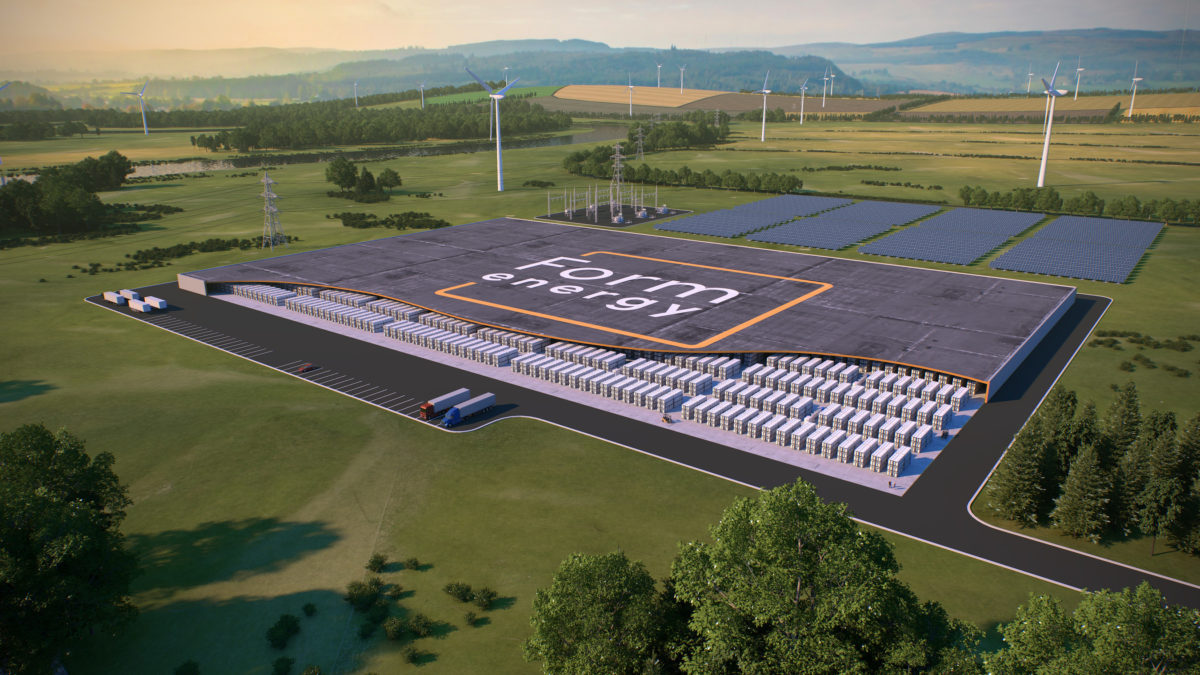





Google has reached a definitive agreement with Xcel Energy to deploy a massive 300 MW / 30 GWh iron-air battery system in Minnesota. The project, utilizing technology from Form Energy, is set to become the largest battery system by energy capacity announced globally, providing a blueprint for how Big Tech intends to firm up intermittent renewables to meet the relentless power demands of the AI era.
The project is a cornerstone of the new “Clean Energy Accelerator” agreement, a regulatory framework that allows Google to cover the costs of the deployment directly. Xcel Energy said the framework is designed to ensure the 100-hour long-duration energy storage (LDES) system, paired with 1,400 MW of wind and 200 MW of solar, does not impact the rates of its residential customers.
While lithium-ion batteries are effective for 4-hour shifts, they cannot handle the multi-day storage. Form Energy said its iron-air batteries can store renewables-sourced electricity for 100 hours at system costs competitive with conventional power plants.
The iron-air battery is composed of cells filled with thousands of iron pellets that are exposed to air and create rust. The oxygen is then removed, reverting the rust to iron. Controlling this process allows the battery to be charged and discharged.
The technology is less energy-dense than its lithium-ion counterparts, making it a better fit for large grid-scale applications. Form Energy said an individual battery module is about the size of a side-by-side washer/dryer set and contains a stack of approximately 50 one meter-tall cells. The cells include iron and air electrodes, the parts of the battery that enable the electrochemical reactions to store and discharge electricity. Each of these cells are filled with water-based, non-flammable electrolyte, like the electrolyte used in AA batteries.
This Minnesota deployment follows a string of aggressive procurement moves by Google. Just last month, TotalEnergies signed 1 GW of solar PPAs to power Google’s data center operations in Texas. Together, these projects illustrate Google’s “all-of-the-above” approach to decarbonization, combining massive solar capacity with the long-duration hardware needed to keep the lights on through the night.
The timing of the Xcel-Form Energy deal is critical. According to recent market data, corporate PPA deals were down 10% in 2025 as general corporate buyers pulled back. However, the data center sector, driven by the explosion of AI, is aggressively filling the gap.
The iron-air modules will be built at “Form Factory 1” in Weirton, West Virginia. The facility is currently scaling toward 500 MW of annual production capacity, benefiting from Domestic Content bonuses under the Inflation Reduction Act.
This content is protected by copyright and may not be reused. If you want to cooperate with us and would like to reuse some of our content, please contact: editors@pv-magazine.com.


By submitting this form you agree to pv magazine using your data for the purposes of publishing your comment.
Your personal data will only be disclosed or otherwise transmitted to third parties for the purposes of spam filtering or if this is necessary for technical maintenance of the website. Any other transfer to third parties will not take place unless this is justified on the basis of applicable data protection regulations or if pv magazine is legally obliged to do so.
You may revoke this consent at any time with effect for the future, in which case your personal data will be deleted immediately. Otherwise, your data will be deleted if pv magazine has processed your request or the purpose of data storage is fulfilled.
Further information on data privacy can be found in our Data Protection Policy.