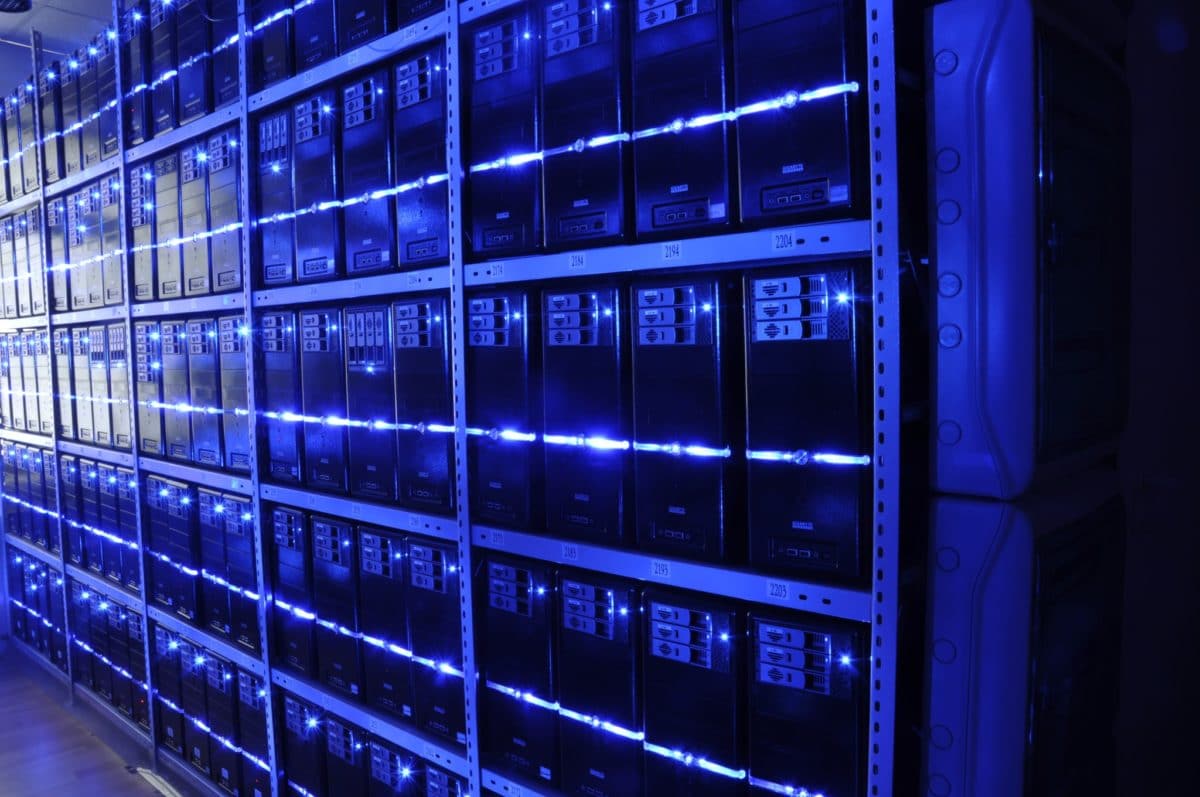





The rapid growth of artificial intelligence is leading to changes in data center electrical systems. Modern AI training clusters now require 50 kW to 100 kW per rack. Traditional AC-based power systems struggle to meet these demands.
According to a whitepaper by Enteligent, a California-based developer of DC-to-DC power electronics, these legacy architectures are reaching their physical and economic limits. For a typical 10 MW AI datacenter, an 800VDC architecture provides $5.8 million in initial capital expenditure savings, said the company.
The savings come from eliminating expensive uninterruptible power supply (UPS) systems and rack power distribution units (PDUs). Annual operational expenses also drop by approximately $711,000 due to improved energy efficiency and lower cooling requirements, said the whitepaper.
In a typical solar-powered facility, energy is generated as DC, inverted to AC for distribution, and then rectified back to DC several times before reaching a server.
Enteligent’s architecture utilizes an 800VDC backbone that allows solar arrays and battery storage to connect directly to the system. This direct-DC coupling eliminates two complete conversion stages, reducing energy losses by 8% to 10% compared to traditional AC-interfacing models, said the whitepaper.
Efficiency is a core advantage of the high-voltage DC model. Traditional AC systems often see end-to-end efficiency drop as low as 78%. Enteligent’s 800VDC system achieves 94% to 95% efficiency by simplifying the power path.
The double-digit improvement reduces the total electricity load and the heat generated by the system. For solar developers, this means more of the generated clean energy powers the computing hardware rather than being wasted as heat.
The 800VDC design also solves bottlenecks caused by copper, said the whitepaper. High-density AI racks at 240VAC require massive copper cables and high currents of 400 amps or more. At 800VDC, current is reduced by approximately 70%. A 100 kW load requires only 125 amps, allowing for smaller #2 AWG conductors instead of bulky 4/0 AWG cables. This reduces copper mass by 50% to 80% and significantly lowers installation labor costs.
Reliability improves as the number of failure points decreases. Traditional server power supplies are prone to failure due to high thermal loads and complex switching components. Enteligent replaces these with shared, high-efficiency DC power shelves at the rack level. The modules are hot-swappable, avoiding abrupt shutdowns. “Hot-swappable” means you can fix the equipment while the power is still on.
As AI clusters scale toward 200 kW per rack, high-voltage DC provides a scalable foundation that AC distribution cannot safely match, said Enteligent. Hyperscale operators are already moving toward direct-DC standards to meet sustainability goals and manage rising power costs. By integrating solar and storage directly into an 800VDC backbone, data centers can function as stabilizing assets for the grid while maximizing the value of on-site renewable energy.
This content is protected by copyright and may not be reused. If you want to cooperate with us and would like to reuse some of our content, please contact: editors@pv-magazine.com.



By submitting this form you agree to pv magazine using your data for the purposes of publishing your comment.
Your personal data will only be disclosed or otherwise transmitted to third parties for the purposes of spam filtering or if this is necessary for technical maintenance of the website. Any other transfer to third parties will not take place unless this is justified on the basis of applicable data protection regulations or if pv magazine is legally obliged to do so.
You may revoke this consent at any time with effect for the future, in which case your personal data will be deleted immediately. Otherwise, your data will be deleted if pv magazine has processed your request or the purpose of data storage is fulfilled.
Further information on data privacy can be found in our Data Protection Policy.