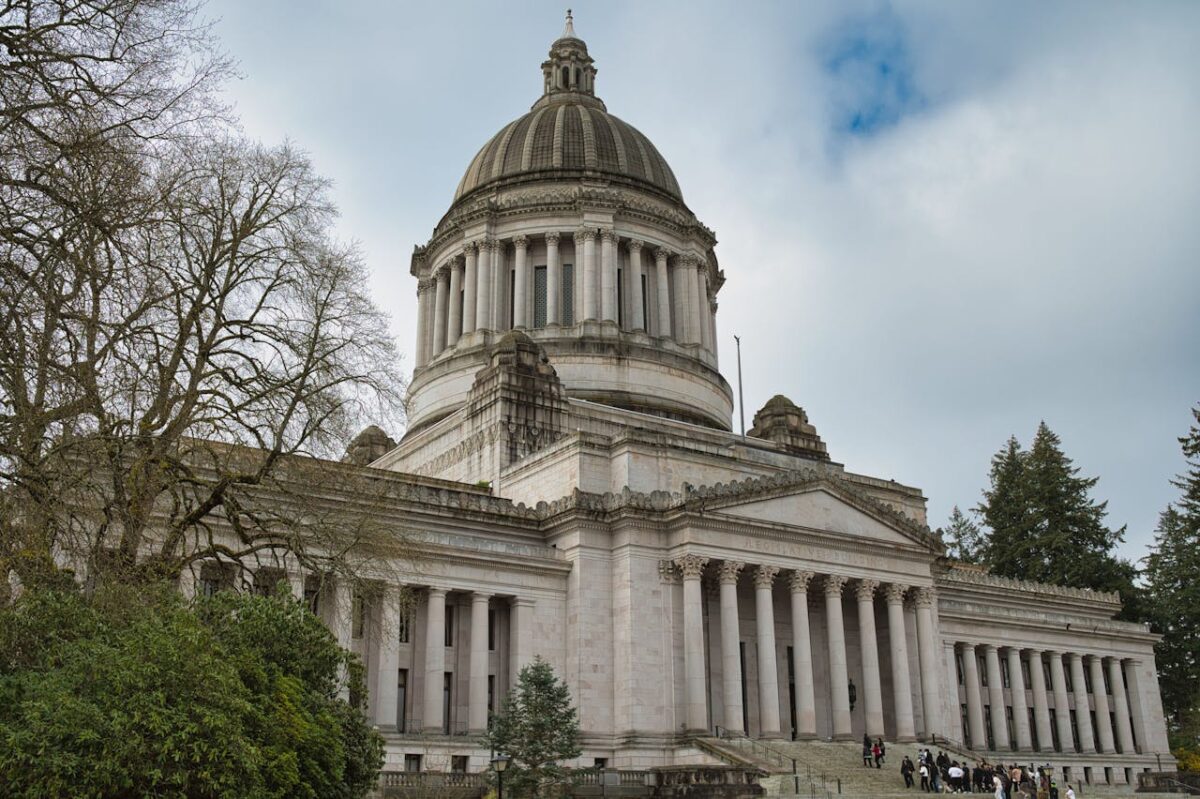





As deadlines for solar projects to qualify for the Section 48E investment tax credit (ITC) draw near, lawmakers in some states are taking steps to remove barriers to project development.
The furthest along of these efforts may be Virginia’s SB 347, which passed the state Senate on January 30th after a 21-17 vote, mostly along party lines.
The version of the bill that passed the Senate would strip language from existing state law that allows localities to enact ordinances and zoning regulations that ban all new development of ground-mounted solar facilities.
Instead, localities would be required to evaluate projects based on specific criteria included in their ordinances — such as setbacks, fencing, panel height and visual impacts — rather than imposing blanket bans.
Crucially, the bill requires local governments to report any adverse decisions to the State Corporation Commission (SCC). The SCC would then maintain a searchable public database of these denials and the specific findings of nonconformity used to justify them.
The bill currently sits with the House Committee on Counties, Cities and Towns. Virginia legislators are considering a slate of other solar-related bills in this legislative session, including HB 434, which would establish grid utilization metrics for the state’s two major utilities and HB 395, which permits any electric utility customer to own a small “balcony solar” system.
Echoes of previous state laws
The approach of SB 347 in Virginia echoes, though with a lighter touch, the more aggressive legislative strategies used in previous battles over project siting authority from two Midwest states.
In 2023, Illinois enacted HB 4412, which effectively prohibited counties and municipalities from enforcing zoning ordinances that were more restrictive than state-set standards for setbacks and height. That law also explicitly banned local moratoria on wind and solar development.
Michigan followed suit later that year with HB 5120, which granted the Michigan Public Service Commission the ultimate authority to site large-scale renewable energy projects. Under the Michigan model, if a local government does not have a “compatible renewable energy ordinance,” the state can step in and permit the facility directly, bypassing local opposition.
Northwest states diverge on siting authority
While the Midwest has moved toward centralization, legislative efforts in the Pacific Northwest demonstrate that there is no single template for accelerating deployment.
In Oregon, lawmakers are considering HB 4031, a bill that effectively reverses the typical “state override” logic. Introduced to help developers meet deadlines for federal tax credits, the bill would create an exception to the requirement to receive a site certificate from the state’s Energy Facility Siting Council (EFSC) for projects that could qualify for the tax credits.
Supporters of the Oregon bill argue that the state-level EFSC process has become a bottleneck, sometimes taking several years to certify a project. By temporarily allowing projects to bypass the EFSC and instead seek permits directly from counties — provided construction begins before the end of 2028 — proponents hope to shave significant time off development schedules.
Oregon governor Tina Kotek previously took action on siting and permitting of renewable projects, issuing Executive Order No. 25-25 in October of last year. The Order directed state agencies to accelerate and prioritize renewable project reviews and approvals and work with project developers to assist them in meeting deadlines for tax credit eligibility.
Meanwhile, lawmakers in Washington are looking to refine — but not remake — the state’s existing energy facility siting procedures.
HB 1237, currently before the House Committee on Environment & Energy, would streamline the Energy Facility Site Evaluation Council (EFSEC) process by requiring the council to issue a recommendation of approval if a project meets statutory criteria regarding greenhouse gas limits and environmental health.
This content is protected by copyright and may not be reused. If you want to cooperate with us and would like to reuse some of our content, please contact: editors@pv-magazine.com.



By submitting this form you agree to pv magazine using your data for the purposes of publishing your comment.
Your personal data will only be disclosed or otherwise transmitted to third parties for the purposes of spam filtering or if this is necessary for technical maintenance of the website. Any other transfer to third parties will not take place unless this is justified on the basis of applicable data protection regulations or if pv magazine is legally obliged to do so.
You may revoke this consent at any time with effect for the future, in which case your personal data will be deleted immediately. Otherwise, your data will be deleted if pv magazine has processed your request or the purpose of data storage is fulfilled.
Further information on data privacy can be found in our Data Protection Policy.