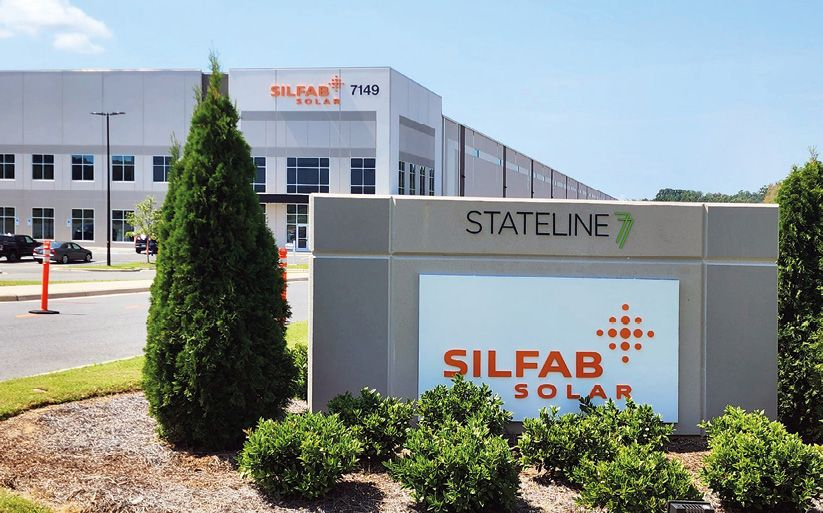





York County, South Carolina, has cleared a significant legal hurdle in its effort to host Silfab Solar’s latest U.S. manufacturing hub.
Judge G.D. Morgan Jr. issued an order granting the county’s motion to dismiss a lawsuit brought by local resident Dennis Floyd Bivins, effectively allowing the Canadian-headquartered solar manufacturer to proceed with its Fort Mill facility.
The facility is designed to have a solar cell and module manufacturing capacity of 1 GW, producing 2 million solar panels per year at full capacity. The facility is expected to create 800 jobs and represents an investment of at least $150 million in the local economy.
The legal battle centered on 7149 Logistics Lane, where Silfab is converting an existing industrial space into a solar module manufacturing facility. The project, which was initially verified as compliant with “Light Industrial” zoning in late 2022, faced local opposition related to chemical usage and environmental safety.
In his ruling, Judge Morgan determined that the plaintiff failed to establish “special damages” necessary to maintain the suit.
Under South Carolina law, private citizens challenging zoning decisions must demonstrate a concrete, individualized harm distinct from that of the general public. The court characterized the plaintiff’s concerns regarding public health as “conjectural and hypothetical” rather than imminent.
The court also found that the challengers missed their window of opportunity to contest the project’s zoning. Because no party appealed the county’s original Zoning Compliance Verification within the statutory 30-day period in 2022, the court ruled that administrative remedies had not been exhausted.
The judge also noted that the York County Council’s subsequent approval of a Fee-in-Lieu-of-Tax (FILOT) agreement in September 2023 acted as a legislative ratification of the project’s location and use.
The Silfab dispute has been a tangled web of administrative reversals. While the York County Board of Zoning Appeals issued a contradictory ruling in May 2024 suggesting solar manufacturing was prohibited in Light Industrial zones, that decision remains stayed pending an ongoing appeal. Judge Morgan’s dismissal of the Bivins suit reinforces the status quo, which treats Silfab’s current permits as valid and enforceable.
Silfab Solar, which also operates facilities in Washington state, expects the Fort Mill plant to significantly expand its North American capacity. The facility is part of a broader trend of domestic solar manufacturing growth spurred by the Inflation Reduction Act, though local land-use disputes continue to be a bottleneck for the industry.
With this latest ruling, Silfab continues site work and equipment installation. The company has maintained throughout the process that its operations meet or exceed all local and federal safety standards for solar assembly.
This content is protected by copyright and may not be reused. If you want to cooperate with us and would like to reuse some of our content, please contact: editors@pv-magazine.com.




By submitting this form you agree to pv magazine using your data for the purposes of publishing your comment.
Your personal data will only be disclosed or otherwise transmitted to third parties for the purposes of spam filtering or if this is necessary for technical maintenance of the website. Any other transfer to third parties will not take place unless this is justified on the basis of applicable data protection regulations or if pv magazine is legally obliged to do so.
You may revoke this consent at any time with effect for the future, in which case your personal data will be deleted immediately. Otherwise, your data will be deleted if pv magazine has processed your request or the purpose of data storage is fulfilled.
Further information on data privacy can be found in our Data Protection Policy.