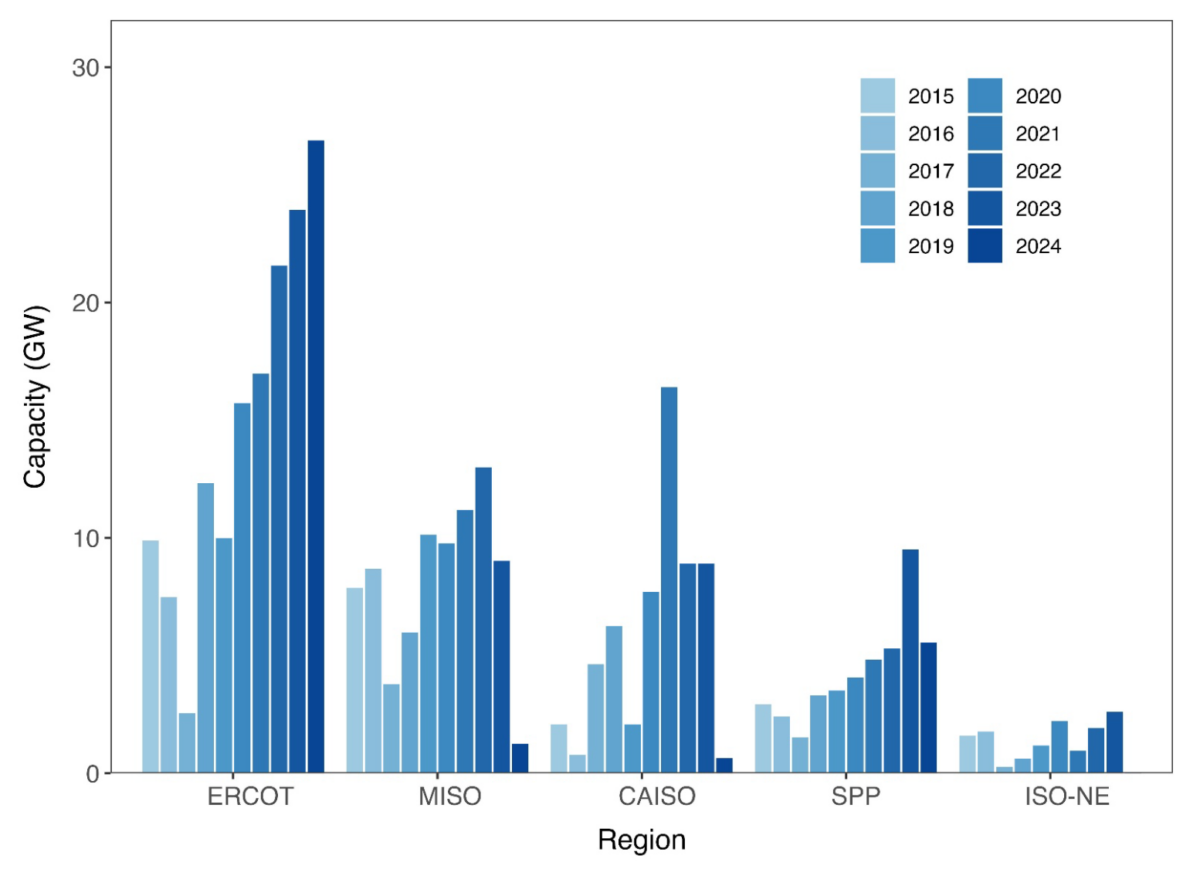





The ERCOT transmission grid operator in Texas outperformed other regional grid operators in executing interconnection agreements in 2024, as shown in the featured image above, according to an analysis by Berkeley Lab.
ERCOT’s “connect and manage” approach to generator interconnection “does not require network upgrades for interconnections,” the analysis said, “instead managing grid congestion through redispatch and curtailment.” Generators may deliver energy through the transmission system on an “as available” basis.
“This approach differs from other balancing areas, and is likely one reason for the higher interconnection agreement rates seen in ERCOT.”
ERCOT also reached more interconnection agreements than other grid operators as a percentage of its peak load in 2024, as shown below.
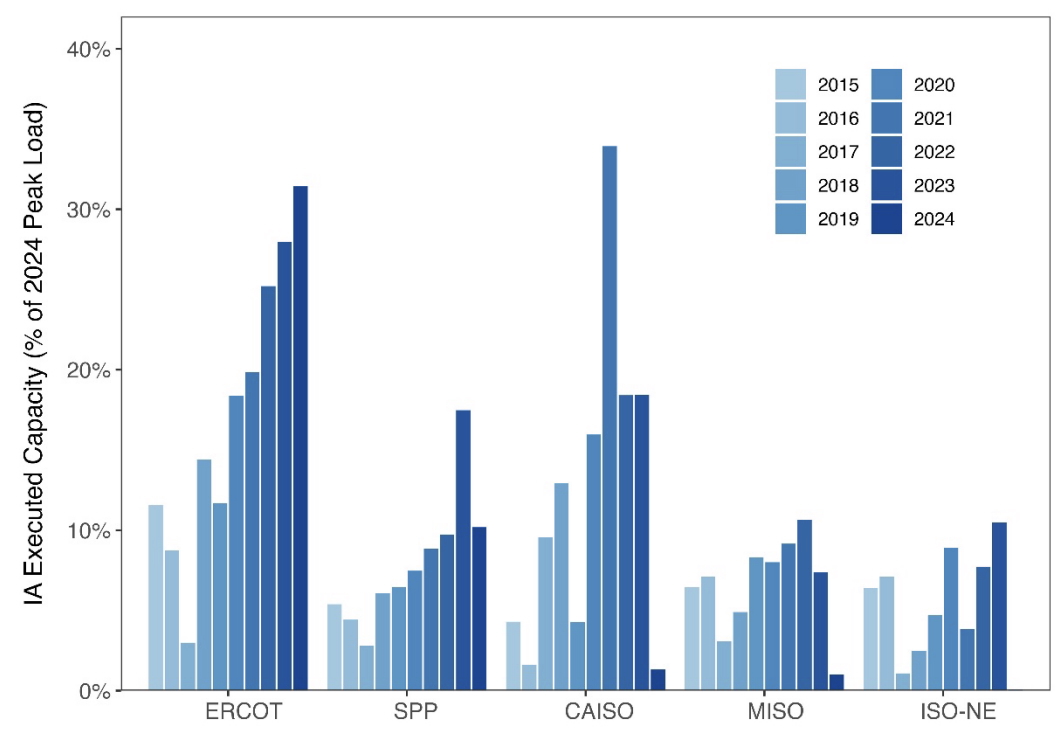
Berkeley Lab did not include in the graphs regional grid operators whose data showed an interconnection agreement date for less than 70% of projects with an interconnection agreement.
ERIS not faster
ERCOT’s “connect and manage” approach is similar to the Energy Resource Interconnection Service (ERIS) offered by some other grid operators. Outside of ERCOT, most projects requested interconnection through Network Resource Interconnection Service (NRIS), to enable their energy to be deliverable during congested grid conditions.
But since 2010, the analysis found that ERIS requests were “not significantly faster to process” than NRIS requests, “though ERCOT requests [were] faster,” as shown below in a graph comparing the median number of months from interconnection request to interconnection agreement. ERCOT’s values are shown with a red dashed line.
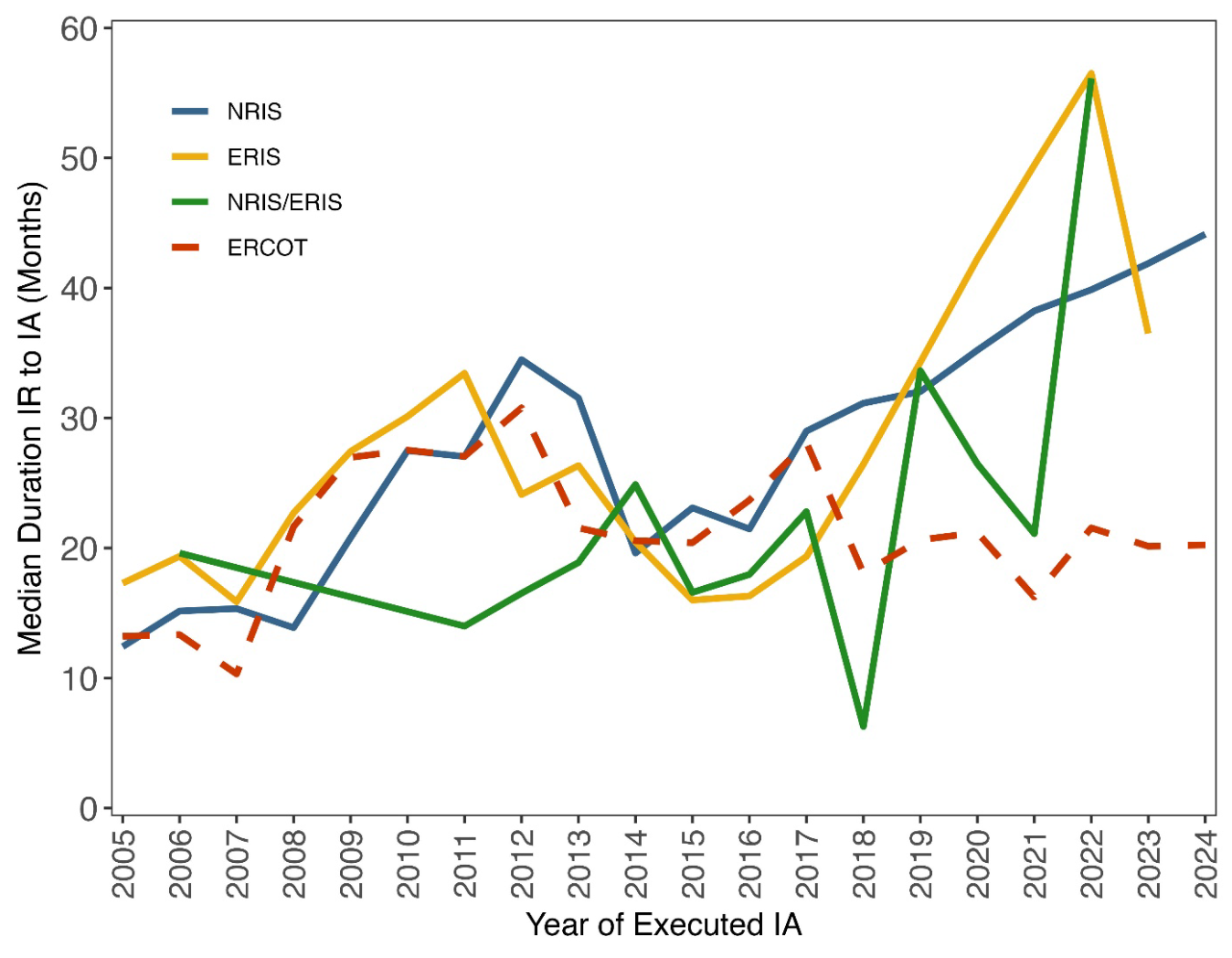
A similar result was found in a 2024 study by researchers Tyler Norris and Dalia Patino-Echeverri, both at Duke University at the time, who said “it is reasonable to assume that the similarity in study methods for ERIS and NRIS outside ERCOT, and the oft-comparable network upgrade costs, is a significant factor” that could explain why non-ERCOT jurisdictions do not achieve the faster flexible interconnection that ERCOT achieves.
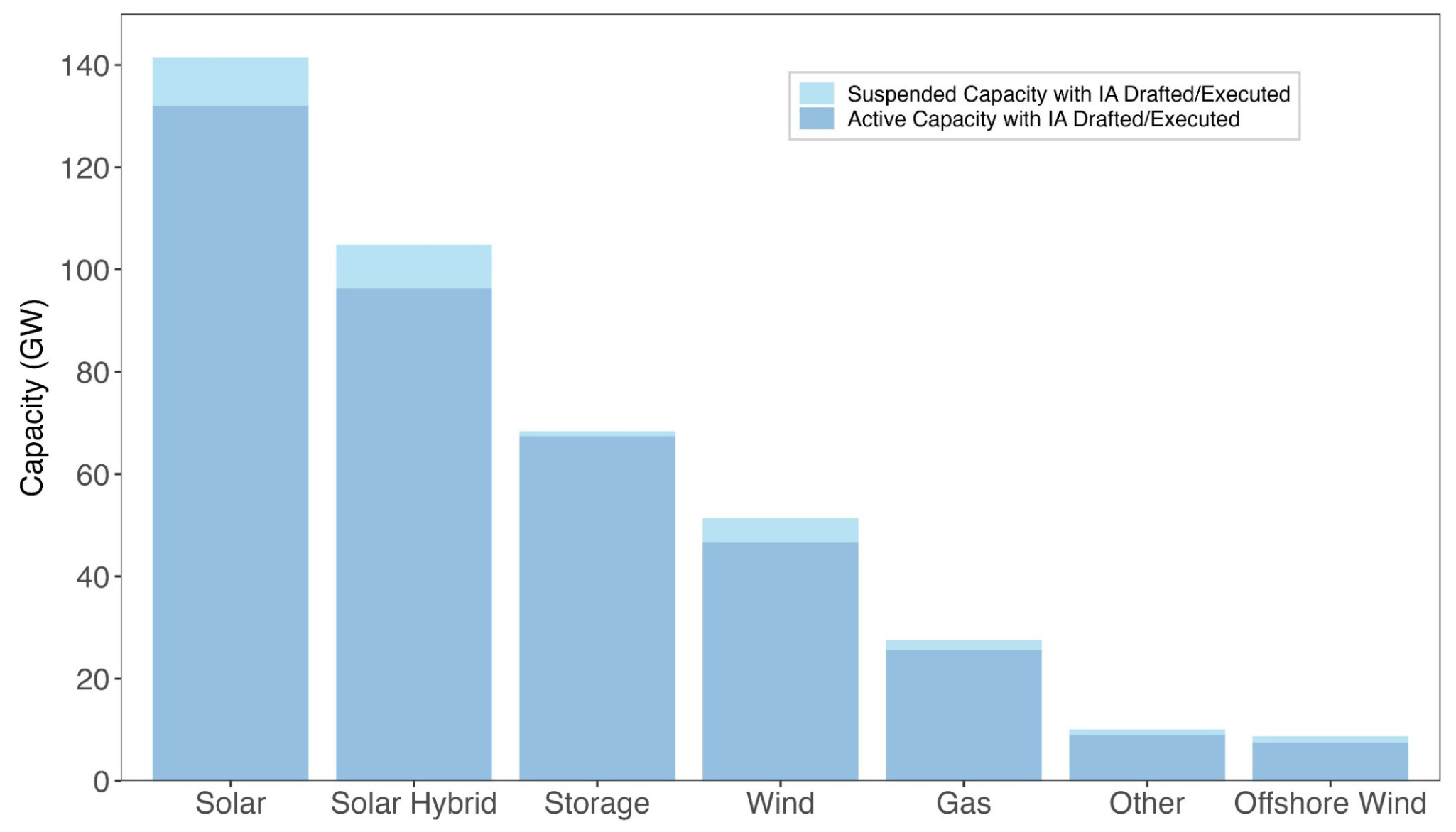
The Berkeley Lab report showed over 240 GW of solar and solar+storage hybrid projects with drafted or executed interconnection agreements as of year-end 2024, as shown below.
Interconnection.fyi
The Berkeley Lab report relied on data from Interconnection.fyi. That firm had provided its own report on interconnection data last summer, showing that:
- Nearly 160 GW of solar projects and 80 GW of all types of hybrid projects had signed, or executed, interconnection agreements as of May 2025
- The total capacity of solar projects in interconnection queues decreased by 12% in 2024.
The Berkeley Lab report is titled “Queued up: 2025 edition—Characteristics of power plants seeking transmission interconnection as of the end of 2024.”
This content is protected by copyright and may not be reused. If you want to cooperate with us and would like to reuse some of our content, please contact: editors@pv-magazine.com.







By submitting this form you agree to pv magazine using your data for the purposes of publishing your comment.
Your personal data will only be disclosed or otherwise transmitted to third parties for the purposes of spam filtering or if this is necessary for technical maintenance of the website. Any other transfer to third parties will not take place unless this is justified on the basis of applicable data protection regulations or if pv magazine is legally obliged to do so.
You may revoke this consent at any time with effect for the future, in which case your personal data will be deleted immediately. Otherwise, your data will be deleted if pv magazine has processed your request or the purpose of data storage is fulfilled.
Further information on data privacy can be found in our Data Protection Policy.