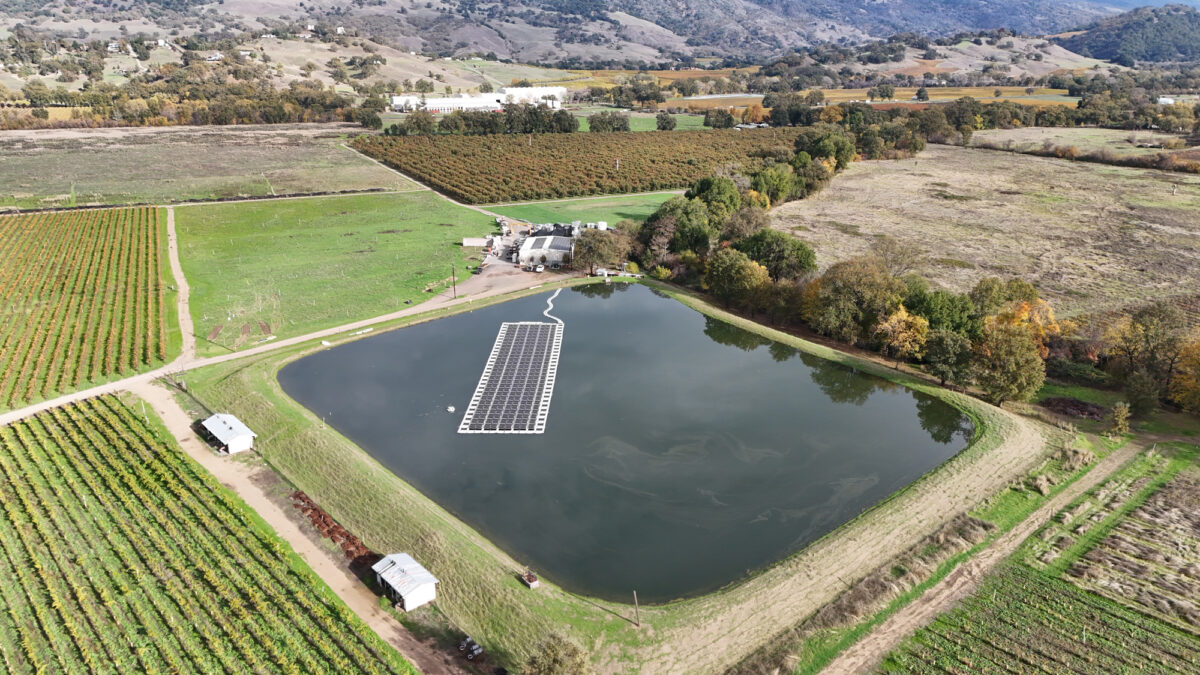





California winery Nelson Family Vineyards is now powering 100% of its operations with electricity after Noria Energy has installed onsite solar arrays.
The 74-year-old, 1,800-acre family farm is now fully powered by clean energy, and with no agricultural land taken out of production.
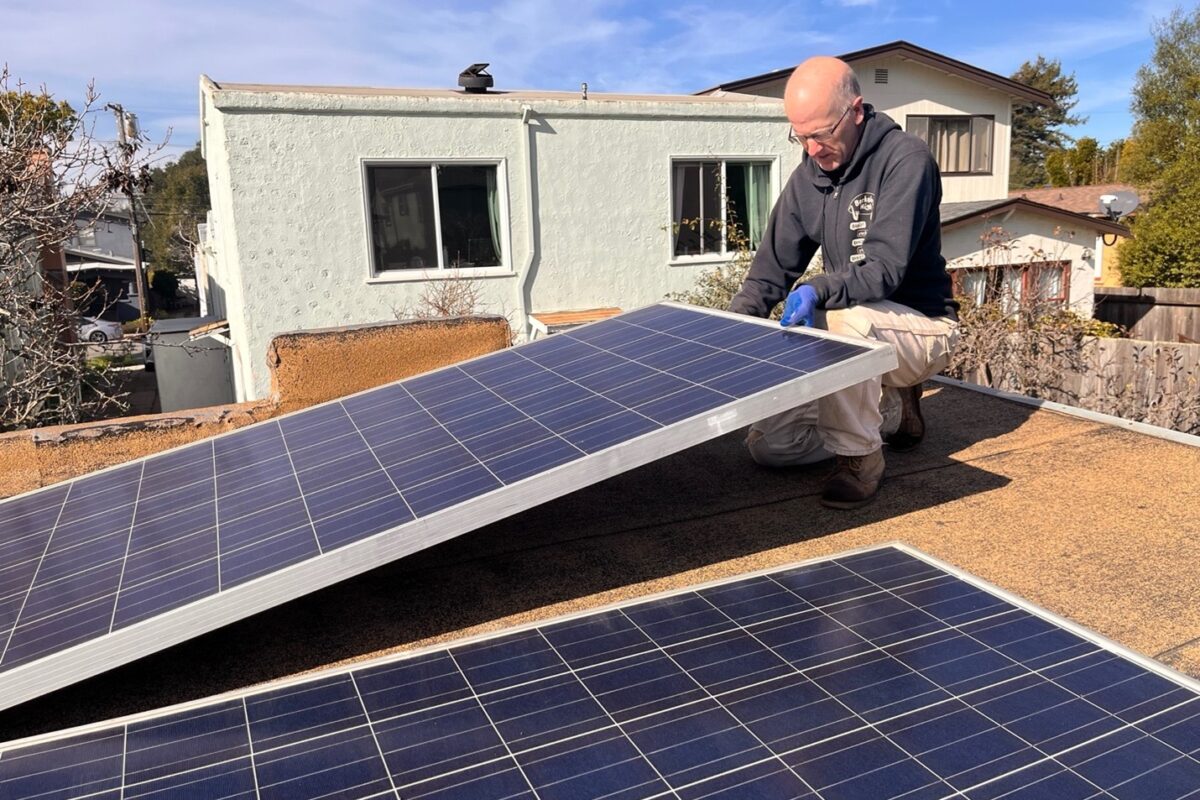
Adding to an existing rooftop solar array’s production, Noria Energy installed a floating solar array on an irrigation pond. Together, the two solar projects are expected to generate about 200,000 kWh of electricity per year, powering the winery, agricultural pumps, tasting room, shop, and 12 on-site homes.
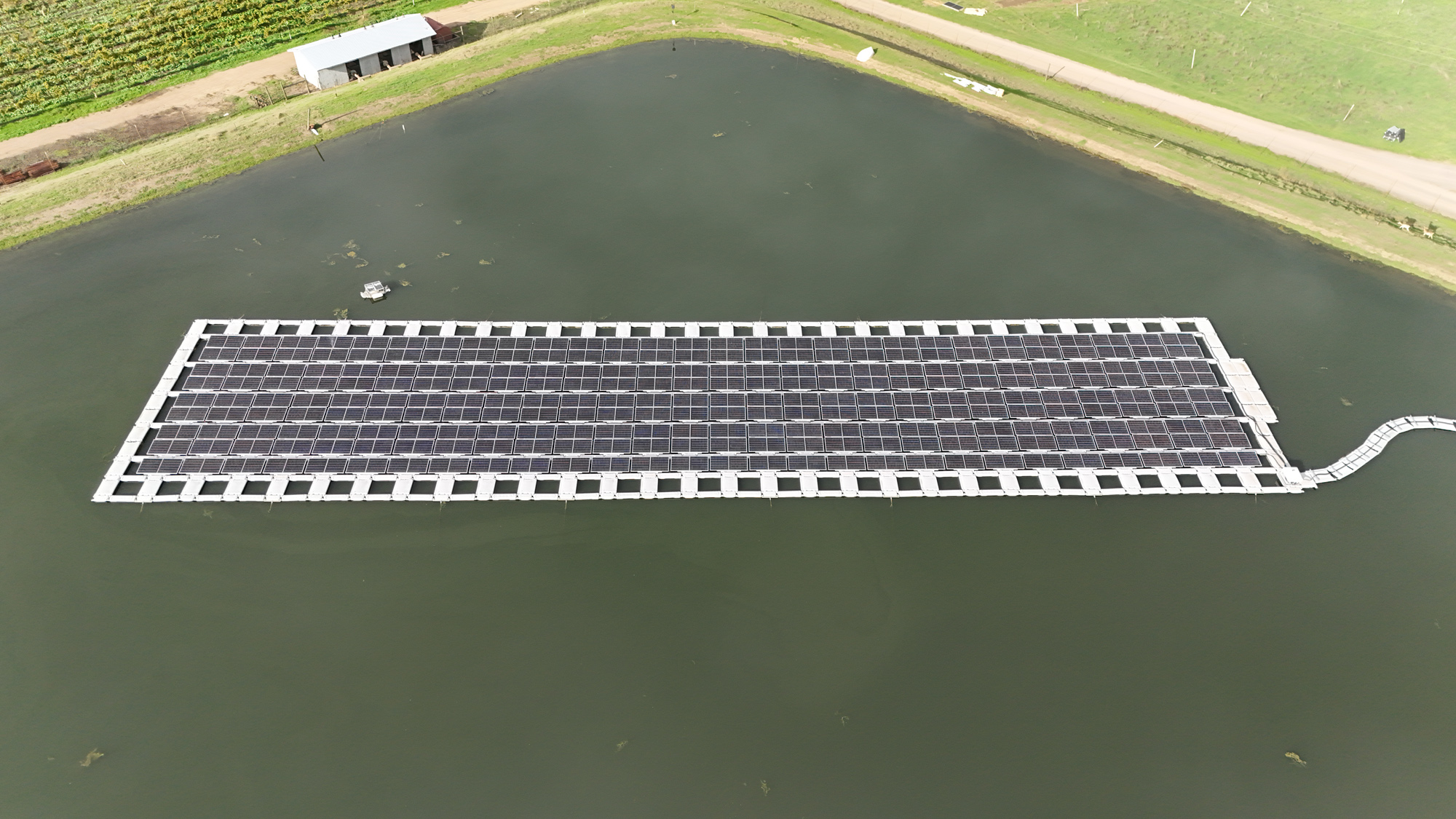
The project is expected to save Nelson Family Vineyards an estimated $90,000 on electricity bills annually.
“With the cost of grid electricity rising so sharply, becoming energy independent will have a major and immediate impact on our operation. This investment will save us a tremendous amount of money year after year,” said Tyler Nelson, the owner of Nelson Family Vineyards. “Best of all, because the system floats on a pond, it does not take a single acre of land out of production.”
The installation is also planned to serve as a field site for a study on the ecological impacts of floating solar. Scientists from the UC Davis Wild Energy Center will use the system to examine how floating solar installations influence water quality, aquatic species, microclimates, and biodiversity in an agricultural setting.
The focus of the study will be to determine whether shading from the floating solar panels can help control invasive zooplankton (water fleas) and aquatic weeds that frequently clog the vineyard’s high-efficiency drip irrigation filters—an issue that requires hourly maintenance during peak season. By limiting direct sunlight, the panels are expected to slow the growth of water flees and aquatic weeds.
“In conjunction with deploying a new floating solar installation, Nelson’s Family Vineyards has enabled important ecological research on its property. By providing site access to researchers from the UC Davis Wild Energy Center, the vineyard is supporting studies on how floating solar interacts with wildlife and water quality, helping advance our understanding of how floating solar can expand responsibly,” said Dr. Elliot Steele, postdoctoral researcher at UC Davis Wild Energy Center.
This content is protected by copyright and may not be reused. If you want to cooperate with us and would like to reuse some of our content, please contact: editors@pv-magazine.com.




By submitting this form you agree to pv magazine using your data for the purposes of publishing your comment.
Your personal data will only be disclosed or otherwise transmitted to third parties for the purposes of spam filtering or if this is necessary for technical maintenance of the website. Any other transfer to third parties will not take place unless this is justified on the basis of applicable data protection regulations or if pv magazine is legally obliged to do so.
You may revoke this consent at any time with effect for the future, in which case your personal data will be deleted immediately. Otherwise, your data will be deleted if pv magazine has processed your request or the purpose of data storage is fulfilled.
Further information on data privacy can be found in our Data Protection Policy.