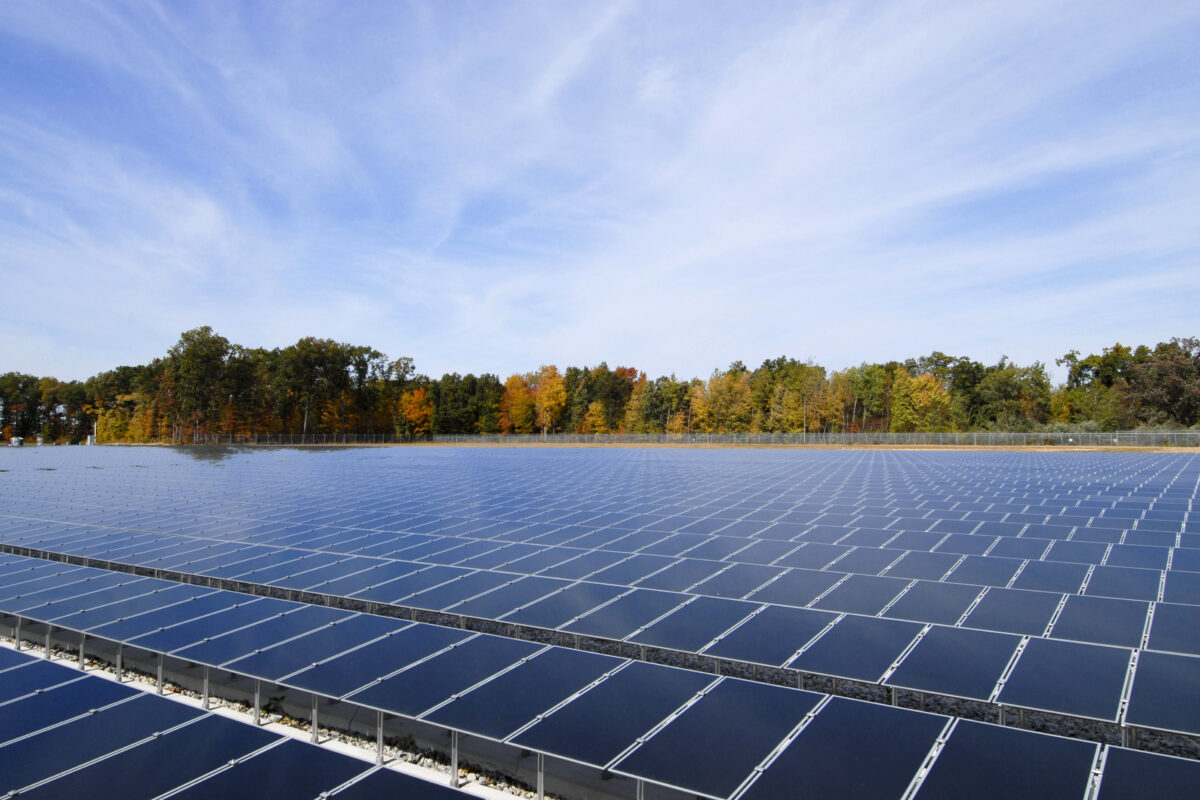





The Ohio Northern University Institute for Civics and Public Policy (ICAPP) completed its annual Northern Poll that found the majority of respondents support solar development.
The questions about solar were a subset of the overall poll that asked approximately 1,600 Ohio adults about general support for solar farms, multi-family housing, marijuana/cannabis dispensaries and AI/data centers.
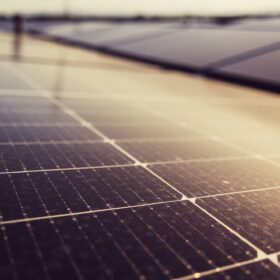
The poll asked respondents if they were for or against the development of solar farms, which were defined as areas of land with a large number of solar panels to generate electricity. The majority (55%) of respondents are in favor of solar farms, with 19% opposed.
Of the 55% who support solar farms, 25% strongly support and 30% somewhat support them. Of the respondents who indicated opposition, only 8% strongly oppose with 11% stating they somewhat oppose solar farms. One-quarter of respondents were neither for or against solar farms.
The questions also found that most respondents believe solar farms to have a positive impact on economic, environmental and quality of life. As for economics, respondents showed a net positivity rating of +37. The view of solar’s positive environmental impact was +36. Similarly, its impact on quality of life came in at +36.
A further finding was that support varies by political identify with those who identified as “very liberal” showed a +75-favorability rating, which drops as people identify as being more conservative. For example, the responses from those identifying as “very liberal” showed a +67-favorability rating, with “somewhat liberal” showing +63 rating, while “very conservative” showed a rating of -7. The conclusion is that those identifying as very conservative are less likely to perceive economic benefits from solar farms. No other differences in opinions on the economic impact of solar farms were detected between other demographic groups.
Views of the environmental impact of solar farms were divided more sharply across political groups. Those identifying as “very liberal” gave environmental impact a +75 rating, “Somewhat liberal” reported a +65 rating, while “very conservative” respondents rated environmental impact at -10, with the conclusion being that conservatives are less likely to perceive a positive environmental impact resulting from development of solar farms.
Looking at responses by region, overall support is somewhat lower in rural areas (+18), than in either suburban areas (+47), or urban areas (+53), although overall support is positive regardless of the area.
This poll was conducted when House Bill 303, the Community Energy Act passed in the Ohio House of Representatives by a bi-partisan vote of 73 to 2. The Act, which will soon be before the Ohio Senate for a vote, aims to establish a 1.5 GW pilot program for community solar facilities across Ohio.
Ohio legislation, however, has not always been so solar friendly. In October 2021, SB 52 was passed, granting county commissions the power to stop solar and wind projects from being developed. Following the law’s passage, solar projects in Ohio plunged. In 2023, Ohio tightened its rules further, adding rules such as 350-foot setbacks and sound regulations extending a mile away. According to the Solar Energy Industries Association, Ohio fell from fifth in solar additions 2024 to 11th place in Q2 2025.
The poll also sought opinions on data centers and found different responses depending on whether the question called them “AI Centers” or “data centers.”
“The clear public hesitation toward the term ‘AI,’ especially its mitigating effect on perceived economic benefits, indicates that the ‘AI Bubble’ may be beginning to burst in Ohio,” Gabriel Mott, ICAPP Fellow, Ohio Northern University, said in a statement.
While data centers have an overall net support level of +10, AI centers fare 16 points worse, at -6. Examining the community impacts, the economic impact is seen as +29 for data centers, +11 for AI centers, Environmentally, both are seen negatively: -12 for data centers, but 11 points lower, -23, for AI centers. The results were similar on quality-of-life issues: +8 for data centers, -9 for AI centers.
This content is protected by copyright and may not be reused. If you want to cooperate with us and would like to reuse some of our content, please contact: editors@pv-magazine.com.




By submitting this form you agree to pv magazine using your data for the purposes of publishing your comment.
Your personal data will only be disclosed or otherwise transmitted to third parties for the purposes of spam filtering or if this is necessary for technical maintenance of the website. Any other transfer to third parties will not take place unless this is justified on the basis of applicable data protection regulations or if pv magazine is legally obliged to do so.
You may revoke this consent at any time with effect for the future, in which case your personal data will be deleted immediately. Otherwise, your data will be deleted if pv magazine has processed your request or the purpose of data storage is fulfilled.
Further information on data privacy can be found in our Data Protection Policy.