





Raya Power, a solar tech startup with a mission to “democratize solar energy,” is preparing to launch its all-in-one home solar and storage appliance. The company is planning a seed funding round and a customer pilot project for early 2026, with full sales to come sometime after.
Raya Power was founded by two women who discovered a shared interest in making home solar power easier to use and install while attending a friend’s wedding. One of the founders, CEO Meghan Wood, spoke to pv magazine USA about the company’s mission and go-to-market strategy.
Wood holds an MBA and a Masters of Science in Sustainable Energy Systems from Stanford, and says her experience there led to an exploration of the potential benefits of balcony solar installations like those that have become popular in Germany. However, she realized that these installations still face logistical and regulatory hurdles that prevent their widespread adoption in the United States.
Raya Power’s co-founder is CTO Nicole Gonzalez, a manufacturing engineer with BS from Princeton and Engineering Masters from Stanford. She was working on the NASA Mars Rover project when Hurricane Maria hit Puerto Rico and made it impossible to communicate with her family. The experience caused her to think of ways to build solutions to allow anyone to benefit from solar energy and backup power.
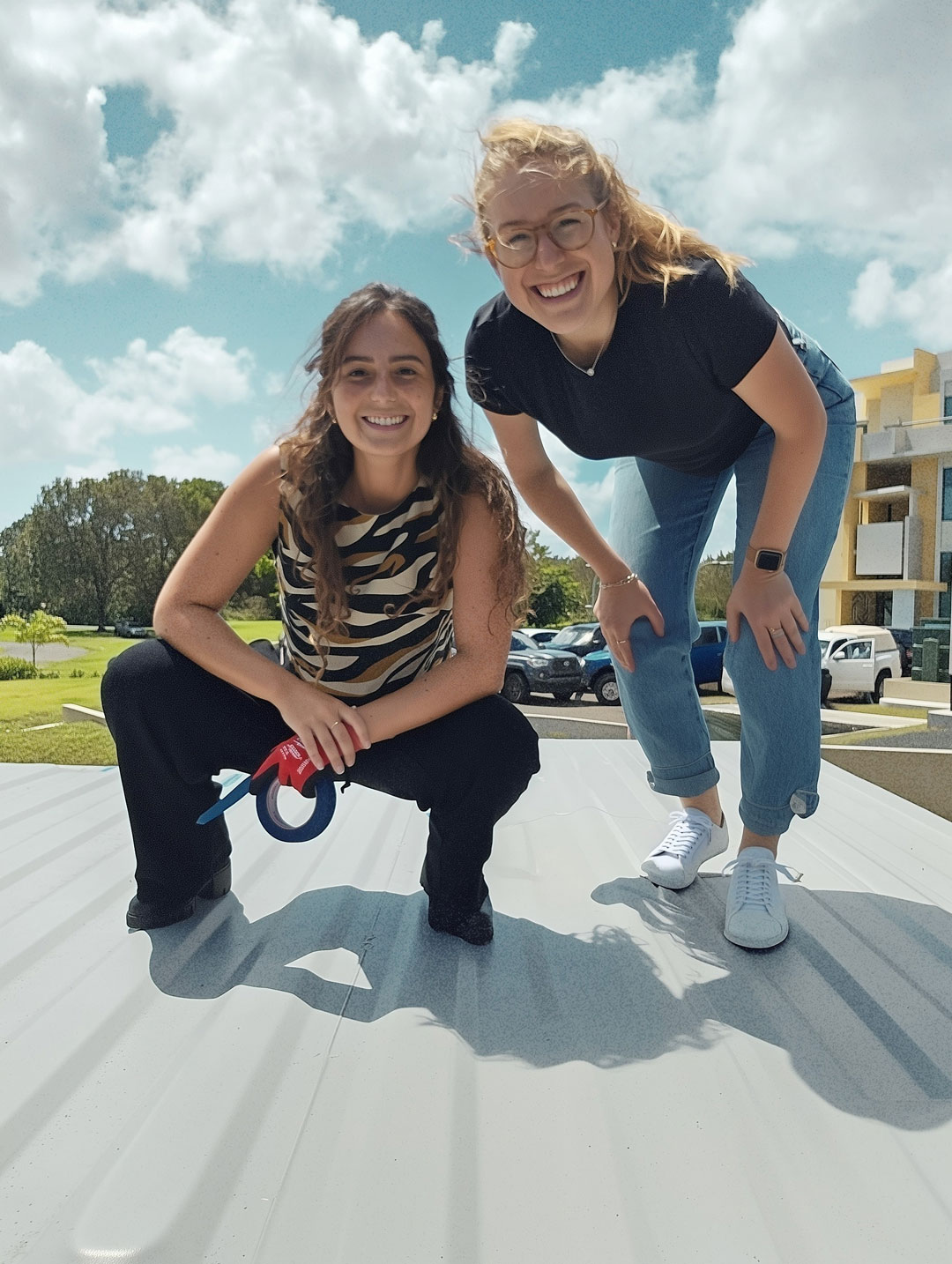
Together, the pair created a standalone system that can provide solar and storage without any of the hassles of current solutions.
Wood says that Raya’s self-ballasted solar-plus-storage “pods” do not discharge power to a home or apartment’s wiring, meaning the system does not need any special electrical permits and also avoids the kinds of permitting and interconnection hassles that often plague residential installations.
Instead, the Raya Power pods are designed to be installed between an exterior outlet (which the system can use to charge the battery when necessary) and a large appliance like a mini split heat pump. The system uses stored solar energy to run the heat pump and save its owner money on their electric bill.
The pods can also be connected to a central hub installed inside the home that can provide power to small appliances such as a refrigerator, fan or internet modem/router in the case of an outage. Raya Power offers an app to allow system owners to control which appliances can use power during an outage.
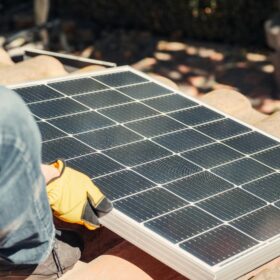
The Raya Power website says a system can be configured with between 1.35 and 1.8 kilowatts of solar panels, along with 2.5 to 5 kilowatt-hours of lithium battery storage. The installation takes up a ground space of 12 feet by 5 feet.
Wood says prototype Raya Power systems have been installed in Puerto Rico by a group of women who were trained in solar installation by Grid Alternatives. She estimates a starting system of three pods can be installed by a team of people in just a few hours without specialized equipment.
Pre-orders for the Raya Power system are available now in Puerto Rico and California with a refundable deposit. The total cost of the system is listed as $6,790, or about $5 per watt. Wood says the company intends to offer financing, but does not currently plan to offer its products through leases or power purchase agreements.
The company enters a U.S. market with major changes on the horizon for residential solar, and with few options for renters or homeowners without an ideal roof for solar. Other plug-in solutions exist from companies like Bright Saver, Craftstrom and EcoFlow, but these are designed to feed power into an AC outlet for use within the home and often require work inside a home’s electrical panel, unlike the Raya Power system, which only provides power to dedicated appliances and its own hub.
This content is protected by copyright and may not be reused. If you want to cooperate with us and would like to reuse some of our content, please contact: editors@pv-magazine.com.



To whom it may concern, I live in northern illinois. In the future are you going to design a unit that will work in the cold/snowy weather of the upper Midwest? Would consider if a viable unit could be developed that would work in 0 degree fahrenheit and shed snow sometimes as deep as 10 to 12 inches.
You also said your unit will work for heat pumps but it did not stat that it would work for a conventional ac unit that has a greater startup amperage?
Thank you in advance,
Alan