
Solar key to space-based AI
Elon Musk, the CEO of both Tesla and SpaceX, raised some eyebrows at this year’s World Economic Forum (WEF) in Davos, Switzerland, when he predicted “that the lowest cost place to put AI will be space and that will be true within two to three years, three at the latest.” pv magazine reported on Musk’s vision on our global website www.pv-magazine.com on Jan. 26, 2026, and exactly one week later SpaceX announced that it was acquiring xAI “to form the most ambitious, vertically integrated innovation engine on (and off) Earth, with AI, rockets, space-based internet, direct-to-mobile device communications, and the world’s foremost real-time information and free speech platform.”

Solar asset managers gear up for Solarplaza 2026 in San Diego
The Solarplaza Summit Asset Management North America conference returns to San Diego from April 1 to April 2, 2026. The expanded event will cover how asset owners can maximize performance, integrate storage and navigate risks as they operate their portfolios.

Treasury domestic content guidance on blue wafers creates compliance risks for solar developers
A legal alert from Wiley indicates that importing silver silicon wafers for domestic anti-reflective coating may disqualify solar cells from the 10% domestic content bonus credit despite conflicting customs rulings.
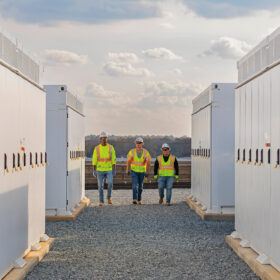
How on-site batteries are fast-tracking data center grid connections
Battery energy storage systems (BESS) are already regularly deployed in uninterruptible power supply (UPS) applications for data centers, but current market conditions are now driving new deployment needs and strategies. Blathnaid O’Dea hears from industry insiders about increasingly popular approaches like bring your own capacity (BYOC) and flexible grid connections (FGC), and why batteries can provide services beyond speed to power that gas turbines can’t.
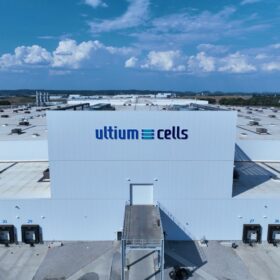
LG and GM pivot Ultium Cells JV to LFP battery production for U.S. storage market at Tennessee plant
LG Energy Solution and GM are converting part of their Spring Hill battery joint venture to LFP production for energy storage, as another North American battery manufacturing plan shifts from EVs toward stationary storage.
Tackling the AI power conversion tax
SolarEdge and Enteligent are stripping away AC bottlenecks to reclaim gigawatts of wasted data center capacity.

U.S. determines China not undercutting domestic battery anode makers
The U.S. International Trade Commission (ITC) has blocked the imposition of anti-dumping and countervailing duties on Chinese active anode material (AAM), providing a massive sigh of relief for the domestic battery storage sector.
Residential solar to decline 33% year-over-year, said Roth Capital Partners
The U.S. residential solar market faces immediate pressure as tax credits expire and FEOC challenges mount.
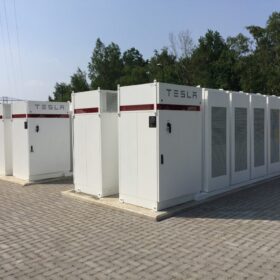
U.S. government confirms Tesla as mystery buyer in $4.3 billion LG Energy Solution LFP deal
The Department of the Interior has ended months of speculation, identifying Tesla as the counterparty for a massive domestic lithium iron phosphate battery contract aimed at scaling U.S. energy storage production.
Seeing shortage, California seeks 6 GW clean power capacity
The CPUC has put out a call for 6 GW of non-emitting resources to be deployed 2 GW per year from 2030 to 2032 – with 750 MW explicitly excluding solar, and another 750 MW requiring long-duration energy storage.