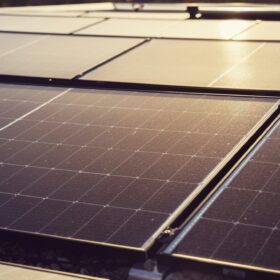
States rethink solar rules as affordability and grid constraints reshape the market
The U.S. distributed solar market is entering a more complicated policy era, according to a report from the North Carolina Clean Energy Technology Center.
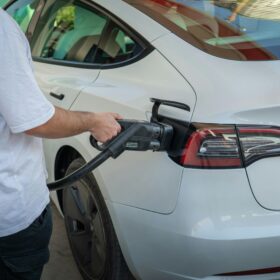
U.S. House wants to tax EV $130/year – equal to an 18.3 MPG car
The fee would rise $5 every two years starting in 2029, topping out at $150/year for EVs and $50 for plug-in hybrids.
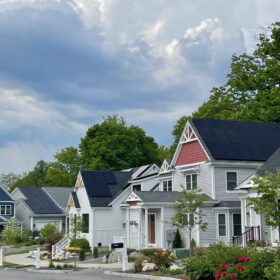
Recheck introduces ‘Certified’ portable credential for residential solar sales representatives
The new credential launches in partnership with six initial solar installers, representing more than 5,000 sales reps, with more to come later in the year.
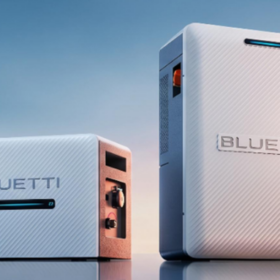
Bluetti launches new storage systems for balcony PV
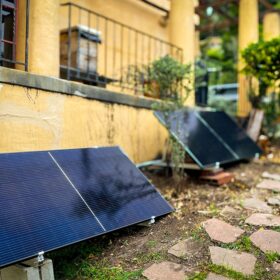
Bluetti has launched the Balco 260 and Balco 500, two integrated balcony PV storage systems combining MPPT, inverter, battery storage and smart control in a plug-and-play architecture for urban households.
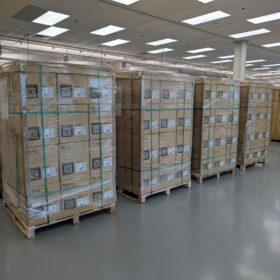
Tigo Energy delivers U.S.-made optimizers to EG4 Electronics for use in domestically-produced goods
The Tigo products will be integrated into and/or bundled with EG4 inverters. The companies say the combined products will qualify for enhanced federal tax incentives.
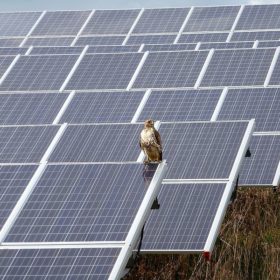
RFP alert: DTE Energy opens bidding for 1 GW of solar and wind capacity
The Michigan utility issued a request for proposals targeting new in-state renewable energy assets to support its long-term generation strategy.

Ford and EDF sign gigawatt-scale BESS agreement for North American market
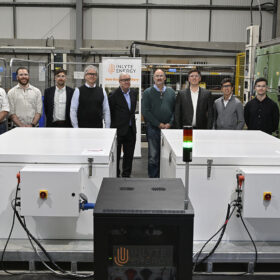
New Ford battery energy storage system (BESS) subsidiary announces multi-year framework agreement with EDF Power Solutions. It follows Ford Energy unveiling its new containerized BESS product earlier in May 2026.
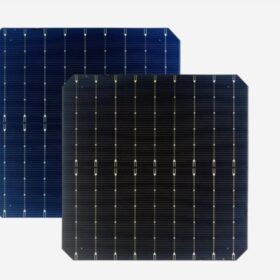
Toyo denies Ethiopia duty evasion, confirms 4 GW ramp and U.S. cell plant
Toyo Co. says a new anti-circumvention petition targeting its Ethiopian solar cell facility is “riddled with misinformation.” The Japanese manufacturer tells pv magazine that the site reached 4 GW of capacity last year and that it is planning a U.S. onshore cell plant.
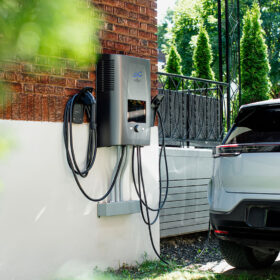
Bi-directional EV charging company dcbel nears 200 installations in California, plans for thousands more
The Montreal-based company is working through phase 1 of a project partially funded by the California Energy Commission, and has just began serving the Quebec market. As it works to prove its technology can support the California grid and its homeowner customers, the company is planning for phase 2.
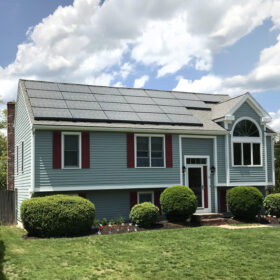
Massachusetts distributed solar potential reaches 92 GW as electrification demand rises
A report from the Applied Economics Clinic reveals that Massachusetts possesses 92 GW of technical potential for distributed solar, a capacity nearly four times higher than the state projected peak electricity demand for 2050. The report explores program design for more equitable access to the benefits of distributed solar and storage.