Ryan Kennedy


Addressing organizational challenges of rapid renewable expansion
Radian Generation, a digital platform and management services provider for renewable energy asset owners, shares its perspective of the challenges faced by organizations as the industry rapidly scales.
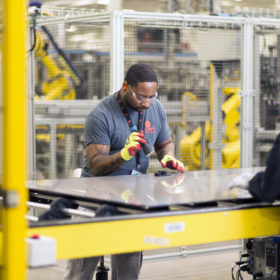
First Solar beats revenue expectations in Q1 earnings, policy tailwinds emerge
The U.S.-headquartered solar panel manufacturer delivered revenues of $794 million, beating consensus estimates by about 10%.
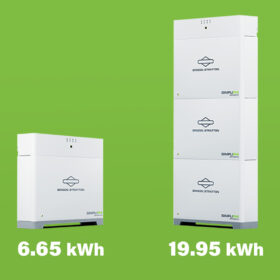
Briggs & Stratton releases 6.6 kWh stackable home battery
The 3.33 kW / 6.65 kWh lithium-ferro-phosphate battery offers home backup and storage of rooftop solar generation.
Microsoft announces largest-ever corporate procurement of renewable energy
The tech giant signed on for 10.5 GW of renewable energy with Brookfield Renewable Partners, which may cost more than $11.5 billion to build, according to Bloomberg NEF.
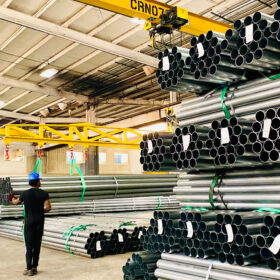
Leading U.S. solar tracker providers expand their manufacturing footprint
Array Technologies broke ground on a factory in New Mexico, while Nextracker expanded operations with a contract manufacturer.
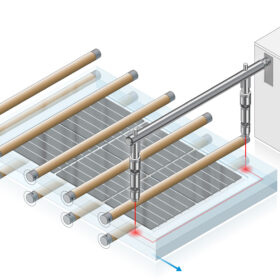
Improving solar panel recyclability with lasers
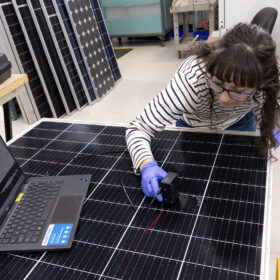
The National Renewable Energy Laboratory developed a proof of concept for a method to remove polymers from solar panel manufacturing to enable more efficient recycling.
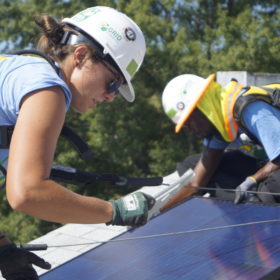
IRS issues final guidance for clean energy tax credit transferability
Rules and definitions for the transfer and sale of tax credits, which has quickly grown to a multi-billion-dollar market, largely affirm the proposed guidance from last June.

Petition filed to enforce antidumping tariffs on solar imports
A coalition of U.S. solar manufacturers submitted a request for investigation of alleged dumping of Chinese goods in four Southeastern Asian nations responsible for roughly 80% of U.S. solar panel supply.

Enphase delivers revenue miss amid softened residential solar demand
The company remains profitable, generating $41.8 million in free cash flow, despite a slumping market.
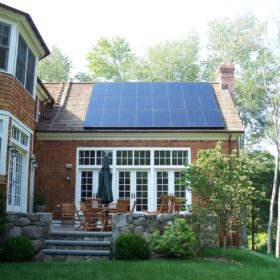
SunPower to close business units, cut about 26% of workforce
The company announced plans to wind down its residential solar installation locations and close its direct sales unit.