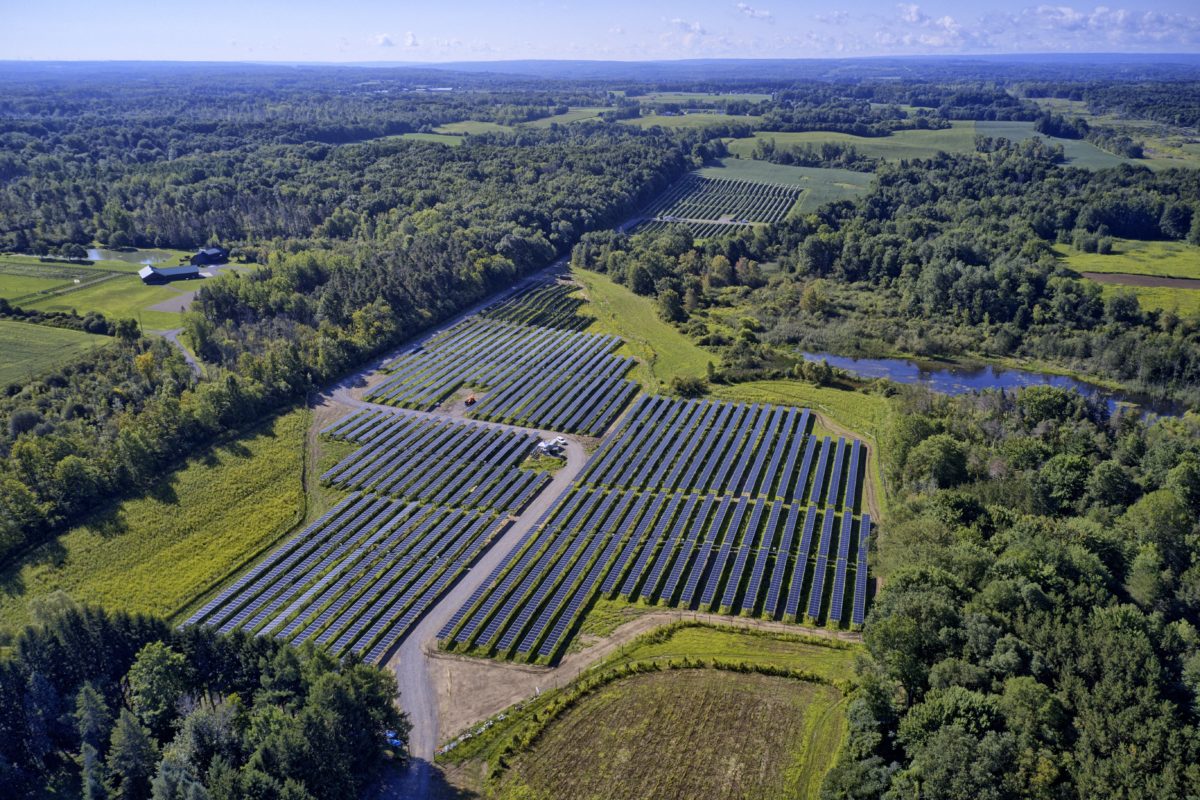





As the power grid reaches saturation in key markets, community solar developers are being forced to adapt to a more complex regulatory and technical landscape.
A recent episode of Norton Rose Fulbright’s Currents podcast explored this transition, highlighting how interconnection hurdles and the Inflation Reduction Act (IRA) are reshaping the sector. The podcast featured Aaron Halimi, chief executive officer of Renewable Properties, who discussed how community solar and distributed generation are adapting during a period when traditional subscription models face constraints.
Customer management remains a significant cost center for community solar. A tool that has emerged for project bankability is Utility Consolidated Billing (UCB). The mechanism allows the community solar credit to appear directly on the customer’s primary utility bill, eliminating the need for a separate invoice from the developer.
By streamlining the payment process, UCB significantly reduces customer turnover, or the rate at which subscribers cancel their service. For lenders and tax equity investors, the decreased risk of customer confusion and default makes these projects easier to finance.
As states like Colorado and Maryland implement mandatory consolidated billing in 2026, the industry expects a higher standard of subscriber retention.
The transition is not without friction. While established markets navigate these shifts, newer markets like New Mexico, Virginia, and New Jersey, which recently opened massive new capacity blocks for 2026, are drafting rules based on these lessons.
Grid congestion has become the primary bottleneck for new capacity. In established markets like Massachusetts and New York, the available “low-hanging fruit” for interconnection has been harvested. Developers now face massive upgrade costs to connect projects to the distribution grid, making interconnection a primary financial risk.
To mitigate these costs and provide grid services, the industry is pivoting toward solar-plus-storage. Batteries allow developers to shift energy export to peak periods, making projects more palatable to utilities and grid operators.
State programs are increasingly incentivizing or mandating these hybrid configurations to solve local capacity issues, effectively turning storage from an optional adder into a functional requirement for “Community Solar 2.0.”
The next generation of community solar projects are expected to be more capital-intensive and technically demanding. Success depends on the ability to integrate storage, navigate complex tax equity structures, and secure a place in increasingly crowded interconnection queues. As the industry matures, the focus has shifted from raw growth to grid-interactive reliability.
This content is protected by copyright and may not be reused. If you want to cooperate with us and would like to reuse some of our content, please contact: editors@pv-magazine.com.






By submitting this form you agree to pv magazine using your data for the purposes of publishing your comment.
Your personal data will only be disclosed or otherwise transmitted to third parties for the purposes of spam filtering or if this is necessary for technical maintenance of the website. Any other transfer to third parties will not take place unless this is justified on the basis of applicable data protection regulations or if pv magazine is legally obliged to do so.
You may revoke this consent at any time with effect for the future, in which case your personal data will be deleted immediately. Otherwise, your data will be deleted if pv magazine has processed your request or the purpose of data storage is fulfilled.
Further information on data privacy can be found in our Data Protection Policy.