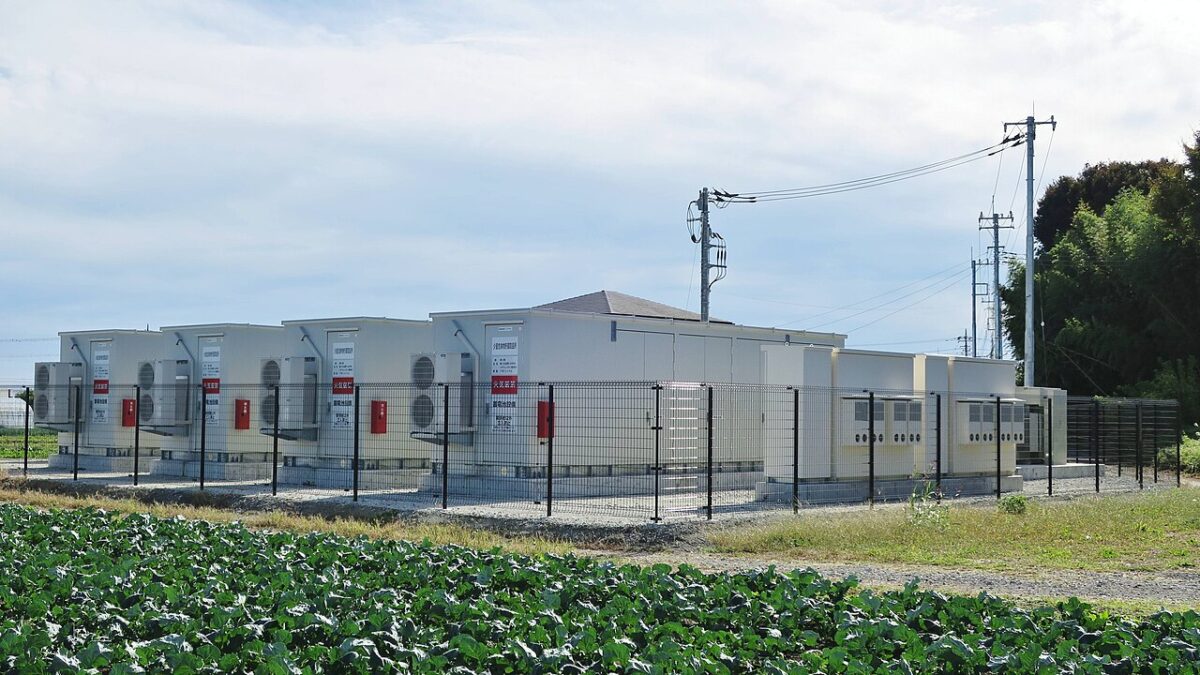





The U.S. energy storage industry has entered a “new phase of sustained, high-volume deployment,” according to the inaugural Energy Storage Market Outlook Q1 2026 released by the Solar Energy Industries Association (SEIA) and Benchmark Mineral Intelligence.
The report confirms that 2025 was the largest single year for battery additions on record, with the U.S. installing 57.6 GWh of new capacity, a 30% increase over 2024. The utility-scale segment remained the primary engine of growth, accounting for nearly 50 GWh of the total, while residential storage saw a 51% year-over-year surge as homeowners raced to capitalize on tax credits before year-end shifts.
Notably, the report underscores a “red state” boom in clean energy infrastructure. Two-thirds of all utility-scale storage installed in 2025 was built in states won by President Donald Trump in the 2024 election. Texas is now on a trajectory to overtake California in 2026 as the nation’s largest energy storage market, driven by the state’s urgent need for grid reliability amid rising demand from AI and data centers.
“Energy storage is no longer an add-on to solar; it is a central technology for America’s energy future,” said Darren Van’t Hof, interim president and CEO of SEIA.
However, the outlook for 2026 is tempered by the passage of the One Big Beautiful Bill Act (OBBBA) and new “Foreign Entity of Concern” (FEOC) requirements. While SEIA projects 2026 installations to climb to 70 GWh, the industry faces a complex period of supply chain realignment.
Five trends for energy storage in 2026
An analysis from Wood Mackenzie identifies five themes that will define the energy storage landscape over the next 12 months:
1. Global supply chain restructuring China’s dominance in the battery supply chain is facing new hurdles. To maintain access to the U.S. market and comply with FEOC requirements, many Chinese firms are expected to restructure their ownership stakes to below 25% in 2026. This pivot, combined with new tariffs, is creating a temporary “bottleneck” for top-tier certified battery modules.
2. From voluntary to mandatory: Grid-forming regulation 2026 is the year grid-forming inverters move from technical curiosity to regulatory necessity. As coal and gas plants retire, these systems—which stabilize voltage and frequency—are being mandated in markets like Europe and parts of the U.S. to ensure grid stability in high-renewable scenarios.
3. Non-lithium technologies emerge at scale While lithium-ion remains king, alternative chemistries are finally hitting the “bankable” stage. Wood Mackenzie points to a surge in sodium-ion, flow batteries, and iron-air systems. Significant supply deals, such as the 4.75 GWh sodium-ion agreement between Peak Energy and Jupiter Power, signal that the market is diversifying to mitigate lithium supply risks.
4. Data centers drive “speed-to-power” demand Generative AI is outstripping the grid’s ability to provide traditional interconnections. In response, data center developers are increasingly co-locating storage to manage massive millisecond “training loads” and bypass utility bottlenecks. Storage is now the second most common onsite power source in the data center pipeline, trailing only gas turbines.
5. Hybrid system popularity expands globally The U.S. has long led the “solar-plus-storage” trend, but 2026 will see this model dominate in Australia, India, and Europe. Falling capture prices for solar are forcing developers to add batteries to shift generation into evening peaks, making standalone solar projects increasingly difficult to finance in saturated markets.
This content is protected by copyright and may not be reused. If you want to cooperate with us and would like to reuse some of our content, please contact: editors@pv-magazine.com.






By submitting this form you agree to pv magazine using your data for the purposes of publishing your comment.
Your personal data will only be disclosed or otherwise transmitted to third parties for the purposes of spam filtering or if this is necessary for technical maintenance of the website. Any other transfer to third parties will not take place unless this is justified on the basis of applicable data protection regulations or if pv magazine is legally obliged to do so.
You may revoke this consent at any time with effect for the future, in which case your personal data will be deleted immediately. Otherwise, your data will be deleted if pv magazine has processed your request or the purpose of data storage is fulfilled.
Further information on data privacy can be found in our Data Protection Policy.