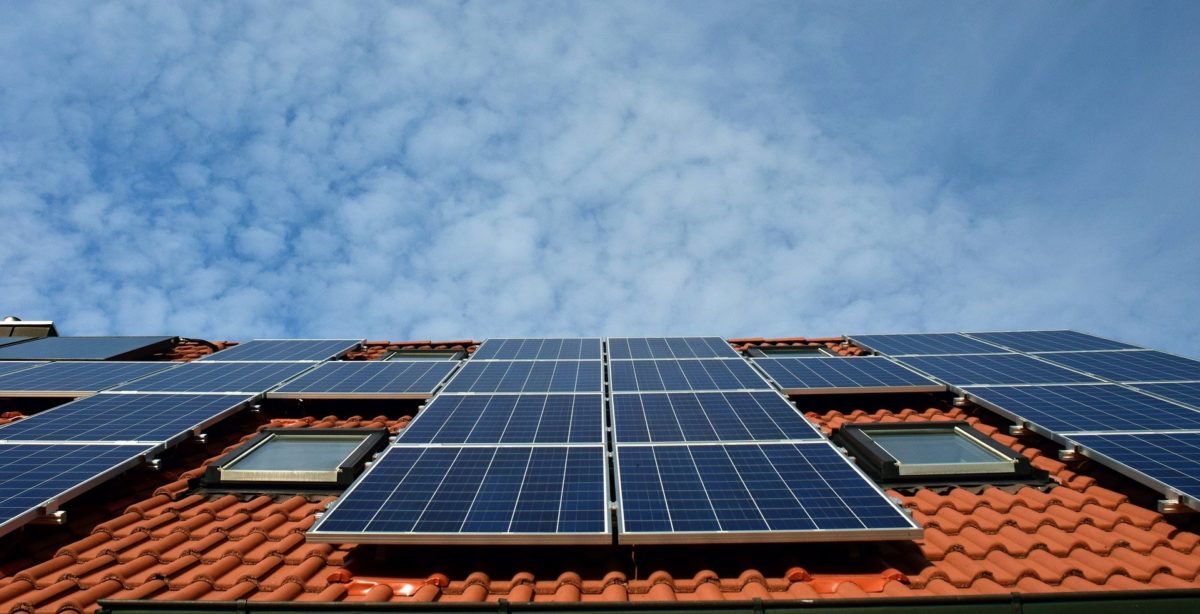





For more than 30 years, the solar industry has been built around rectangular panels. Everything, from cutting the silicon cells to framing, shipping, mounting, and connecting them to inverters, has been designed for straight lines and right angles. This standardization helped lower costs, improve reliability, and allow solar to grow rapidly around the world.
Residential roofs have hips, valleys, dormers, skylights, chimneys, and required safety setbacks. Commercial buildings often have angled walls and irregular rooflines. As architecture becomes more creative and complex, fitting a rigid rectangular grid onto these surfaces can be challenging. In many rooftop projects, the main limit is not sunlight or equipment size, but how well the panels physically fit the shape of the roof. As solar expands into more urban and architecturally complex spaces, geometry is becoming an important, though often overlooked, constraint.
How roof geometry constrains solar deployment
The industry has tested alternatives before. Triangular and other non-standard modules were introduced, particularly in Japan, to fill edge gaps. While they addressed specific corner cases, they did not significantly improve overall packing efficiency. Added manufacturing complexity and limited performance gains meant the rectangular format remained dominant.
Today, the question can be asked in a different way. Instead of using non-rectangular panels only as small filler pieces, we can think of panel shape as part of the overall design strategy. In other words, the shape of the module becomes another tool engineers can use to get more panels onto roofs that are irregular or space is limited.
Turning geometry into a solar advantage
Modern solar design software already treats a roof like a digital puzzle. The roof is drawn as a shape, usually a polygon. Chimneys, skylights, and vents are marked as obstacles. Safety setbacks and spacing rules are added. Inside that digital model, the goal is simple: fit as many solar panels as possible while following all the rules.
With traditional rectangular panels, installers usually place them in just two directions, portrait or landscape. That works well on flat, rectangular roofs. But many roofs are not perfectly square. When a roof edge is angled or broken into smaller sections, rectangular panels cannot follow the lines cleanly. Small gaps are left along edges and around corners. Those gaps add up, and usable space is lost. If panels are allowed to rotate at more angles instead of just two, more placement options become possible. That means panels can follow the natural shape of the roof more closely. Rhombus-shaped panels, especially those based on Penrose tiling patterns, are one example. Because of their symmetry, they can rotate in specific increments such as 36° or 72° and still fit together without leaving holes. This added flexibility helps fill areas near angled edges without creating random or messy layouts.
To understand the impact, imagine two real rooftop comparisons where everything was kept the same: same roof size, same obstacles, same safety spacing. The only difference was the panel shape and the number of directions they were allowed to face.
- Layout A accommodated 31 rectangular modules versus 39 Penrose rhombus modules, a 25.8% increase.
- Layout B accommodated 19 rectangular modules versus 28 Penrose rhombus modules, a 47.4% increase.
If each panel produces roughly the same amount of energy, more panels directly mean more electricity. In simple terms, when you increase installed capacity, annual energy output increases too. Modeling tools such as PVsyst show that on roofs with awkward shapes or tight boundaries, expanding orientation options can boost yearly energy production by around 40%. (Readers who want the full mathematical framework and comparative layout methodology can find a deeper technical treatment in Sheth’s recent paper on IEEE TechRxiv).
Module shape does not Alter electrical fundamentals
A common concern about using non-rectangular solar panels is that they might create electrical problems. In reality, a rhombus-shaped panel can be built using the same internal components as a regular rectangular panel. Inside, it still uses standard silicon solar cells connected together in a series, along with small protective devices called bypass diodes that help reduce power loss if part of the panel is shaded. The basic electrical behavior, how voltage and current are produced, remains the same.
Manufacturers can even use standard half-cells inside a non-rectangular frame. If you change the number of cells in the panel, the voltage changes accordingly, while the current stays mostly the same. This means the panel can still connect to the same types of inverters and wiring systems used today. Installers would follow the same electrical design rules they already know.
In simple terms, the shape of the panel does not change how electricity is created. The science of how electrons move inside the solar cells stays the same. The geometry mainly affects how well the panels fit on the roof, not how well they generate power.
Can manufacturing adapt?
It is reasonable for people to be cautious about non-rectangular solar panels. The solar industry has spent decades building factories and equipment designed specifically for rectangular panels. Changing the shape would mean cutting glass differently, adjusting manufacturing machines, redesigning frames and mounting systems, and going through new safety and certification tests. These are significant changes, not small tweaks. In the past, triangular panels were tried in some markets, but the extra complexity did not deliver enough benefit to justify large-scale production.
That said, there are ways to reduce disruption. One practical approach is to keep using the same rectangular solar cells inside the panel and simply change the outer shape of the module. Modern manufacturing techniques, such as laser cutting, shingled-cell construction, and flexible electrical connectors, already make it easier to adapt to new layouts without completely rebuilding factories. The key question becomes economic: does the added manufacturing cost justify the extra roof space that can be used? In markets where roof area is limited or highly valuable, the answer could be yes. Importantly, this type of innovation does not require inventing new solar cell materials. It mainly involves rethinking how the cells are packaged and assembled into the final panel.
From mounted systems to integrated skins: Rethinking solar geometry
The biggest opportunity for new panel shapes may be in building-integrated solar, where solar panels are designed to be part of the building itself rather than something added on top. Today, architects and developers want solar systems that not only produce electricity but also look good blend naturally with the structure and act as weather barrier. Solar shingles are a good example. Instead of installing panels over a roof, solar shingles replace regular roofing materials and act as the protective layer against rain and weather. Similarly, some buildings use solar panels as part of the exterior walls, where they serve as cladding while also generating power. In these cases, appearance and flexibility in design are just as important as performance.
Using shapes like rhombus tiles can help create a smooth, continuous surface without the rigid rows of traditional rectangular panels. The edges of these tiles can be designed to lock together, overlap slightly, and hide fasteners so they work like normal roofing materials. Even the sections that do not generate electricity can be made to look the same, so the whole building maintains a clean and uniform appearance. The industry has already demonstrated its ability to evolve through innovations such as bifacial modules, shingled-cell technology, frameless glass-glass designs, and solar shingles. On buildings with curved or unusual shapes, smaller tiles can follow the surface more closely than large rectangular panels. Places like stadium roofs, transit stations, or modern commercial buildings with bold designs could benefit from this approach. In these situations, the shape of the solar panels is not just a technical detail.
As solar becomes more common in cities and architecture grows more complex, adjusting panel shapes could be another practical step forward. This does not mean replacing rectangular panels everywhere. They remain highly effective on large, simple surfaces. Instead, it means giving designers more options when buildings are not perfectly square. In a world of irregular roofs and creative architecture, that added flexibility could make a meaningful difference.

Kajal Sheth is a Staff Engineer at Reactivate, an Invenergy company, where she focuses on solar engineering, data‑driven analysis, and system optimization. Her work centers on advancing practical, scalable approaches to distributed and commercial solar deployment. She holds a master’s degree in Energy Management and Systems Engineering from the New York Institute of Technology and completed postgraduate studies in Data Science and Artificial Intelligence at the University of Texas at Austin.
The views and opinions expressed in this article are the author’s own, and do not necessarily reflect those held by pv magazine.
This content is protected by copyright and may not be reused. If you want to cooperate with us and would like to reuse some of our content, please contact: editors@pv-magazine.com.


By submitting this form you agree to pv magazine using your data for the purposes of publishing your comment.
Your personal data will only be disclosed or otherwise transmitted to third parties for the purposes of spam filtering or if this is necessary for technical maintenance of the website. Any other transfer to third parties will not take place unless this is justified on the basis of applicable data protection regulations or if pv magazine is legally obliged to do so.
You may revoke this consent at any time with effect for the future, in which case your personal data will be deleted immediately. Otherwise, your data will be deleted if pv magazine has processed your request or the purpose of data storage is fulfilled.
Further information on data privacy can be found in our Data Protection Policy.