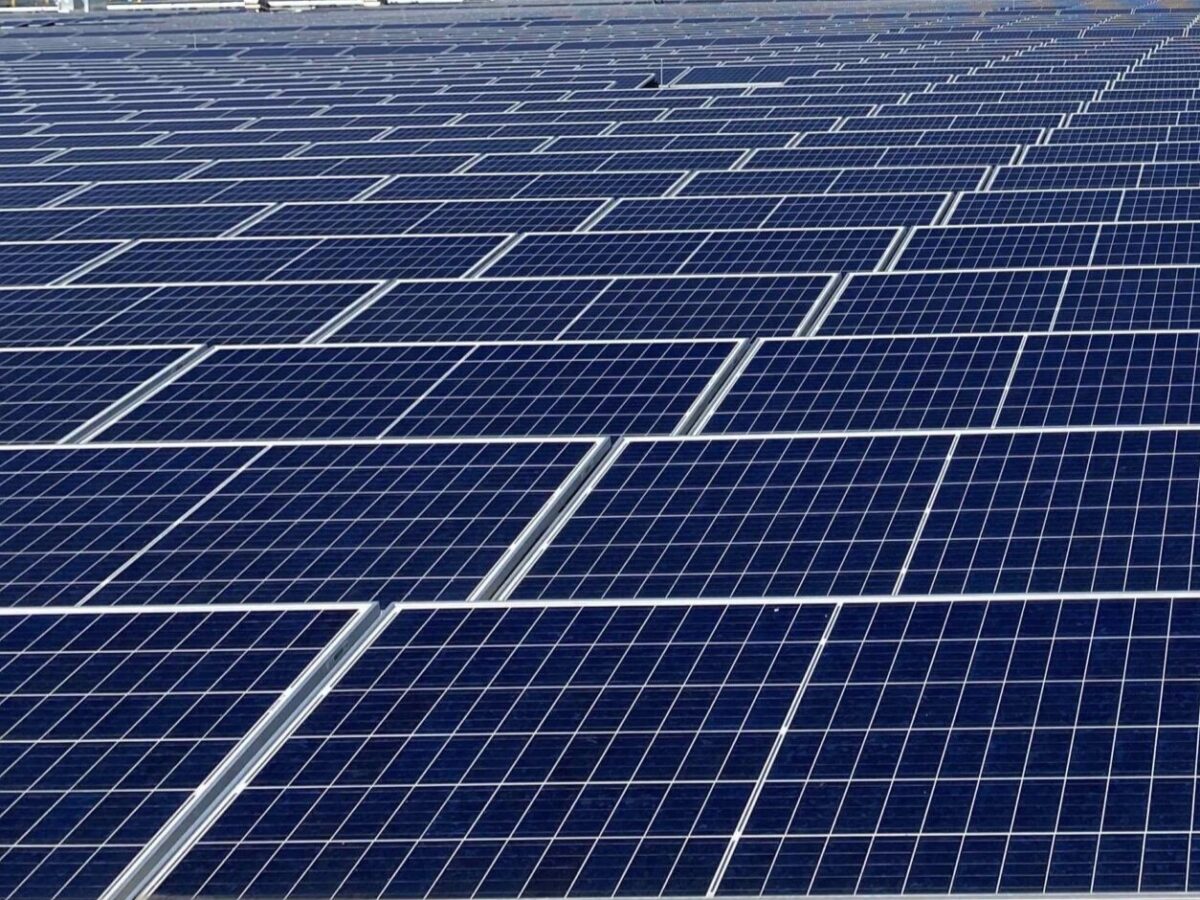





San Luis Obispo, Calif.-based developer REC Solar has contracted with Arctic Cold on a 3.3 MW ballasted rooftop PV project at the cold storage and logistics company’s new location in Santa Maria, Calif. REC will own and operate the project as part of its independent power producer portfolio.
Arctic Cold’s Santa Maria facility primarily provides cold storage for fresh and frozen fruits distributed to regional food service companies, big-box retailers and other providers. Construction of the solar array is expected to begin soon, once a utility study is completed. Component suppliers and engineering service and operations providers have not been announced.
James Presta, business development manager at REC Solar, told pv magazine USA that the project falls into the high end of rooftop commercial and industrial solar installations. While major developers have reported that many of their clients are having difficulty expanding because of inadequate access to grid power, Presta said Arctic Cold’s short-term interest in solar is for energy costs and environmental concerns.
“This project wasn’t driven by the grid not having enough capacity to serve the facility, which is fairly new construction and had full power from PG&E, the local utility,” he said. “The goals were to help reduce energy spending and also to improve the facility’s sustainability. It was important to them to retain the renewable energy credits and help pursue LEED [Energy and Environmental Design] certification.”
The latter goal refers to a framework for energy efficient and cost-effective buildings developed by the U.S. Green Building Council non-profit intended to support environmental and social benefits in construction.
Arctic Cold said it anticipates first-year energy savings of $850 thousand, with a power purchase agreement (PPA) protecting against future energy price increases. The project is anticipated to offset roughly 83% of the facility’s energy needs and avoid an estimated 2,953 metric tons of CO2 annually.
“As we continue our efforts to build new, state-of-the-art facilities, keeping energy costs low and guarding against future volatility will be critical,” said Tim Dayton, president and CEO of Arctic Cold. “Partnering with REC Solar will help us identify creative, long-term solutions for Arctic Cold and its customers.”
According to Presta, the primary purpose of the solar installation will be for self-consumption, with surplus being made available to the utility under a net metering agreement. Presta, who says his main focus at REC Solar is on behind-the-meter projects, said Arctic Cold’s generation qualifies, even if it can’t properly be characterized as a proper microgrid. However, he said there are provisions for adding battery storage to the project in the future.
Unlike some PV projects, interconnection is not an issue for the Arctic Cold installation. The facility is already in operation and the array will serve to replace grid power not bolster what is already provided. At the same time, the requirement for a two-way connection to enable the PPA entails a review process, which is ongoing.
“For a project this size, we usually expect some sort of a study for the utility,” Presta said. “We’re anticipating approval here in the short term, and then we can work towards the physical installation.”
This content is protected by copyright and may not be reused. If you want to cooperate with us and would like to reuse some of our content, please contact: editors@pv-magazine.com.





By submitting this form you agree to pv magazine using your data for the purposes of publishing your comment.
Your personal data will only be disclosed or otherwise transmitted to third parties for the purposes of spam filtering or if this is necessary for technical maintenance of the website. Any other transfer to third parties will not take place unless this is justified on the basis of applicable data protection regulations or if pv magazine is legally obliged to do so.
You may revoke this consent at any time with effect for the future, in which case your personal data will be deleted immediately. Otherwise, your data will be deleted if pv magazine has processed your request or the purpose of data storage is fulfilled.
Further information on data privacy can be found in our Data Protection Policy.