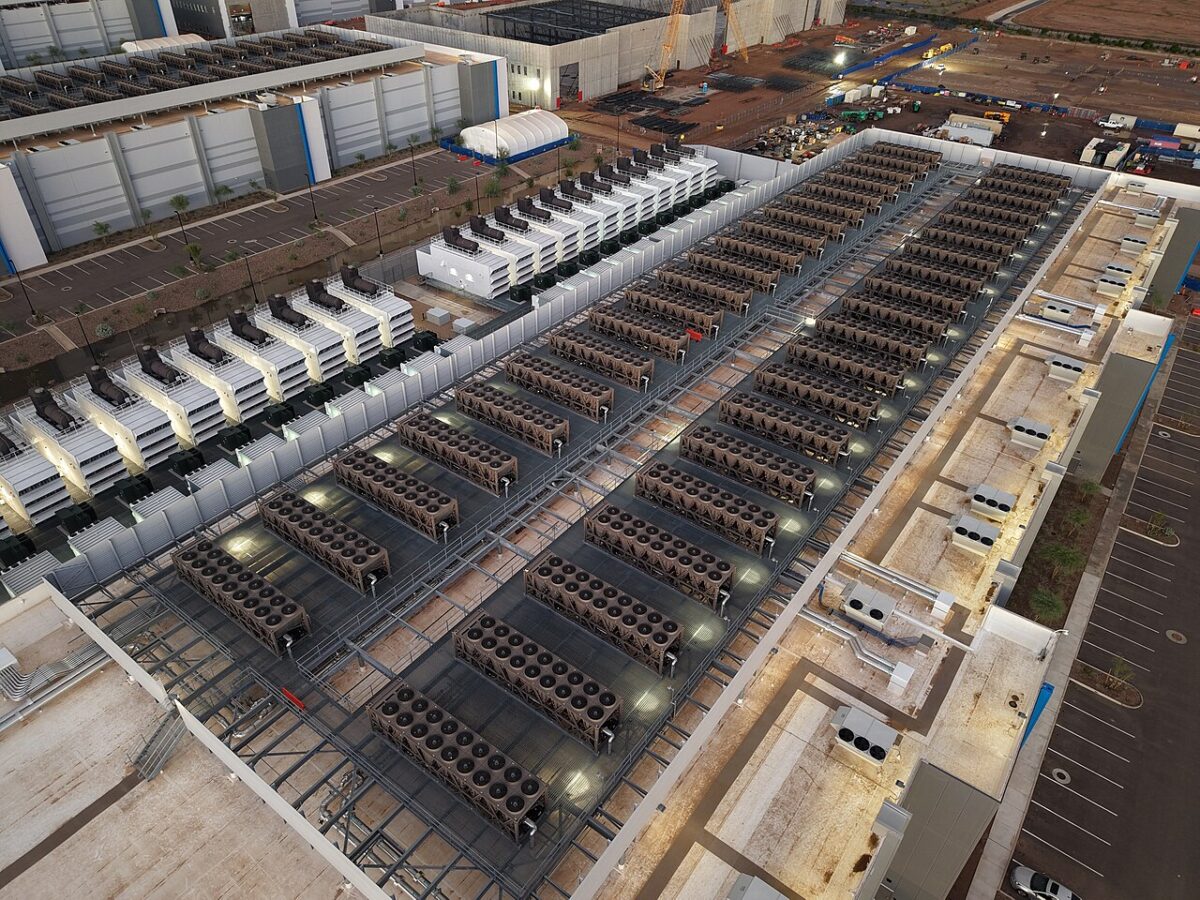





Mexico is increasingly attracting industrial energy investments, particularly from data centers relocating from the United States, according to Santiago Barcón, CEO of PQBarcon.
There are bottlenecks in US electricity infrastructure, especially in states like Texas, where projects needing around 150 MW face connection timelines of up to seven years. This has made Mexico an attractive alternative, where power supply can typically be secured in about two years.
However, Barcón noted that data centers in Mexico, at least initially, will likely be powered by gas power plants operated by the country’s national utility, the CFE. That said, renewables may become a feasible alternative at some point.
“Although data centers can structure renewable PPAs, in practice they rely heavily on the grid and firm gas generation to ensure service quality and continuity, with only limited battery storage,” Barcón told pv magazine.
This industrial shift is driving interest in hybrid energy solutions, including behind-the-meter projects and cogeneration setups, where electricity and steam or cooling are needed simultaneously.
Renewables may eventually represent an alternative, as the Mexican PV market is showing signs of tangible development, driven by regulatory adjustments and a renewed focus on technically viable projects.

“Mexico is beginning to show clear signs of reorganization in its electricity market after years marked by regulatory tensions and frictions between the public and private sectors,” Barcón said.
A recent call for new renewable capacity reflects growing interest in solar and other renewables, though it was not a traditional public auction.
The process offered 6 GW of new capacity, received bids totaling around 10 GW, and ultimately awarded 4 GW. Unlike previous schemes, selected projects will not sell energy directly to the CFE but instead to the wholesale electricity market or end consumers via bilateral contracts (PPAs), including hybrid structures between spot markets and long-term contracts. The call allowed only two weeks for submissions, favoring projects that already had prior permits.
Barcón said that this careful selection addresses a structural issue. In past years, renewable permits were granted without fully considering system stability, leading to approvals totaling 35 GW while peak demand at the time was around 42 GW. Since renewables have dispatch priority, the system faced operational limitations, prompting authorities to now select only technically viable projects.
A central element of the new regulatory approach is mandatory storage for newly authorized renewable plants, requiring batteries equivalent to 30% of installed capacity for three to four hours – aligning with standards used in California.
“Uniform rules may not reflect the needs of each node – some areas may require more hours, others less – but a fixed standard provides regulatory clarity and facilitates planning,” Barcón noted.
Another key market change is the increase in the behind-the-meter generation threshold. Administrative limits without complex interconnection studies rose from 0.5 MW to 0.7 MW, with simplified schemes now allowing installations up to 20 MW, provided no electricity is injected into the grid. This change is expected to be a major growth driver, especially in regions with limited access to firm power.
Solar distributed generation has already reached about 4 GW in Mexico and is growing strongly in both the commercial and residential sectors, particularly among high-consumption domestic users. In cities like Mexico City, exceeding 500 kWh per month pushes households into the highest tariff bracket, incentivizing larger PV installations that can nearly eliminate electricity bills. However, residential storage remains marginal due to cost and stable supply.
Compared to other Latin American markets, green hydrogen has limited momentum in Mexico, primarily because low-cost natural gas diminishes its short- and medium-term economic appeal. Politically, the sector will see a gradual opening under the current federal administration, as it is showing more pragmatism toward renewable development and private participation.
“If transmission expansion keeps pace with this new stage, and technical selection mechanisms and clear requirements like mandatory storage continue, Mexico could enter a more orderly and sustainable growth cycle, combining centralized generation with strong behind-the-meter and distributed generation expansion,” Barcón concluded.
Santiago Barcón is a Mexican entrepreneur, CEO of PQBarcon, and founder of Energía Hoy, a platform specializing in the energy sector. He recently published the book “How to Be a Good Engineer: Ten Commandments and 100 Tips to Achieve It.”
This content is protected by copyright and may not be reused. If you want to cooperate with us and would like to reuse some of our content, please contact: editors@pv-magazine.com.



By submitting this form you agree to pv magazine using your data for the purposes of publishing your comment.
Your personal data will only be disclosed or otherwise transmitted to third parties for the purposes of spam filtering or if this is necessary for technical maintenance of the website. Any other transfer to third parties will not take place unless this is justified on the basis of applicable data protection regulations or if pv magazine is legally obliged to do so.
You may revoke this consent at any time with effect for the future, in which case your personal data will be deleted immediately. Otherwise, your data will be deleted if pv magazine has processed your request or the purpose of data storage is fulfilled.
Further information on data privacy can be found in our Data Protection Policy.