




When Tim Pianta sat down to talk with pv magazine USA about Base Power’s new 10 MW distributed energy storage partnership with El Paso Electric (EPE), his next appointment was already on his mind.
“I’m closing on a house today,” he said, adding, “it’s time to put down roots in Austin.”
The choice makes sense, because Base Power — where Pianta is head of utility partnerships — is growing rapidly all across the Lone Star State and maintains its headquarters in Austin.
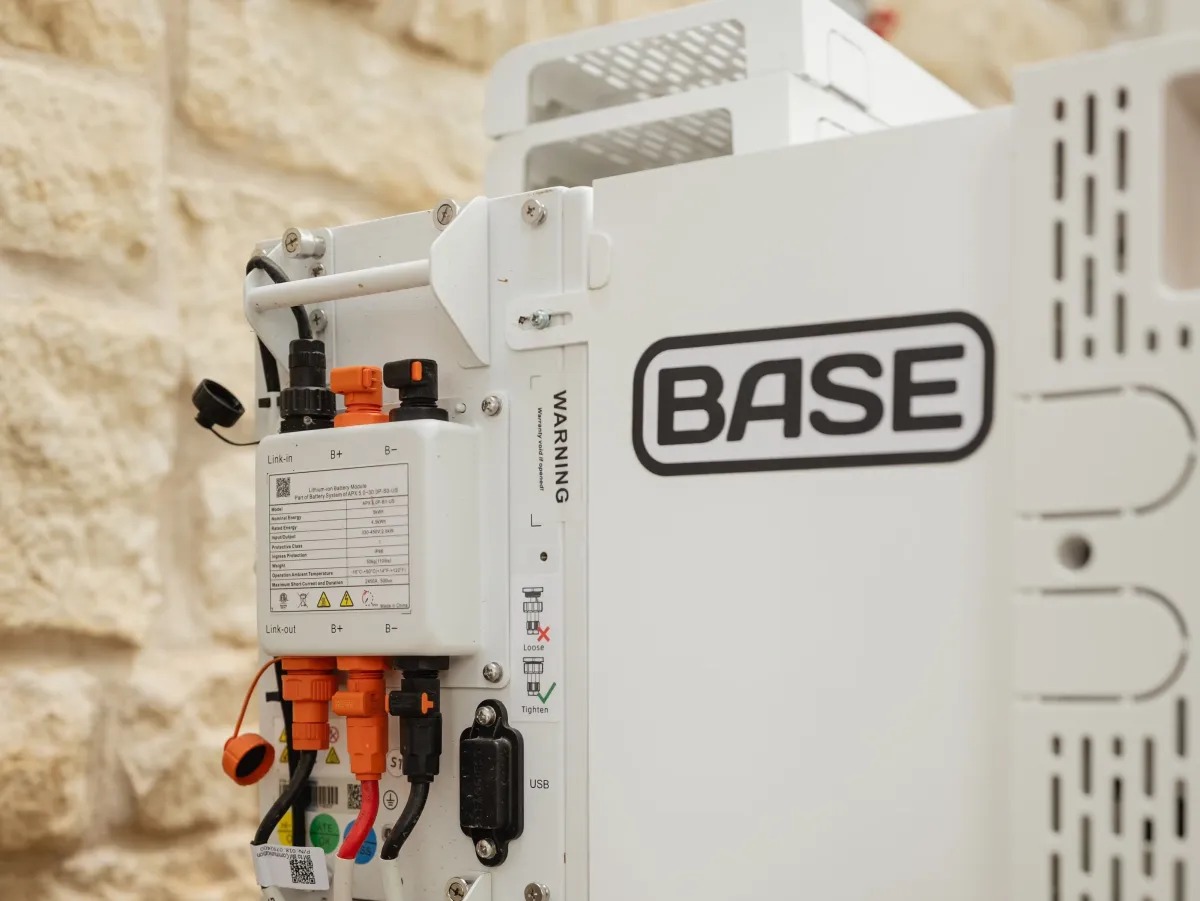
For the project with EPE, the company will install a fleet of batteries at customer homes, which the utility will control to address times of peak demand on the grid.
The partnership is something new for Base Power: its first foray into operating alongside a regulated, investor-owned utility.
Until now, the company has operated as a retail electric provider (REP) in the deregulated Texas energy market, meaning it sells electricity directly to residential customers. Base Power batteries are located at each customer’s house, and the company controls their charging to pull from the grid when the cost of electricity is low and discharge when it’s high — a practice known as “rate arbitrage.”
The company advertises its electricity plan to homeowners on a three-year fixed-price agreement that starts with a $695 one-time installation fee for a single 25-kWh battery. The plan requires an ongoing $19 monthly fixed payment and a per-kWh rate of 8.5 cents (before the delivery utility charges another 6-7 cents) for electricity.
How the El Paso Energy partnership is different
Unlike its REP business, homeowners who sign up for the EPE program will pay no ongoing costs for energy. Instead, they will receive a one-time payment of $250 per battery in exchange for serving as battery hosts, and also enjoy the benefits of resilience with a battery backup system located on their property.
However, rather than being connected to each home behind the electric meter, the batteries will be hooked up on the utility side of the meter. This arrangement allows EPE to serve energy to the homes or the grid depending on its needs at any given time.
The utility will control the batteries as part of a unified fleet, with a total dispatchable power capacity of up to 10 MW to be discharged during times of peak demand.
That 10 MW of power represents about 0.4% of EPE’s 2024 peak load of 2,316 MW (according to the utility’s 2025 sustainability report). But Pianta sees this project as the beginning of something much larger.
“Point-four percent today, and four percent tomorrow,” he said, adding “this is Base’s core competency… we’ve developed an engine to deploy local capacity really quickly and our business model is laser focused on using that resource to support the grid and to solve challenges.”
Each battery holds 25 kWh of energy and has a maximum power output of 11 kW, and homeowners can have a maximum of two batteries located at their home, which Pianta said allows the company to serve nearly all homes.
“Part of our process is to do a site survey and understand the electrical setup at homes to ensure that a battery can be safely installed,” he said. “Unless customers have things like multiple main panels or other elements that would make the homes difficult to service, we’re able to serve them.”
To enable utility control of the batteries, Base Power commissions them with redundant communication, mostly relying on a host customer’s wi-fi connection, but with a virtual 4G chip as a fallback. In certain rare cases, the utility already has fiber optic cable run to the meter, allowing Base Power to add another layer of redundancy.
In the event of bad weather, the utility can ensure the batteries retain a certain amount of the energy they store in case the grid goes down. In an outage, the Base Power batteries disconnect from the grid to allow for repairs, but continue to provide their stored energy to residents.
Future expansion
Base Power’s decision to operate initially as a REP was a strategic move. “We were able to get the technology stack built, the operational engine established and the customer outcomes demonstrated in a way that was really critical,” said Pianta, adding that the company’s current operations have been “a really good way to demonstrate the merits of the model.”
The company, founded in 2023, has now grown its distributed energy storage portfolio to some 250 MWh statewide. Last year, the company raised $1 billion in a single Series C investment round, on top of $200 million raised in a Series B round in April.
With this funding, investors have shown great confidence in Base Power’s ability to expand beyond its REP business.
The company is also looking to scale its vertically-integrated manufacturing business, with a new Austin facility the company hopes will receive property tax incentives from the city based on the facility’s potential to create 500 jobs.
While Base Power has not announced concrete plans for expansion outside of Texas, Pianta says the company is looking at places around the country that have both regulated and de-regulated energy markets, paying special attention to places where the needs of grid operators and customer demand for resiliency are strong factors.
This content is protected by copyright and may not be reused. If you want to cooperate with us and would like to reuse some of our content, please contact: editors@pv-magazine.com.





By submitting this form you agree to pv magazine using your data for the purposes of publishing your comment.
Your personal data will only be disclosed or otherwise transmitted to third parties for the purposes of spam filtering or if this is necessary for technical maintenance of the website. Any other transfer to third parties will not take place unless this is justified on the basis of applicable data protection regulations or if pv magazine is legally obliged to do so.
You may revoke this consent at any time with effect for the future, in which case your personal data will be deleted immediately. Otherwise, your data will be deleted if pv magazine has processed your request or the purpose of data storage is fulfilled.
Further information on data privacy can be found in our Data Protection Policy.