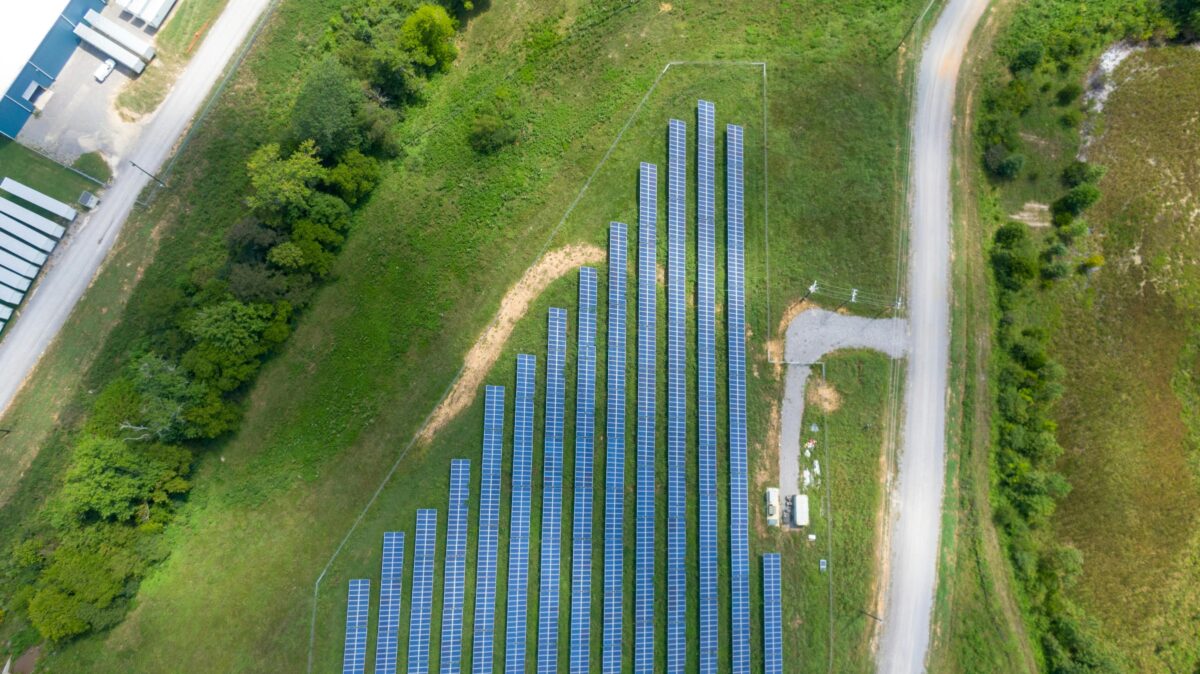





Solar energy met nearly two-thirds of the growth in U.S. electricity demand in 2025. According to a report from Ember, solar generation increased by 83 TWh, a 27% increase over 2024.
U.S. electricity demand rose by 3.1% in 2025. This was the fourth-largest rate of increase in the last decade. Solar now generates 8.5% of all U.S. electricity, said the report.
Regional growth
Solar generation grew most in regions where demand rose the fastest. In Texas and the Midwest, solar growth met 81% of the increase in electricity demand. In the Mid-Atlantic, solar met 33% of the demand rise.
In Florida, solar growth exceeded demand growth, leading to a decrease in fossil fuel generation. In the Southwest, Northwest, Southeast, and California, solar met nearly all the rise in demand.
Battery storage and dispatch
The rise of batteries is changing solar from a daytime resource to dispatchable all-day electricity. Battery capacity additions grew 133% in 2025, reaching 26 GW, said the report.
In California, utility-scale solar and battery generation rose 58% over the last six years, but generation during the sunniest hour of the day only rose 8%. This indicates that the majority of new solar energy is being stored and delivered during the evening, said Ember.
Across the U.S., solar met 100% of the rise in daytime demand between 10:00 and 18:00 ET. With the increase in storage, solar also began to meet a portion of the demand rise during the evening hours of 18:00 to 02:00 ET, found the report. Demand growth occurring overnight was still met primarily by coal and gas, it found.
Capacity and grid constraints
While generation reached record levels, new utility-scale solar capacity additions were 6% lower than in 2024. The report attributes this to project delays caused by tariff uncertainty and long wait times for grid connections.
The residential market also saw a slowdown. California, the largest residential market, saw lower contributions from behind-the-meter systems following changes to net metering rules.
Ember’s report said that solar is only beginning to scale in most of the U.S. There is currently no “duck curve” at the national level. Non-solar electricity generation needed during the day is still higher than what is needed overnight.
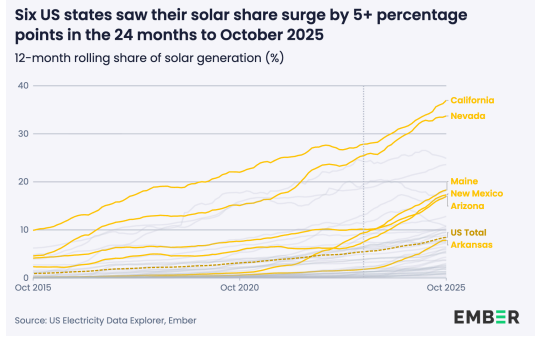
During peak sun hours, solar provides 20% of U.S. electricity generation on average, said the report. While California and Nevada have solar shares of 37% and 34%, 37 states still have a solar share of less than 10%.
New Mexico was the fastest-growing state for solar share, rising from 7% to 17% in the 24 months ending October 2025. The report concluded that solar has the potential to meet 100% of demand growth as costs continue to fall and battery storage scales.
This content is protected by copyright and may not be reused. If you want to cooperate with us and would like to reuse some of our content, please contact: editors@pv-magazine.com.



By submitting this form you agree to pv magazine using your data for the purposes of publishing your comment.
Your personal data will only be disclosed or otherwise transmitted to third parties for the purposes of spam filtering or if this is necessary for technical maintenance of the website. Any other transfer to third parties will not take place unless this is justified on the basis of applicable data protection regulations or if pv magazine is legally obliged to do so.
You may revoke this consent at any time with effect for the future, in which case your personal data will be deleted immediately. Otherwise, your data will be deleted if pv magazine has processed your request or the purpose of data storage is fulfilled.
Further information on data privacy can be found in our Data Protection Policy.