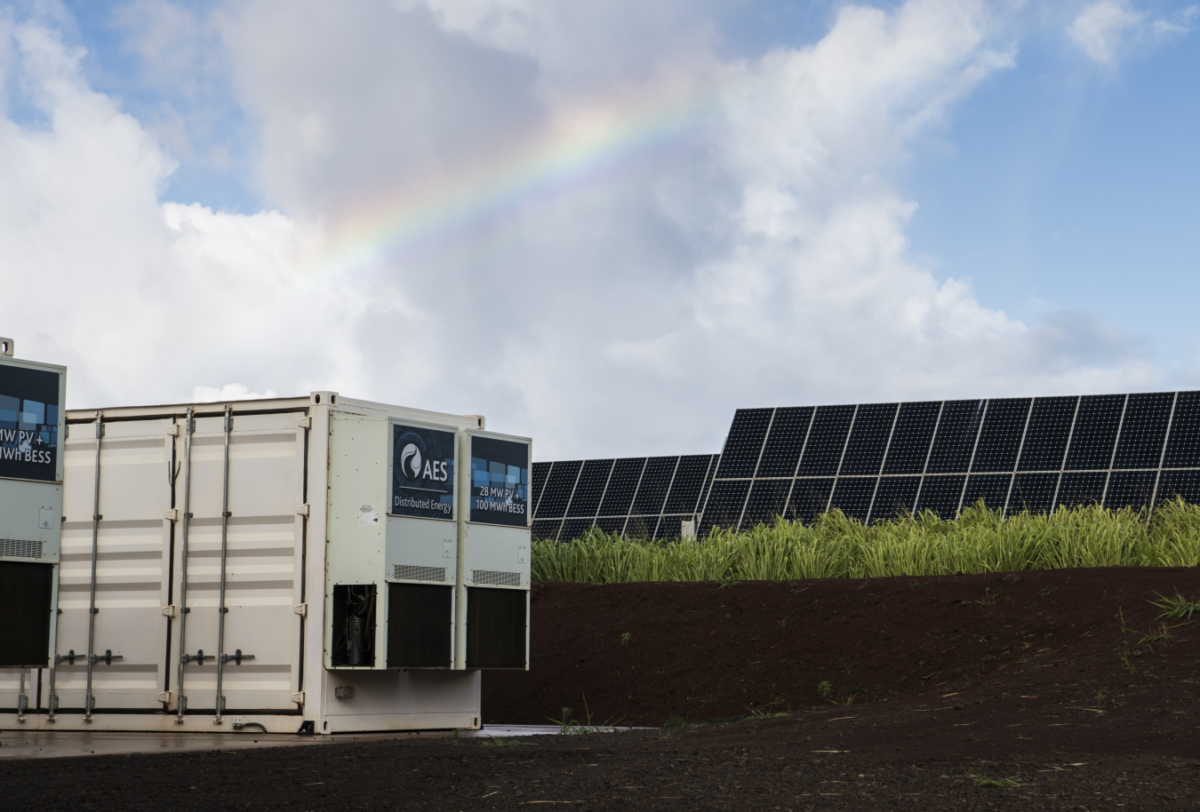





When an oil-fired generator on Kauaʻi Island tripped offline before dawn one morning in late 2021, grid frequency dropped, but the batteries at four solar-plus-storage plants mostly performed well, according to an open-access analysis.
The batteries provided a fast frequency response within 50 milliseconds, contained the frequency decline within 1.5 seconds, and brought the frequency back to 60 Hz within one minute.
Still, there was a problem, as there were frequency oscillations during the first minute.
The problem arose from the limited functionality of the inverters used at the solar-plus-storage plants, with three of the plants using inverters with grid-following controls.
“While this disruption was not disastrous, it was a warning,” says a post from the National Laboratory of the Rockies (NLR).
To prevent the problem from recurring, the Kauaʻi Island Utility Cooperative worked with the National Renewable Energy Laboratory (now the NLR) and other partners to support an exhaustive analysis and testing process, as described in the NLR post.
The result was that the utility cooperative switched to grid-forming controls at its solar-plus-storage plants, to provide synthetic inertia to replace the mechanical or rotational inertia of a fossil-fired generator.
A grid-forming inverter works by holding “its own frequency and voltage constant,” said Andy Hoke, principal engineer at NLR. He helped the Kauaʻi utility identify the grid-forming inverter settings they needed “to restore grid strength,” the post says.
Indeed, when the same oil-fired generator that had tripped offline before tripped again in 2023, no oscillation occurred.
The NLR team then further tested the newly capable inverters, sending, with the utility’s consent, “small pulses” through Kauaʻi’s grid and measuring the pulse with custom sensors.
As a result of that testing, “we found that grid-forming inverter-based resources significantly enhance grid stability,” said Jin Tan, project lead at NLR.
UNIFI Consortium
The comprehensive testing process involved a computer model of Kauaʻi’s grid, a physical re-creation of the grid at NLR’s campus, and custom sensors on Kauaʻi’s actual grid.
That work helped inform the work of the UNIFI Consortium, which coordinates industry progress on grid-forming software for inverters, as NLR Power Systems Engineering Center Director Benjamin Kroposki was involved in the Kauaʻi project and leads the UNIFI Consortium.
The UNIFI Consortium is now finishing “its final year,” says the NLR post, and plans to deliver “a vast library of well-tested models, standards, and controls” for grid-forming inverters.
ESIG advice
With its statement that grid-forming resources enhance grid stability, NLR joins the Energy Systems Integration Group in endorsing grid-forming inverters.
ESIG last year recommended that new large-scale batteries should be deployed with grid-forming software, to avoid costly upgrades later.
The NLR post ends with an indication that the national laboratory continues to offer grid stability studies.
This content is protected by copyright and may not be reused. If you want to cooperate with us and would like to reuse some of our content, please contact: editors@pv-magazine.com.




By submitting this form you agree to pv magazine using your data for the purposes of publishing your comment.
Your personal data will only be disclosed or otherwise transmitted to third parties for the purposes of spam filtering or if this is necessary for technical maintenance of the website. Any other transfer to third parties will not take place unless this is justified on the basis of applicable data protection regulations or if pv magazine is legally obliged to do so.
You may revoke this consent at any time with effect for the future, in which case your personal data will be deleted immediately. Otherwise, your data will be deleted if pv magazine has processed your request or the purpose of data storage is fulfilled.
Further information on data privacy can be found in our Data Protection Policy.