




From ESS News
Any technology aiming to compete with lithium-ion batteries (LIBs) faces the challenge of rapidly declining costs for this already ubiquitous technology. As LIBs continue to expand their market dominance, sodium-ion batteries (SIBs) are still waiting for their moment to shine.
However, a new study led by researchers at Finland’s LUT University finds that, although SIBs have yet to achieve widespread market adoption, their cells are already approaching cost parity with LIBs.
“Sodium-ion batteries (SIBs) are not yet in full roll-out for electric vehicle applications, as energy density remains a limiting factor. While SIBs are already cost-competitive with lithium-ion batteries (LIBs), their gravimetric energy density still lags behind. This gap may close once solid-state SIBs enter the market,” Dominik Keiner, junior researchers at LUT School of Energy Systems, tells ESS News.
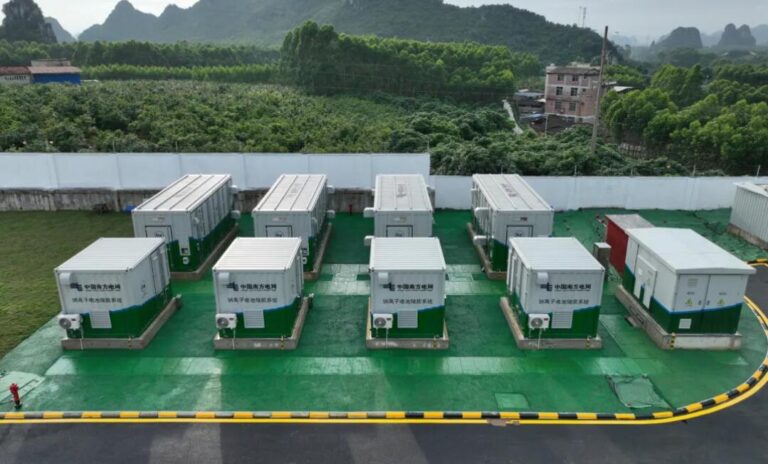
However, the first commercial utility-scale battery energy storage facilities are now being constructed and commissioned, including projects at the 100 MWh scale. “This demonstrates that SIBs are on the verge of full-scale market entry. Once supply chains are established and economies of scale take effect, there is essentially nothing to prevent sodium-ion batteries from fully taking over the market, provided that existing LIB lock-ins are manageable,” he says.
To continue reading, please visit our ESS News website.
This content is protected by copyright and may not be reused. If you want to cooperate with us and would like to reuse some of our content, please contact: editors@pv-magazine.com.






By submitting this form you agree to pv magazine using your data for the purposes of publishing your comment.
Your personal data will only be disclosed or otherwise transmitted to third parties for the purposes of spam filtering or if this is necessary for technical maintenance of the website. Any other transfer to third parties will not take place unless this is justified on the basis of applicable data protection regulations or if pv magazine is legally obliged to do so.
You may revoke this consent at any time with effect for the future, in which case your personal data will be deleted immediately. Otherwise, your data will be deleted if pv magazine has processed your request or the purpose of data storage is fulfilled.
Further information on data privacy can be found in our Data Protection Policy.