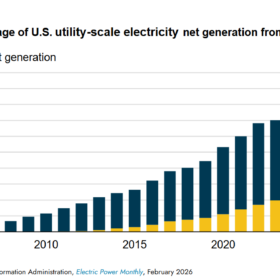
Solar and wind reach record 17% of U.S. power generation
The combined output from wind and utility-scale solar reached a record 760,000 GWh last year, accounting for 17% of total U.S. electricity generation as the sector scales to meet intensifying load growth.

Why generative AI is good for grids
Extreme weather events have brought grid resilience into focus in the United States, where hurricanes can wreak havoc on energy infrastructure. During a crisis, quick decisions in the control room are essential – and predicting faults before they occur can prevent major disruption. San Francisco-based AI professional Rudrendu Paul examines how generative AI can improve stability and security, starting with microgrids.
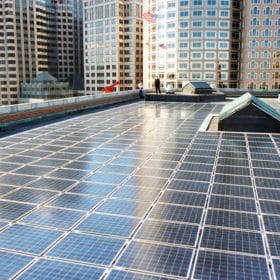
Massachusetts mandates 15-month permitting deadline for solar and storage
Executive order from Governor Healey targets 4 GW of in-state solar, 3.5 GW of demand side resources, and 5 GW of energy storage by 2030.
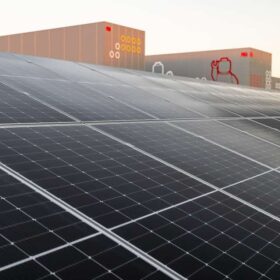
LEGO to stack up 28 MW of on-site solar at $1.5 billion Virginia plant
The 28 MW solar infrastructure and LEED Platinum design drive the $1.5 billion Virginia project toward a 2027 carbon-neutral production launch.

Sandia Labs benchmarks PV software providers in first ever blind comparison analysis
Sandia National Laboratories conducted the first-ever blind comparison of seven commercial PV modeling software, revealing that differences in weather handling, system modeling, derates, and assumptions grow as system complexity increases. The study emphasizes that software choice should consider project complexity, workflow, and modeling features rather than relying on rankings alone.
Canadian startup unveils AI tool for solar panel cleaning optimization
Swish Solar has an AI-driven tool that optimizes solar panel cleaning schedules to reduce soiling losses and operating costs. The platform uses data analytics and forecasting models to help operators time cleaning based on financial impact.
Canadian Solar posts $1.2 billion in Q4 revenue, missing analyst targets
The company reported a net loss of $86 million in the fourth quarter as lower module and storage volumes offset record annual shipments to the U.S. market.
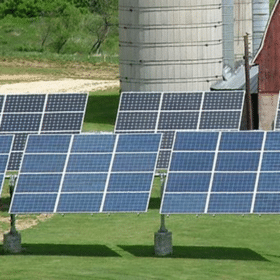
Minnesota LMI community solar reaches 179 MW amid regulatory shifts
The state’s shift to a “capped” system means developers are now racing for limited space. The program exceeds its goals for low-income participation, addressing access gaps in the energy transition.
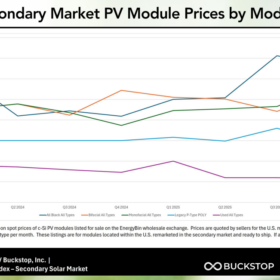
Cheap new modules are stalling the used solar market
Data from EnergyBin and Buckstop shows used panels accounted for just 1% of resale listings in 2025, as record-low prices for new modules undermine the economics of reuse.
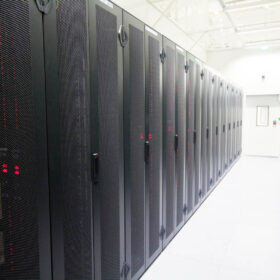
U.S. data center pipeline growth slows as grid constraints mount
New data center capacity additions fell 50% quarter-over-quarter in Q4 2025, signaling a shift in developer focus toward executing existing projects amid power queue bottlenecks.