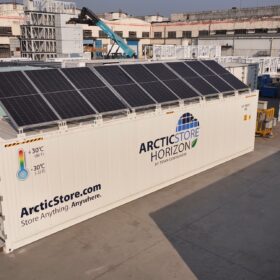
Cold storage units incorporate solar to help achieve a 55% reduction in power usage
TITAN Containers’ ArcticStore Horizon have a solar-grid power management system and cleaner refrigerants.
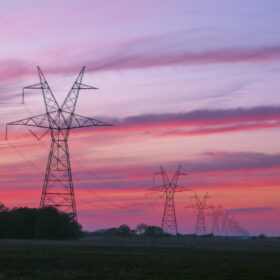
Two approaches to prevent queue-jumping by thermal generation
A study from Grid Strategies and ACORE finds evidence that priority transmission access offered by three grid operators has yielded generating portfolios “heavily weighted” to thermal resources. The study favors transmission planning followed by recruitment of projects that can use planned transmission capacity to enter the interconnection queue. A limited non-discriminatory “fast path” could meet near-term reliability needs.

FEOC compliance and stranded energy storage assets
The looming threat of Foreign Entity of Concern (FEOC) compliance is set to create stranded energy storage assets by jeopardizing tax credits for projects reliant on certain Chinese-sourced components after 2025.
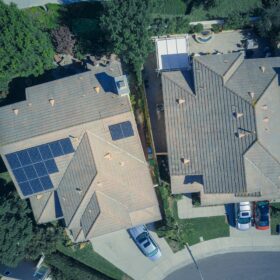
Community-based energy trading system for home solar-plus-storage
A research team led by Washington State University has developed a cloud-based system for trading and sharing energy from solar panels and batteries within a neighbourhood. The concept displayed potential energy cost savings of around 12% over a five-day test period.
Department of Energy removes renewable energy, climate offices
The Trump Administration DOE has removed the Office of Energy Efficiency and Renewable Energy, Office of Clean Energy Demonstrations and others from its organizational chart, absorbing them into the Office of Critical Minerals and Energy Innovation.
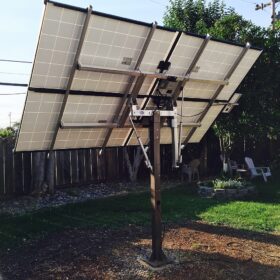
Advanced materials for solar tracker durability
Integrating advanced materials, such as high-strength steels and next-generation coatings, is crucial for ensuring solar tracker durability in increasingly challenging environmental conditions.
Unstable permitting, aging grid threaten U.S. AI leadership, 113 GW of clean energy at risk
The Solar Energy Industries Association (SEIA) warns that current policies risk U.S. energy dominance and grid reliability as data center demand surges. In comments to the U.S. Department of Energy, the association highlights solar and storage as the only energy sources available at scale today but notes over 110 GW of capacity is imperiled by regulatory instability.
Plan now to achieve faster clean energy support under a future president, report says
To enable construction of federally supported clean energy projects during a single presidential administration, a report offers 14 recommendations, and an overriding imperative to plan now.
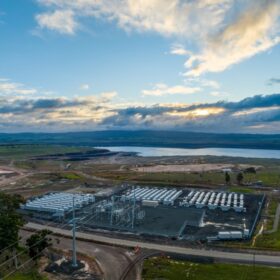
As BESS becomes more complex, EPCs need to front-load project activities
Early engagement with regulators, suppliers and first responders is essential, said a report from Fluence Energy.
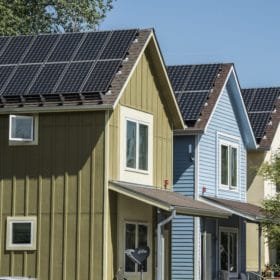
How the value proposition of residential solar is evolving as the federal solar tax credit comes to a close
As residential solar installers face the end of the Section 25D solar tax credit, they must grapple with how to reduce costs, work with new financing models, and build systems that provide new ways to capture long-term value through grid interactivity.