Managing cyber risks in the era of decentralized energy
The move toward decentralized energy resources offers resilience and flexibility in power generation, but it also introduces new complexities that demand proactive security measures.
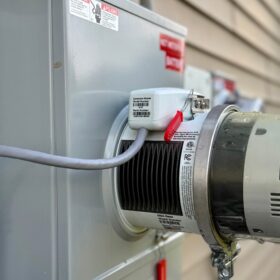
New York can’t afford to wait: we need modern meter socket adapter rules now
New York is facing a dual crisis of energy affordability and bottlenecks to new generation interconnection. The New York Public Service Commission can take action to make affordable technologies available to New Yorkers.
Inverter-based resource performance history leads to regulatory change
Three new NERC Standards — PRC-028, 029 and 030 — are designed to improve grid reliability

Why Chemical and Materials Science Engineers Are the Unsung Heroes of Solar Innovation
For most of the solar industry’s modern history, progress has been framed as a story of physics. Higher efficiencies came from better cell architectures, improved passivation schemes, and optimization of semiconductor performance. That framing was accurate for a long time. As photovoltaic technologies approach their theoretical efficiency limits and global manufacturing capacity reaches unprecedented scale, […]
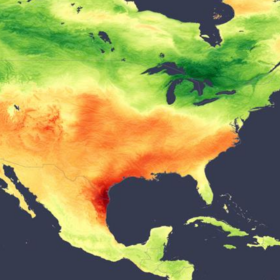
Heat dome and high pressure boost southern U.S. solar as polar vortex clouds the north
In a new weekly update for pv magazine, Solcast, a DNV company, reports that last month North America saw a stark solar divide, with southern regions like northeastern Mexico, southeastern Texas, and much of California experiencing 20–25% above-average irradiance, while Canada, the Great Lakes, and the northeastern U.S. faced persistent cloudiness and below-normal solar conditions. This contrast was driven by high-pressure systems and a southwestern heat dome in the south versus a polar vortex bringing cold air and storms to the north.
The battery linchpin: Why energy storage is the only the only way to safely power the AI boom
Utility-scale battery storage capacity is projected to reach 24.3 GW of new additions in 2026 as developers look to mitigate the grid impact of hyperscale data centers.
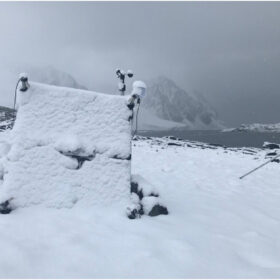
Solar above 60° North: The Arctic as PV’s next frontier
An IEA-PVPS report finds that solar power above 60° North is not only viable but rapidly expanding, driven by cold-climate performance gains, bifacial technologies, and rising energy security needs. While challenges like extreme seasonality, snow, permafrost, and scarce data remain, Arctic PV is emerging as a critical—and technically distinct—frontier for global solar deployment.
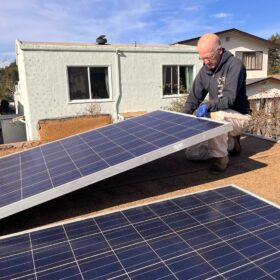
The theory and practice of plug-in solar
Achieving a system cost of $0.65 per watt through the secondary market and DIY assembly demonstrates a viable pathway for U.S. plug-in solar to provide immediate utility bill relief to renters and apartment dwellers.
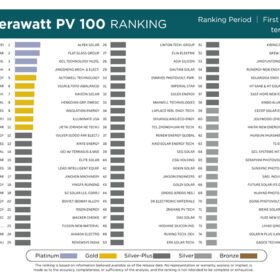
Who are the Top 100 PV manufacturers today?
The Terawatt PV 100 ranks the top 100 solar manufacturing companies using a new methodology based on production scale, financial strength, and corporate transparency, with Tongwei leading the Q1 2026 list and most top firms headquartered in China. The analysis highlights increasing global supply-chain scrutiny driven by tariffs and ESG mandates, while also showing rising influence from Indian companies and strong positions for key materials and equipment suppliers.
Private deals, public marketplace breaking the quiet bottleneck of solar sales
The solar industry continues to innovate as demand reaches new sales levels, yet outdated transaction models remain a significant barrier to growth.