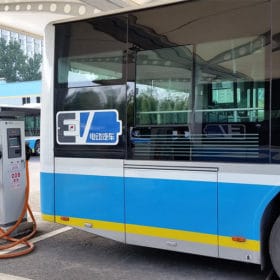
Soros Fund Management, Siemens make a big bet on EV charging
The two companies have invested $13.2 million into Amply Power, a service that combines EV charging hardware distribution and fleet management software into one customer-focused package.
Abu Dhabi’s 1.5 GW tender draws world record low solar bid of $0.0135/kWh
The tariff is around $0.0021 lower than the $0.0156/kWh French oil giant Total and Japanese conglomerate Marubeni Corp offered in Qatar’s 800 MW tender in late January. French energy company EDF and Chinese solar company JinkoPower reportedly submitted the record bid in the UAE exercise.
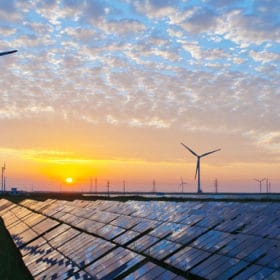
Morning Brief: Solar and wind are the cheapest new sources of electricity, Appalachian Power halts distributed projects
Also in the brief: Ohio regulators have approved an 80 MW array, Sierra Club responds to Duke’s climate report, Rhode Island funds brownfield projects and more.
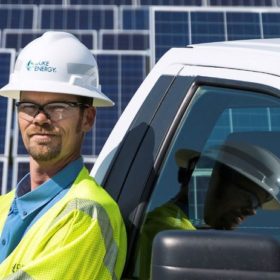
Duke doubles renewable goals while staying committed to fossils
The utility giant now owns or purchases 8,000 MW of renewable generation, with plans to double that mark by 2025. However, while the company eyes zero-carbon electricity by 2050, it maintains that natural gas will remain a crucial source to achieve this goal.

Rebuilding the West through bold investment in clean energy
Renewable energy development can be the catalyst for restoring our economic strength post-Covid-19. Founders of Navajo Power along with Kevin De Leon, Los Angeles City Council candidate, make their case.
Pandemic-related uncertainty in the US solar industry — and the case for an ITC extension
Renewable energy industry officials are hopeful that a post-pandemic comeback is possible in 2021 but, “Supply chain issues haven’t played out yet,” said George Strobel of Monarch Capital.
Electricity consumption up for pizza and liquor stores, down for dry cleaning and religion
Electrical demand across most, but not all, industries is down due to the pandemic. Yet, while hospitals and pizza shops drive demand, it remains to be seen how much of this new load will be met with renewable energy.
Morning Brief: What does the pandemic mean for the energy transition?
Also in the brief: Michigan solar installers say their future depends on lifting the energy cap. Plus, chickens.
California values distributed energy resources fairly — and ratepayers score a big win
Until now, the value of distributed energy resources has been robbed by as much as 50% because the CPUC’s avoided cost calculators did not include avoided transmission costs in valuations of DERs.
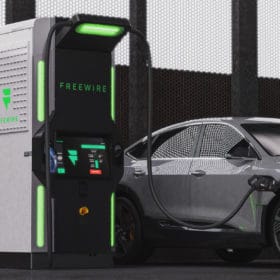
Battery startup FreeWire raises $25 million in funding
The funding was led by an existing investor of FreeWire, BP, and will allow the company to commercialize its upcoming Boost EV Charger, as well as expand operations across the United States and into Europe.