Georgia solar groups call for a hosting capacity map
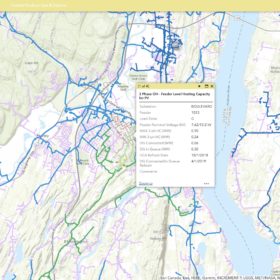
A hosting capacity map saves time and money for developers of distributed solar. Utilities in California, New York, and elsewhere have already posted these maps online, and now two Georgia solar groups have asked state regulators to require Georgia Power to provide a hosting capacity map for its service area.
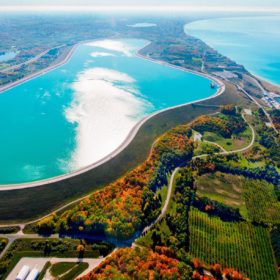
Pumped hydro with better financing can compete with batteries
Pumped hydro storage is highly cost competitive for large-scale energy storage, according to a report published by the San Diego County Water Authority. The report models a pumped hydro project as securing better financing terms than battery storage.
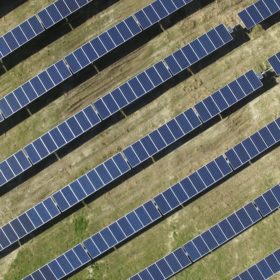
Solar + storage bypassed in Dominion Virginia’s resource plan
By excluding storage from its resource plan, the Virginia utility also excluded solar + storage, proposing up to 3.2 GW of gas-fired peaking units instead. Separately, a solar association and the utility agreed that modeling should use a solar capacity factor higher than the 23% value specified by regulators.

1100 GW new solar by 2035 in Inslee’s climate plan
Democratic Presidential Candidate Jay Inslee has called for 100% “clean, renewable and zero-emission” electricity by 2035. Solar could meet half that total if installed capacity increased at a compound annual growth rate of 19 percent.
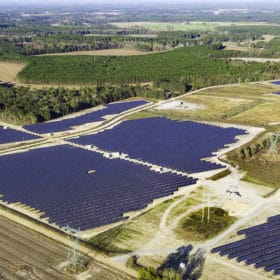
4 GW of Georgia solar now would save customers money, says state solar association
A Georgia solar association and a citizen’s group have brought analyses showing a much greater cost-saving solar potential in Georgia than the meager 1 GW that Georgia Power proposed in its 20-year resource plan.
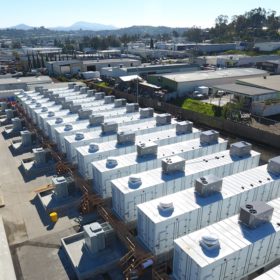
Solar+storage can outcompete “mid-merit” gas units, not just peakers
Solar plus storage can deliver, at lower cost, the same generation profile as “mid-merit” gas generating units in a number of cases studied, per an analysis published by Fluence.
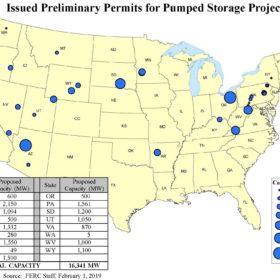
2 GW of pumped hydro storage proposed for Arizona
Of Earth’s 500,000 potential sites for closed-loop pumped hydro storage, the largest U.S. site under development is in Arizona. If the project is built, the potential for pairing with solar could open new opportunities for solar development.

Nearly half of utilities globally exploring distributed energy management systems
A “virtual power plant” can aggregate distributed solar and storage to help balance supply and demand, and provide grid services. Nearly half of the utility executives interviewed by Deloitte said their firm is considering such a solution, also known by the acronym DERM system, or DERMS.
Solar sandbagged in draft TVA resource plan
By using high projected costs for solar, low costs for natural gas, and capping solar installations at 500 MW per year, the Tennessee Valley Authority “did not optimize for what is best for Tennessee Valley residents,” says a citizens group.
PV additions fall well below potential globally
Last year’s 1% growth in global PV additions is a sharp drop from increases in prior years, and a long way from the 15-29% annual increases that a Science journal article maintained were “challenging but feasible” through 2030. Continued progress on five major challenges can get us back on track.