Ryan Kennedy


Solar and storage are central to Trump energy priorities
Four reasons why the U.S. must deploy low-cost solar and battery storage to meet surging electricity demand and achieve national energy dominance.

Growing pains: Grid congestion as a renewables bottleneck
The electricity grid is a real bottleneck for energy in the United States, and it’s not only utilities and grid operators who are struggling. Grid congestion also puts pressure on renewable energy project owners and is as much a business problem as it is a technical one, writes Alon Mashkovich, CEO of energy management business software supplier enSights.
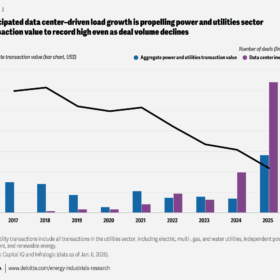
Solar-plus-storage M&A heats up as AI data centers drive demand
As AI data center growth tightens the U.S. grid, investors are pivoting toward de-risked, late-stage solar-plus-storage portfolios to secure firm capacity in a higher-rate environment, said a report from Deloitte.

Sabanci Renewables taps Empact to de-risk 286 MW Texas solar portfolio
The long-term partnership secures IRA tax credit compliance for the 156 MW Pepper Solar and 130 MW Lucky 7 projects as Sabanci targets a 3 GW U.S. pipeline.
OCI Energy, Arava Power secure financing for 347 MW Texas solar project
Backed by a 20-year PPA with a Fortune 100 company, the $394 million “Project SunRoper” near Houston marks a strategic expansion for Israel-based Arava Power into the U.S. market.
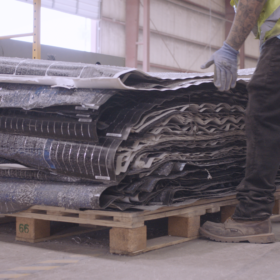
The richest silver mine isn’t underground: It’s in solar panels
As primary silver grades decline and solar demand surges, the industry must transition from viewing retired panels as waste to treating them as high-grade mineral reserves essential for the energy transition.
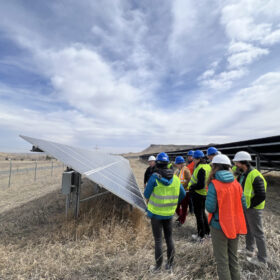
New model reveals pathway for land-efficient U.S. solar expansion
McGill University researchers, publishing in Communications Earth & Environment, used deep-learning computer vision to analyze 719 solar projects across the Western U.S. The study establishes a new “land-sparing” benchmark, providing developers with precise data to balance rapid capacity expansion with conservation and land-use priorities.
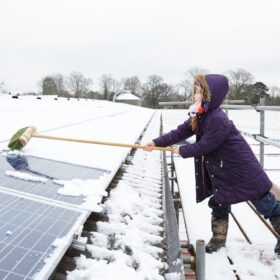
A winter survival checklist for residential solar and storage
Otovo provides tips for solar customers to avoid getting caught with a dead battery or snow-covered panels when the next winter storm hits the grid.
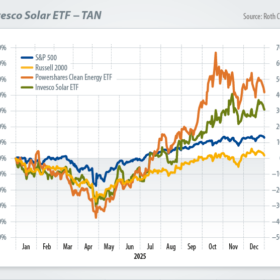
The future of solar is unwritten
Whatever decision the U.S. Department of Commerce makes on polysilicon imports, some market segments are in for a bumpy ride in 2026 as the expiration of tax credits and other policy levers change the trading environment faced by residential installers and others. Jesse Pichel and Lev Seleznov of Roth Capital assess what lies ahead for U.S. solar.
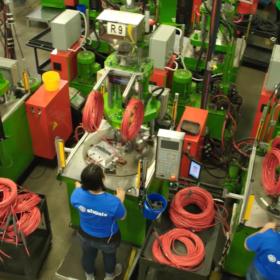
Shoals reports record $148 million Q4 revenue, full-year growth of 19%
The company ended 2025 with a record $748 million backlog as expansion into BESS and international markets offset tariff-related margin pressure.